The post Alibaba.com Unveiled New AI Mode to Automate End-to-End Buyer Journey appeared first on YoKart Blog.
]]>Alibaba.com has unveiled its latest agentic AI feature, AI Mode, at its CoCreate Europe event in London. The new tool is designed to automate the end-to-end experience and make sourcing faster and more intuitive for businesses. Alibaba has also announced that AI Mode will roll out globally from December 2025.
Using this AI technology, users will be able to find results in just a few seconds. They will simply provide inputs in natural languages or can upload relevant details or documents. The technology (AI mode) will scan, analyze and compare considering several factors, including pricing, logistics, and more and recommend the best-suited suppliers in seconds.
The AI mode will help users save time and find the results based on their specific queries and searches without going through searching and filtering manually. The feature is powered by its advanced “Accio” AI engine, which is built to understand complex product requirements and surface suppliers that traditional keyword searches might miss.
According to Alibaba, a strong momentum is observed across Europe’s eCommerce market. Order volumes rise by 57% year-over-year and the number of active suppliers globally has increased by 50%. Hence, it’s the perfect time to introduce agentic AI to enhance the overall online trade experience across the world.
The AI mode will enable Alibaba, a leading B2B multi-vendor marketplace, to trade smarter, quicker, and easier, especially for businesses that want to move fast in today’s competitive market.
Source links:
The post Alibaba.com Unveiled New AI Mode to Automate End-to-End Buyer Journey appeared first on YoKart Blog.
]]>The post Facebook Partnership with eBay and Poshmark and Updates on Its Latest Marketplace Features appeared first on YoKart Blog.
]]>Facebook Partnership with eBay and Poshmark and Updates on Its Latest Marketplace Features
Facebook is evolving its marketplace experience by making it more social and collaborative. Facebook’s recent announcement has introduced new features and shared updates on its partnership with eBay and Poshmark. The company has announced new collaborative tools, social features, improved checkout experience and Meta AI integrations. In addition, Facebook Marketplace extends its offerings by integrating inventory from eBay and Poshamark.
One out of four active Facebook users in the US and Canada visits and explores Marketplace. Hence, to make their journey easier and help them find what they are looking for, Meta has introduced new features and updates.
“Shop Together with Collection and Collaborative Buying”
Facebook Marketplace introduces a new feature, collection. Using this feature, the user can create a group of marketplace listings and invite friends to join. They can simply get started by saving listings and starting a new collection. They can either make it public or private. Users can also add their friends to collections, create and share updates via Feed, Messenger, WhatsApp and more.
In Collaborative buying, users can also invite a friend to join their chat with the seller. This feature will let them directly negotiate pricing, coordinate pickup and get answers to their queries together.
“Shopping Personalization with Reactions and Comments”
Users can now react and comment on the Marketplace listings like they do social posts. This will help Meta learn about the users’ interests, product quality, and unique findings. Suppose you like an item, the marketplace will now start showcasing items based on your interest and preferences. In short, this feature will help make the shopping experience more personalized.
“Smart Shopping with AI”
Meta AI will help you ask the right question to the seller. It will analyze the listing and your conversions, then it will suggest questions you probably want to ask the seller. You can simply tap and ask.
Moreover, AI-powered features will also contribute to making buying cars (vehicles) easier by gathering and providing all the necessary details and insights, such as engine options, safety ratings, transmission type, seating, cargo capacity, reviews, and price insights required in one place.
“Extended Inventory with eBay and Poshmark”
Facebook Marketplace integrates the inventory of eBay and Poshmark, top multi-vendor marketplaces, in order to extend its offerings on the marketplace. Users can gain access to a wider range of products from categories like fashion and electronics. However, the partner listings will be marked with an icon on the listing. Users can see the listing, details and browse them on the product details page. In case of making a purchase, they will be directed to the partner site to complete the checkout process.
Source links:
The post Facebook Partnership with eBay and Poshmark and Updates on Its Latest Marketplace Features appeared first on YoKart Blog.
]]>The post eCommerce Market Shares Analysis, Trends and Forecast Report 2025-2033 appeared first on YoKart Blog.
]]>A global eCommerce market research report released on 12th Nov 2025 by ResearchAndMarkets suggests that the worldwide eCommerce market is expected to reach $12.63 trillion by 2033, growing at a CAGR of 7.54% from 2025. According to the report, the global eCommerce market size in 2024 was recorded $6.56 trillion.
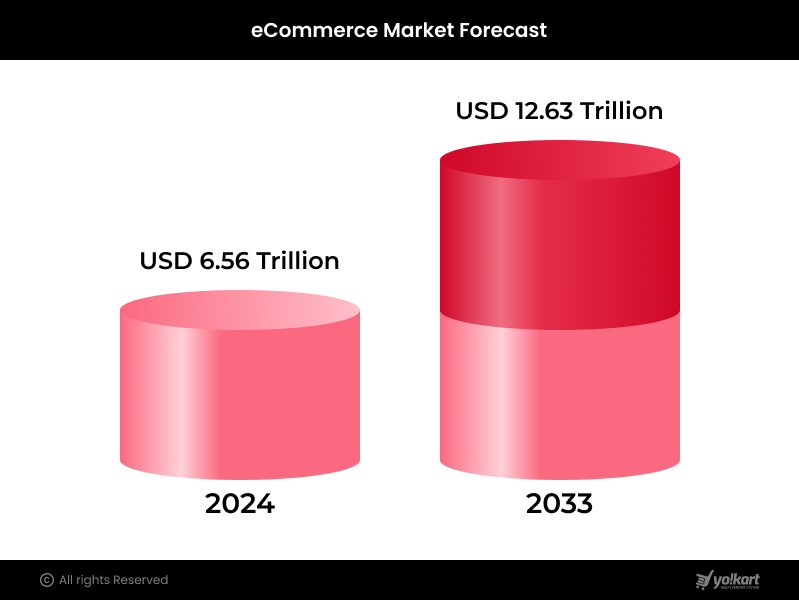
The key growth drivers for the industry are the integration of AI into eCommerce, the expansion of cross-border commerce and the advancement of digital payment systems. Moreover, the adoption of smartphones and high-speed internet connectivity are also key contributing factors in eCommerce growth.
On the one hand, customers worldwide are increasingly welcoming eCommerce advancements and shopping online in large numbers, leveraging eCommerce platforms. On the other hand, for entrepreneurs, startups and business owners seeking growth from this ever-growing eCommerce industry, it’s the right time to invest.
If you are one of those businesses looking for an eCommerce solution to build your own multi-vendor marketplace, you can choose Yo!Kart, a leading self-hosted software that can help you achieve your goals.
Source Link:
The post eCommerce Market Shares Analysis, Trends and Forecast Report 2025-2033 appeared first on YoKart Blog.
]]>The post Google Debuts Agentic Checkout and AI Mode Shopping Features for the Holidays appeared first on YoKart Blog.
]]>Now users will be able to find and buy the best products at their convenience using Google’s AI Mode and the Gemini app. They don’t need to search products across multiple platforms, apply endless filters, keep track of prices and go through a lengthy checkout process. All they can do and manage by simply using Google’s AI mode searches by giving prompts.
Users can ask what they are looking for in AI Mode or the Gemini App. Google (AI) will help shortlist and find the right products by analyzing 50 billion products. Users can trust AI responses as they fetch freshly updated data and information that perfectly match their specific searches and needs. Moreover, by accessing these latest advancements and updates, users can also compare a selected number of products from the list and find the most suitable one.
In case a user wants to buy a product locally from the nearby stores. They can search ‘Product Near Me’. In search results, they will display a “Let Google Call” option, powered by Google’s Duplex technology. The user can tap ‘Get Started’ and will follow some prompts based on their specific requirements.
Behind the scenes, AI does the job. The technology will identify and connect the best stores, ask relevant questions, including pricing and special discounts and offers, collect all the information and send an email or text with an update on the query along with inventory information from nearby stores. This feature ultimately increases merchants’ foot traffic and sales and helps buyers find the best products by saving time and effort.
In addition, these features upgrade in Google AI also enable buyers to buy the right items at the right price using tracking an item’s price with agentic AI. You can suggest what items you want to track, suggesting specific details such as size, color and of course, the price range you want to buy it at. Once the price falls within your budget, you will receive a notification to grant permission. You can choose any from the given options, including view details, buy for me and turn off.
If you choose ‘Buy for Me’and confirm purchase and shipping details, Google will buy that product for you on the eligible Merchant’s site using Google Pay. Eligible merchants in the US are Wayfair, Chewy, Quince, and a few selected Shopify Merchants for now.
Reference:
The post Google Debuts Agentic Checkout and AI Mode Shopping Features for the Holidays appeared first on YoKart Blog.
]]>The post How to Build a Website Like Alibaba: Features, Costs and Monetization Strategies appeared first on YoKart Blog.
]]>However, before we dive deep, let’s explore why build an eCommerce platform similar to Alibaba?
According to Statista, Alibaba Group recorded revenue of approximately $137.3 billion (996.35 billion yuan) in the fiscal year ending March 31, 2025. You can see a continuous growth in Alibaba’s revenue from 2015 to 2025.
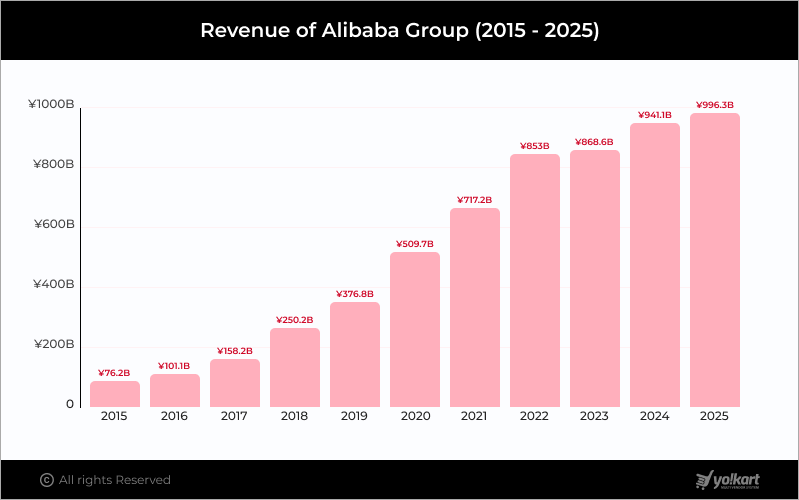
What attracts entrepreneurs more to build a marketplace like Alibaba is its diversified revenue channels and business models. It generates revenue through multiple sources and drives consistent growth via its strategic business model.
Moreover, by building a marketplace like Alibaba, you will not just create a centralized digital platform to connect buyers and sellers, but can extend your business beyond. Let’s explore how to create a website like Alibaba.
Table of Contents
- What is Alibaba?
- Alibaba History: Key Milestones and Achievements
- Business Model: How Does Alibaba Work?
- Top Well-Recognized Subsidiaries/Businesses of Alibaba Group
- Alibaba Revenue Model: How Does Alibaba Make Money?
- Revenue Distribution of Alibaba by Segment
- Key Features of Alibaba B2B Multi-Vendor eCommerce Platform
- How Much Does it Cost to Build an eCommerce Platform Similar to Alibaba?
- How to Build a Website or Marketplace Like Alibaba?
- Build a Multi-Vendor Marketplace Like Alibaba at an Affordable Cost
- Final Thought
- FAQs
What is Alibaba?
Alibaba is a leading B2B multi-vendor marketplace that enables buying and selling products in bulk. The platform is specially designed for B2B trade. It connects businesses (buyers) that prefer good margins with suppliers (vendors) seeking large quantity orders.
There are millions of active buyers, manufacturers, suppliers and wholesalers listed and registered on Alibaba. The marketplace handles approximately 300,000 trades daily. On the one hand, vendors connect with millions of global buyers. On the other hand, buyers also gain access to a wide variety of products from distinct categories and niches.
Alibaba’s offerings are not limited to products; it also extends to services, cloud computing, entertainment, logistics, finance, artificial intelligence, and more.
In short, Alibaba Group is a one-stop destination for individuals and businesses that offers a comprehensive digital solution, from selling products in bulk to selling to individual customers, providing cloud computing services to leveraging AI products, enabling a payment system to offering loans and providing a video streaming platform to making films.
- Parent organization: Alibaba Group
- Founded: April 4, 1999
- Headquarters: Hangzhou, China
- Company Type: Private
- Geographical Presence: Global
Alibaba History: Key Milestones and Achievements
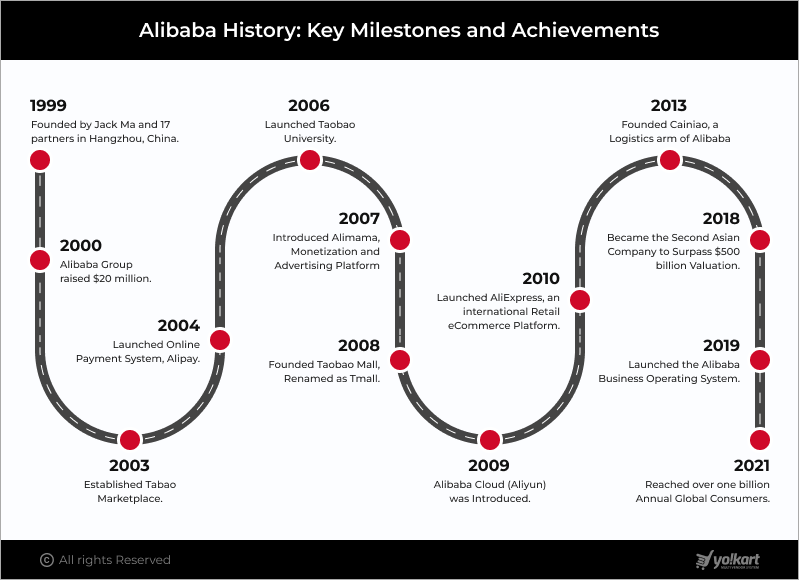
- 1999: Founded by Jack Ma and 17 partners in Hangzhou, China.
Launched China Marketplace (Currently 1688.com) - 2000: Alibaba Group raised $20 million.
- 2003: Established Tabao Marketplace
- 2004: Launched Online Payment System, Alipay.
- 2006: Launched Taobao University
- 2007: Introduced Alimama, Monetization and Advertising Platform
- 2008: Founded Taobao Mall, Renamed as Tmall (2011)
- 2009: Alibaba Cloud (Aliyun) was Introduced.
- 2010: Launched AliExpress, an international Retail eCommerce Platform.
- 2013: Founded Cainiao, a Logistics arm of Alibaba
- 2018: Became the Second Asian Company to Surpass $500 billion Valuation.
- 2019: Launched the Alibaba Business Operating System.
- 2021: Reached over one billion Annual Global Consumers
Business Model: How Does Alibaba Work?
Alibaba is a dedicated B2B multi-vendor marketplace that works as an intermediary between businesses. It connects businesses, including buyers and sellers, to trade in bulk. Manufacturers, distributors and suppliers primarily from China list their products and connect with buyers across the world. Buyers, on the other hand, visit the marketplace and find products at a good value.
Vendors’ Journey on Alibaba
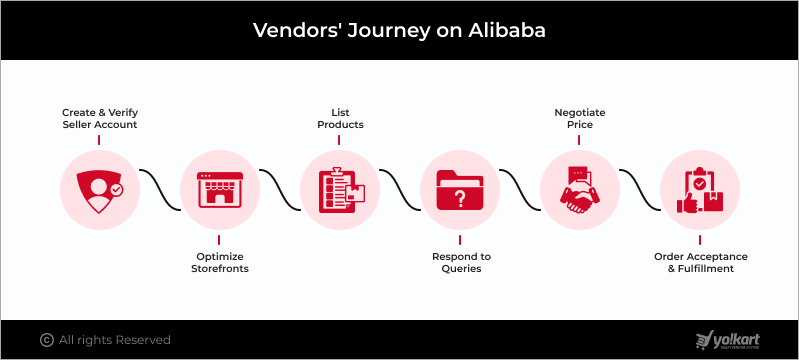
- Create and Verify Seller Account
- Optimize storefronts
- List Products
- Respond to Queries
- Negotiate Price
- Order Acceptance and Fulfillment
Buyers’ Journey on Alibaba
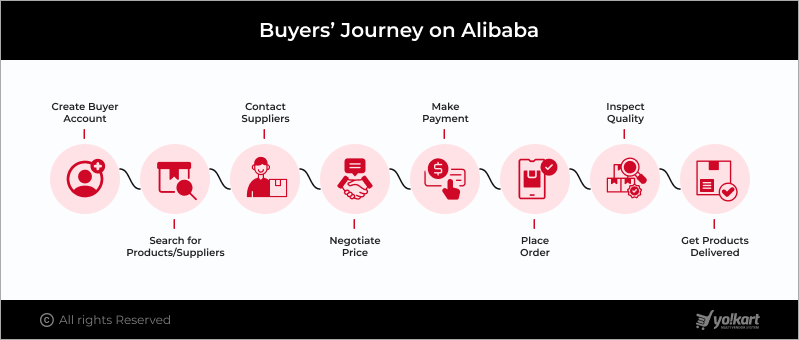
- Create Buyer Account
- Search for Products/Suppliers
- Contact Suppliers
- Negotiate Price
- Make Payment
- Place Order
- Inspect Quality (Through Alibaba Third-party Inspection Services or by Yourself
- Get Products Delivered
Buyers can also take post-delivery actions, such as providing feedback on the product or supplier, or contacting customer support for any complaints, concerns, or queries.
| Admin controls and manages the entire marketplace’s operations, including user management, payment management, order management, role management, return and complaint management, marketing, promotions and much more. |
Top Well-Recognized Subsidiaries/Businesses of Alibaba Group
However, alongside product sales, the Alibaba Group follows a diversified business model that makes it an ideal inspiration for entrepreneurs and business owners who tap into the eCommerce world and extend their offerings beyond. Let’s explore some widely recognized subsidiaries or businesses operated by Alibaba Group that contribute to its growth and expansion.
| Subsidiary | Founded Year | Key Offerings |
| 1688.com | April 1999 | A Chinese B2B eCommerce platform focused on the domestic market. |
| Taobao | May 2003 | A consumer-to-consumer (C2C) marketplace popular across China. |
| AliPay | February 2004 | A widely used digital payment service in China. |
| Youku | December 2006 | A major online video platform, often compared to YouTube. |
| Alimama | November 2007 | A digital marketing and monetization platform by Alibaba Group. |
| Tmall | April 2008 | A B2C platform featuring high-quality products from top brands. |
| Aliyun (Alibaba Cloud) | September 2009 | Global cloud computing solutions provider. |
| AliExpress | April 2010 | A global B2C eCommerce platform connecting buyers with Chinese suppliers. |
| Lazada | May 2012 | A leading Southeast Asian eCommerce marketplace. |
| Cainiao | May 2013 | A smart logistics network enabling fast domestic and cross-border deliveries. |
| DingTalk | December 2014 | An enterprise communication and collaboration platform. |
Want to Build an eCommerce Website Similar to Alibaba or its Subsidiaries?
Alibaba Revenue Model: How Does Alibaba Make Money?
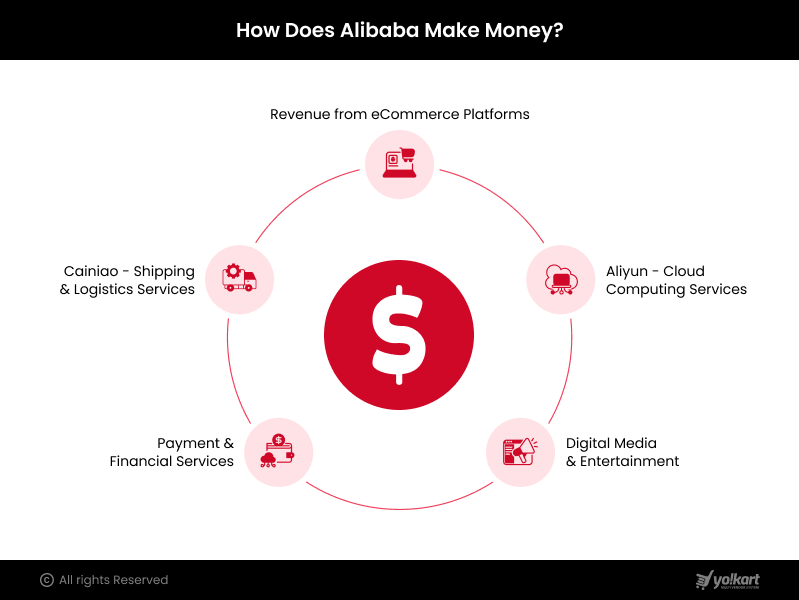
Whether you are a buyer or a seller, user registration and product listing on Alibaba are free. However, its diversified revenue models ensure steady income for the business.
The platform primarily generates revenue through advertising, membership fees, and commission on transactions. While some platforms like Tmall and AliExpress charge commissions on sales, others like Taobao and Alibaba itself rely more on advertising and subscription fees.
In addition, Alibaba Group earns money from its extended services such as cloud computing, logistics, and more. Let’s get an overview of the revenue model of Alibaba below:
Alibaba’s Revenue from eCommerce Platforms
Alibaba and its sister eCommerce platform enable the selling of products in retail and wholesale. These platforms generate revenue from multiple revenue streams. Tmall and Taobao are leading eCommerce platforms that generate a vast amount of revenue for Alibaba. Below are a few revenue streams that contribute to the company’s revenue.
- Commission: Alibaba itself doesn’t charge commission on sales. However, its sister platforms, such as AliExpress, Tmall and Juhuasuan, charge a percentage of GMV (Gross Merchandise Value) on transactions initiated or settled via Alipay.
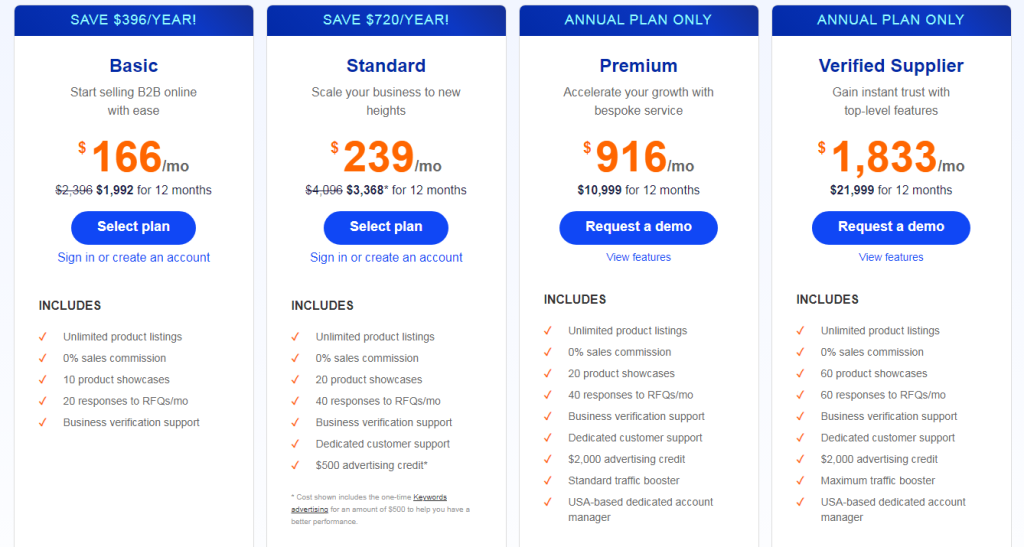
- Membership and Subscription Fees: Membership and subscription-based services are another revenue generation source for Alibaba. Subscription prices varied by plans and offerings.
Primarily, Alibaba offers two different pricing plans: basic and standard. The subscriber can choose either a quarterly or an annual plan. These membership plans provide access to premium services and features, offering subscribers several exclusive benefits. Alibaba’s premium membership program 88VIP has continued to gain traction among its members.
- Advertisements and Sponsored Ads: A significant percentage of Alibaba’s revenue comes from marketing services (advertising and sponsored ads). Merchants and third-party advertisers pay Alibaba in order to promote products, increase visibility, display banner ads, rank keywords and more.
Alimama is the advertising platform that analyses data across platforms and enables targeted marketing across the Alibaba ecosystem.
Suggested Read: How Does Alibaba Make Money : A Detailed Guide
Alibaba’s Revenue from Aliyun (Cloud Computing Services)
Aliyun, Alibaba’s cloud computing arm, has reported year-on-year revenue growth. It provides services like computing, storage, data management and AI solutions. It enables businesses to choose subscription plans or incur charges based on services used, pay-as-you-go.
AI-related products remain key growth drivers for Alibaba Cloud. In the first year of 2025, Alibaba Cloud reported revenue of $16.26 billion. Moreover, by analyzing the rapid adoption of AI products, Alibaba has planned to invest in cloud and AI infrastructure to sustain its growth and expansion.
Alibaba’s Revenue from Cainiao (Shipping and Logistics Services)
Cainiao is one of the world’s largest cross-border eCommerce logistics services providers. It’s one of Alibaba’s leading revenue sources. At the same time, Cainiao is also one of the fastest-growing units.
Cainiao generates revenue from services including warehousing, transportation, pick-up services, last-mile delivery and more. The highlight is that Cainiao generates a significant portion, about 70% from external sources and the remaining 30% of revenue comes from serving Alibaba’s internal needs.
Alibaba’s Revenue from Payment and Financial Services
Alibaba generates revenue from Alipay and other financial services. However, Alipay is now part of Alibaba’s financial services known as Ant Financial. It offers a range of payment and financial services. These services include payment processing, micro-loans, digital banking, wealth management and more. Moreover, Ant Group generates revenue via a combination of fees, interests, and transactional charges.
- Transaction Fees (Alipay): Alipay incurs transactional charges on transactions that take place through the platform. Moreover, utility payments, credit card services, insurance and other services also contribute to Alipay’s revenue.
- Loan Interest: The company also offers loans to customers and earns interest on them.
- Revenue from other Services: In addition to the above-mentioned revenue channels, Ant Financial charges fees and commissions to offer services like wealth management, digital payment and others.
Alibaba’s Revenue from Digital Media and Entertainment
Alibaba Digital Media and Entertainment is another source that generates revenue through subscription fees, licensing, and advertising. This segment of Alibaba includes Youku, a video streaming platform; Alibaba Music, a music division focusing on copyrights and more related to the industry; Alibaba Pictures produces films and TV shows; AliSports, UC web and more.
They all drive revenue for Alibaba in several ways. Such as Youku generates revenue through subscriptions and advertisements and Alibaba Pictures generates revenue by producing films and TV shows.
Revenue Distribution of Alibaba by Segment
The table below defines the revenue share of the Chinese eCommerce conglomerate Alibaba Group by segment. You can see the percentages of Alibaba’s revenue in the second quarter of 2025.
| Alibaba’s Segment/Subsidiary/Business | Revenue Percentage |
| China Commerce Retail | 47.88% |
| All others | 23.66% |
| Cloud Intelligence Group | 13.49% |
| International Commerce Retail | 11.47% |
| Quick Commerce | 5.7% |
| International Commerce Wholesale | 2.56% |
| China Commerce Wholesale | 2.46% |
Key Features of Alibaba B2B Multi-Vendor eCommerce Platform
Operating an online multi-vendor marketplace requires the necessary features and functionality to ensure a seamless and hassle-free experience for users. Similarly, being a leading B2B multi-vendor marketplace, Alibaba offers advanced out-of-the-box features and functionality.
It enables users to navigate complete transactions effortlessly. On Alibaba, two different users primarily participate: buyers and sellers. Let’s explore user-wise key features of Alibaba below:
Features for Buyers
Buyer is the first; at the same time, it’s the end user on the marketplace. The role of a buyer begins with a product search to end with leaving a review and ratings. Below are buyer-specific features of Alibaba:
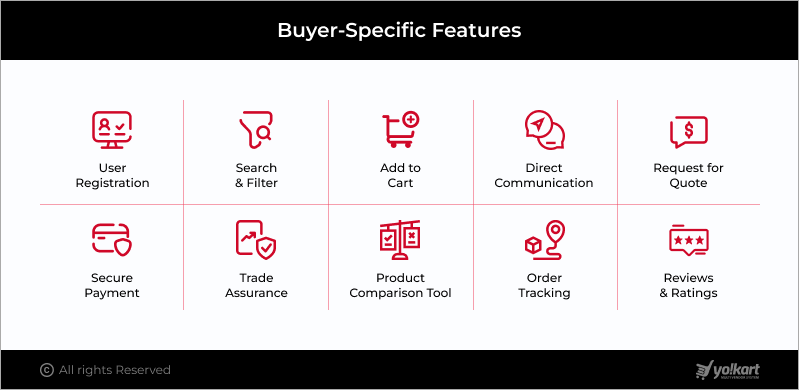
- Easy Registration and Login: Alibaba enables easy registration for buyers. They can register in just a few steps.
- Create an account by providing details like name, email address, location, and phone number.
- Complete security verification by verifying phone and email, entering the verification code.
- Add and verify payment details.
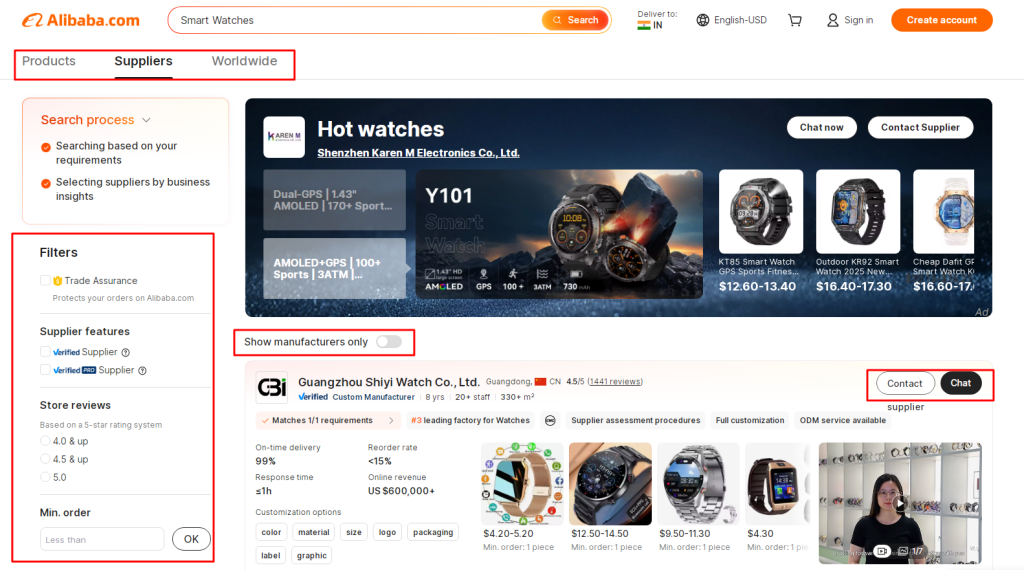
- Search and Filter: Buyers can find the results they are looking for. They search and view results by product, supplier, or worldwide. Buyers can also short products by enabling a toggle ‘Show manufacturers only’.
In addition, buyers on Alibaba can filter products at multiple levels to get more precise and relevant search results. These filters may include supplier country/region, supplier features, store reviews, certification and more. However, the filters can vary depending on the product category and types.
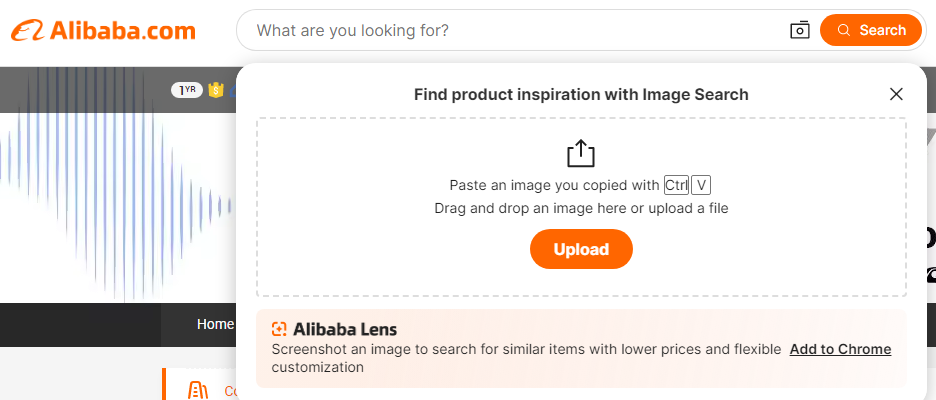
Alibaba also enables product search using images. Buyers can upload, paste or drag and drop images to search. They can even take snaps using Alibaba Lens to find results.
- Add to Cart: Buyers can collect and save items to the cart they want to buy or view later. The add to cart option also helps buyers to streamline the ordering process by enabling buyers to check out multiple products altogether.
- Chat/Contact Seller: Alibaba provides direct messaging tools with real-time translation to negotiate deals, share customized order requirements, and discuss terms such as pricing, quantity, and shipping. These options may include direct charting and contacting the supplier.
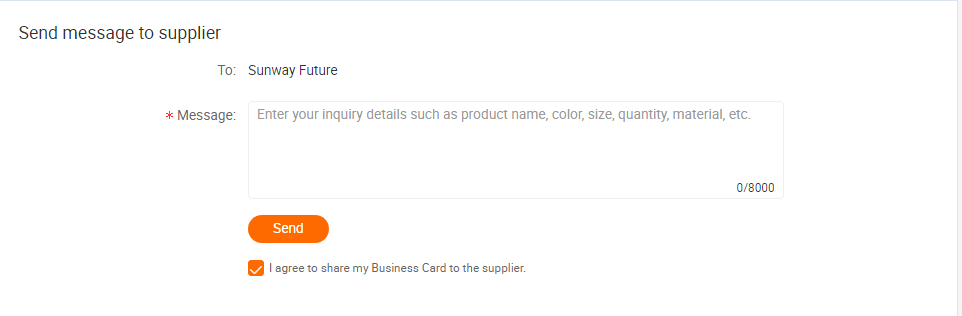
- Request for Quote (RFQ): Using this feature, buyers send and receive RFQ (Request for Quote). They can either raise a request to a particular seller or raise a universal request in order to grab the best possible deal, and any of the sellers can counteroffer.
- Secure Payment: Alibaba offers multiple and secure payment options for buyers. Each payment made on Alibaba is secured with strict SSL encryption and PCI DSS data protection protocols. Moreover, buyers can make payments using their preferred methods.
- Trade Assurance: Works as a protective shield for buyers on Alibaba. It safeguards payments, ensures on-time shipment and guarantees buyers receive the product delivered with optimal quality.
- Product Comparison Tools: Alibaba offers a feature that lets buyers compare products and suppliers simultaneously based on features, performance, and popularity. Buyers can compare up to 20 products or suppliers and choose.
- Order Tracking: One of the important features for buyers on any platform. Order tracking allows buyers to track orders and get updates on their current statuses. Alibaba allows its buyers to track orders using the built-in order tracking system.
- Reviews and Ratings: Buyers on Alibaba can post a review and rate using this feature. However, reviews and ratings on Alibaba are of different types that include:
- Verified purchase reviews: Buyers post reviews 90 days after the transaction is completed.
- Unverified purchase reviews: Buyers may leave reviews without a fully completed transaction on the platform.
- High-level buyers: High-level buyers who have had multiple interactions with a seller may post reviews on the seller’s service within 180 days after such an incident.
Looking for a Feature-rich Multi-Vendor Marketplace Solution?
Features for Suppliers
Vendors on Alibaba are manufacturers, suppliers and wholesalers who list and sell products on the platform. Alibaba brings all the necessary features for vendors. Enabling them to create unique storefronts to process and deliver orders, they perform all the tasks seamlessly. Let’s explore vendor-specific features of Alibaba below:
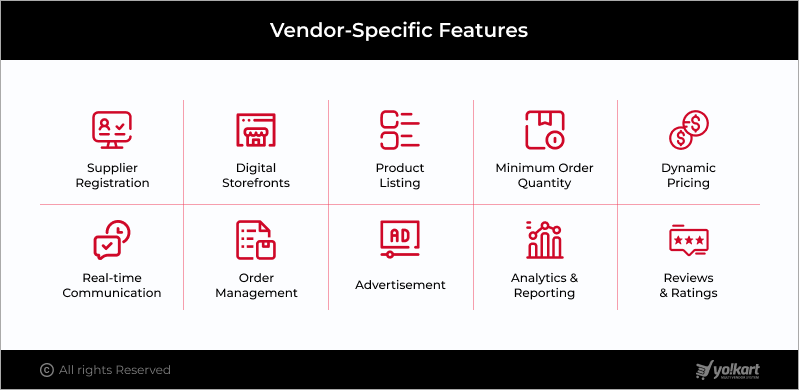
- Supplier Registration: Whether you are a manufacturer, wholesaler or supplier, Alibaba makes onboarding easy. You can register your business on Alibaba by simply providing and verifying the necessary details related to your business. Once registered, you can get started.
- Digital Storefronts: Alibaba provides an option for vendors to set up their own digital storefronts on the marketplace. They can customize and set up their online store, inclusively showcasing their products and businesses.
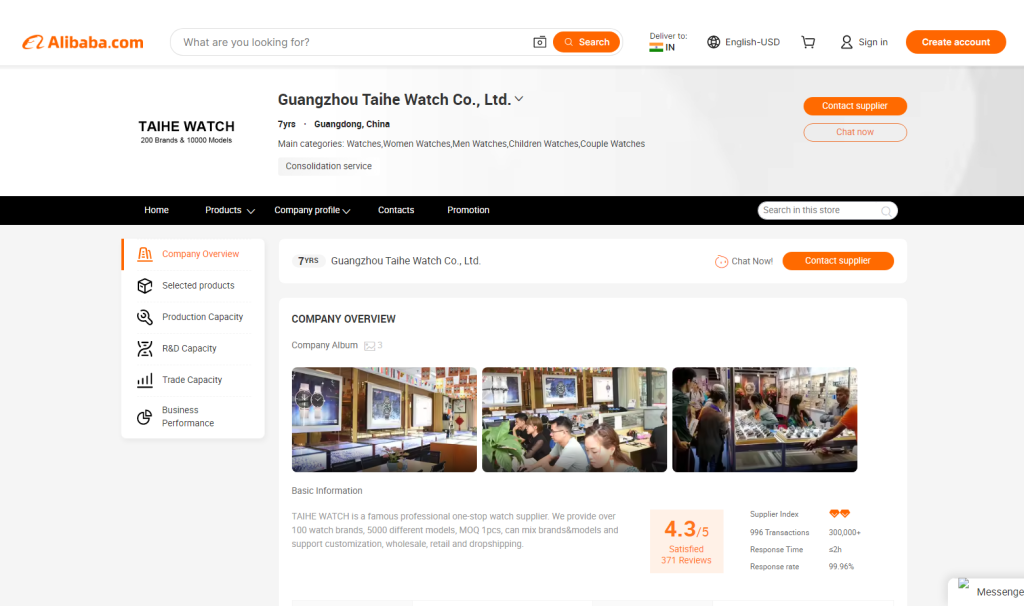
- Product Listing: Suppliers on Alibaba can either list products in bulk using the import export option or can list a single product, providing all the necessary details.
- Minimum Order Quantity: Using this feature, suppliers can restrict buyers from placing orders less than the quantity set. As Alibaba is a B2B focused marketplace, MOQ encourages bulk ordering and lets the suppliers handle order fulfillment, operations and efficiency.
- Dynamic Pricing: Alibaba enables vendors to make maximum profit using the dynamic pricing feature. This feature automatically adjusts pricing by analyzing various factors such as demand, competition and other market conditions.
- Direct and Real-time Communication: Each sales journey begins with a query. Alibaba’s direct and easy communication channels enable suppliers to directly interact with buyers on their queries in 18 languages, offering real-time translations.
In order to enable real-time communication, Alibaba also provides the AliSupplier app that allows suppliers to respond to buyers immediately, contributing to higher conversion chances.
- Order Management: Order management features on Alibaba allow suppliers to complete the ordering process. Starting from accepting orders to updating their statuses and communicating with buyers to ensure doorstep delivery, they can manage every aspect of the order.
- Advertisement: Alibaba allows suppliers to increase visibility of their products via paid ad campaigns. They can precisely target potential buyers through keywords, increase visibility in search results and boost conversion rates.
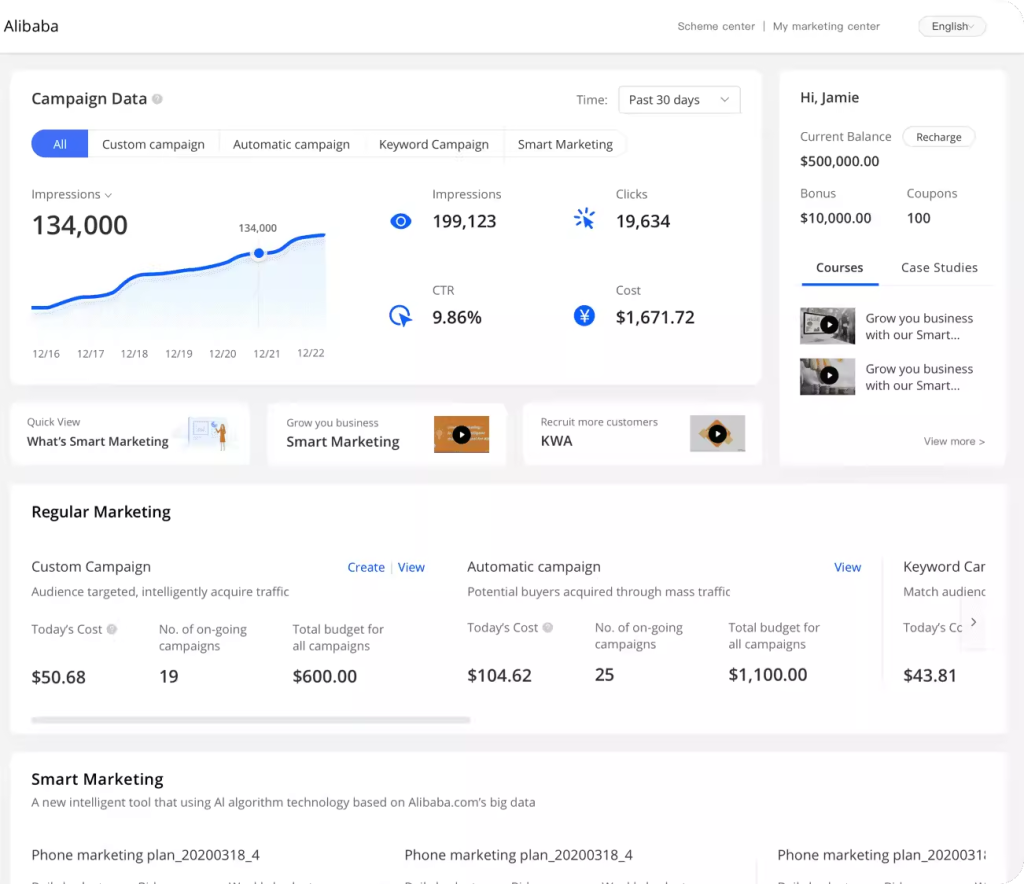
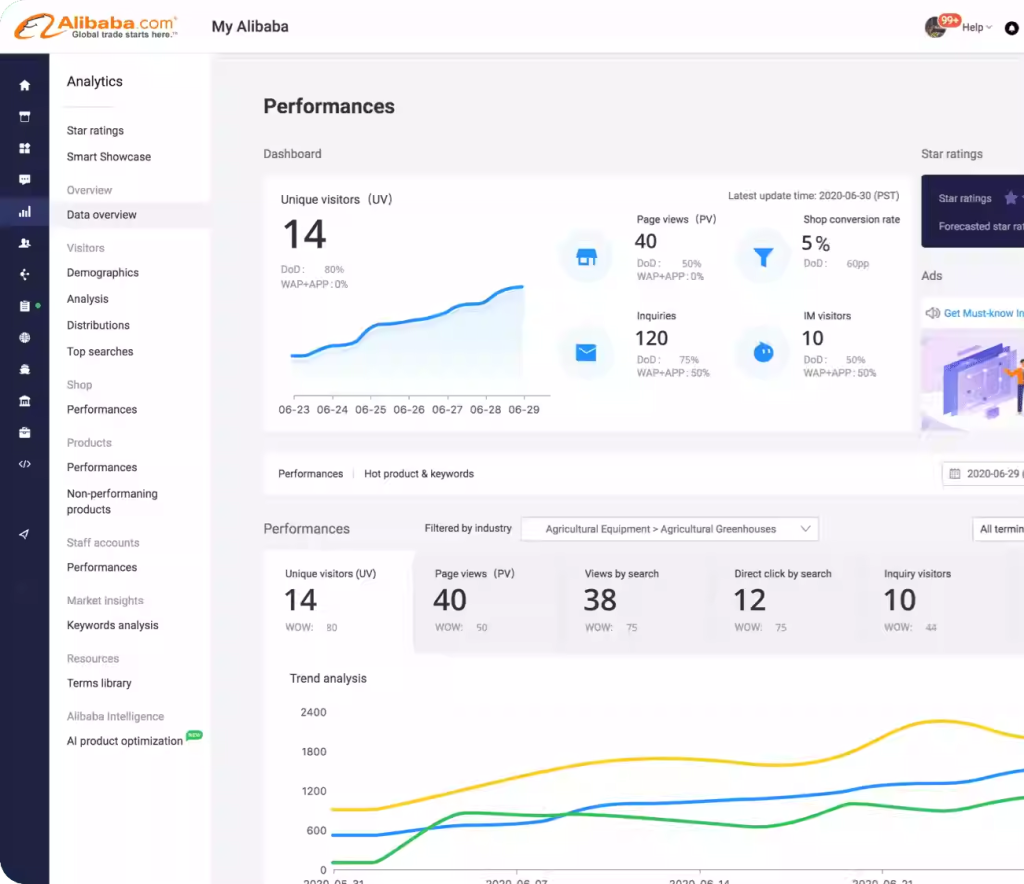
- Analytics and Reporting: Accessing the analytics and reporting dashboard, the supplier can get a complete overview of valuable data and insights, including order details, users’ behavior, search queries, conversion rates, the number of visitors and more. By analyzing these reports, suppliers can plan further strategies and implement them to drive more sales.
Features for Admin
Admin is the marketplace operator that operates, manages and grows the platform. From managing users to ensuring seamless operations, analyzing reports to processing payments, promoting business to acquiring users, implementing emerging technologies to taking care of updates, the admin requires all the necessary features to handle these operations.
Similarly, a B2B multi-vendor marketplace like Alibaba supports all the admin features that ensure seamless marketplace operations. However, Alibaba’s admin features are not officially available. Yet, you can check out these features required for the B2B marketplace admin:
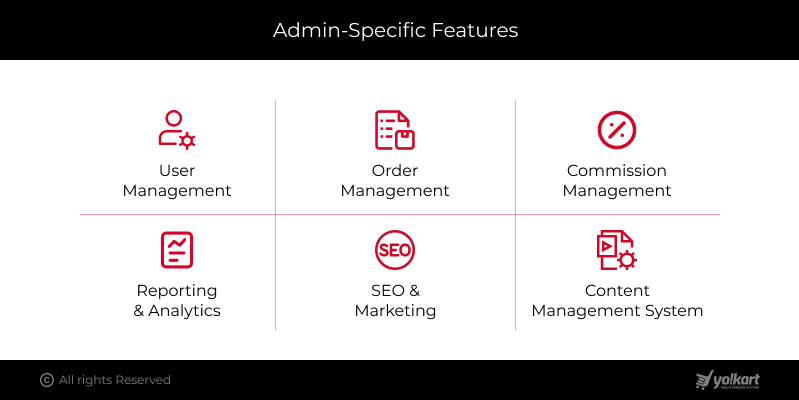
- User management: User management is an option that allows admins to manage the roles of different users including suppliers and buyers. In addition, the admin can also assign a sub-admin role to distribute workloads.
- Revenue/Commission Management: Admins need features to implement and manage multiple revenue streams such as commissions, subscription charges and more.
- Order Management: The order management feature provides complete control over the order-related operations to the admin. They handle everything, including refund and return management.
- Reporting and Analytics: Reporting and analytics in the Admin dashboard provide a complete overview of valuable data and insights of the marketplace.
Whether it’s about the number of users, transactions, tax, commission, or more, the reports showcase everything they need. In addition, by analyzing these data and insights, the admin can plan strategies and grow the marketplace.
- SEO and Marketing: In this highly competitive world, growing businesses require smart strategies, continuous effort and the right tools. SEO and marketing tools enable admins to drive more traffic, engagement and sales organically and through paid campaigns. They plan several marketing
- Content Management System: CMS is another important feature/tool that helps customize the marketplace, enhance user experience and tailor the platform as per the specific requirements without the need for coding expertise. They can easily create, manage, organize, and publish digital content on the marketplace.
How Much Does it Cost to Build an eCommerce Platform Similar to Alibaba?
Deciding on the cost to build a marketplace like Alibaba requires several considerations. The price can vary widely depending on factors such as the approach, technological requirements, features, functionality, integrations and other specific needs or complexity of the marketplace. In short, building a marketplace like Alibaba can cost anywhere between $10,000 – $1,00,000 or more.
However, you can build a B2B marketplace like Alibaba in two popular ways: build from scratch or choose a readymade solution.
Cost to Build an Alibaba-like Marketplace from Scratch
In this approach, you build an Alibaba-like marketplace from the ground up, which requires a significant amount of time, resources and money.
- Cost to Build from Scratch: Anywhere between $50000 – $100000 or more.
- Timeline: 6 to 12 months or more.
Cost to Build a Marketplace like Alibaba Using a Readymade Solution
Choosing a readymade B2B marketplace software can significantly reduce costs and timelines. Suppose you’re building an Alibaba-like eCommerce platform using Yo!Kart B2B, a readymade and dedicated B2B solution. The price can drop unexpectedly from thousands of dollars to a few hundred dollars.
- Cost to Build Using Readymade Solution (Yo!Kart B2B): Starting at $1249 (One-time)
- Timeline: 2 – 4 weeks
| Our Recommendation: Building a B2B marketplace using a readymade solution like Yo!Kart B2B can significantly reduce the cost. What makes it a preferred choice is that it offers a similar level of control and customization flexibility to custom development. |
Build a Marketplace like Alibaba at an Affordable Cost
How to Build a Website or Marketplace Like Alibaba?
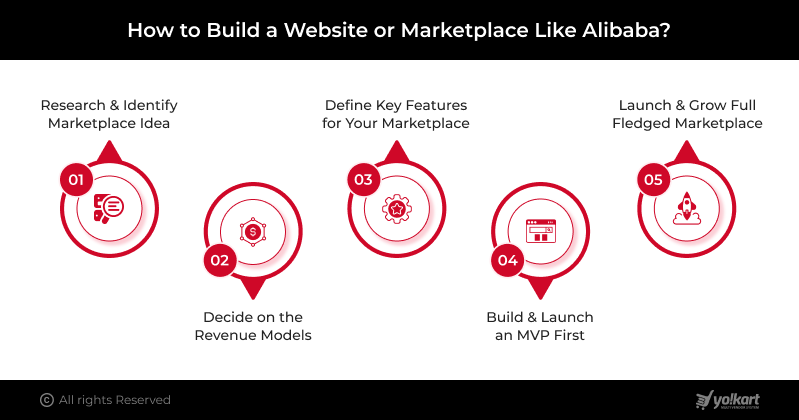
B2B eCommerce has shown substantial growth. According to the International Trade Administration, the global B2B eCommerce market size is expected to reach $36 trillion by 2026. The data indicates it’s the right time for entrepreneurs and startups to take advantage of this ever-growing eCommerce landscape.
If you are planning to build an eCommerce platform like Alibaba, it can be a game-changing decision. At the same time, you need to be careful to avoid potential threats to your business, investment and marketplace idea.
Below are a few time-tested steps suggested by industry experts to help you build a marketplace similar to Alibaba.
Step 1: Research and Identify Marketplace Idea
Alibaba is a dedicated B2B marketplace platform that connects manufacturers, suppliers, and wholesalers with global businesses that want to buy products in bulk at affordable rates. When planning to launch a marketplace like Alibaba, you need to discover a unique idea that can give your marketplace a competitive edge.
Hence, conduct thorough market research, analyze competitors, identify gaps, discover pain points, find an emerging market, understand targeted customers, and define a niche.
Moreover, conduct in-depth market research on Alibaba. It will also help you understand the areas and offerings where Alibaba itself is lacking and its customers are looking for an alternative that can meet their specific needs.
In addition, conducting market research will also give you an idea about the technology, budget and timeline required to build a B2B multi-vendor marketplace like Alibaba.
Step 2: Decide on the Revenue Models (Business Model)
If you want to build a marketplace like Alibaba, it clearly indicates a B2B eCommerce platform. However, when it comes to generating revenue for your eCommerce business, careful consideration is required. You can not simply decide on revenue generation streams that others are following.
Every business idea is unique. Hence, it requires a distinct approach to its monetization model considering the target audience, transaction type, users’ journey and more. Deduce with the revenue model that best suits your marketplace and its audience.
However, below are a few well-known revenue models marketplaces generate revenue from:
- Commission on Each Sale
- Subscriptions/Membership Fees
- Product Listing Fees
- PPC and Third-party Advertising
- Freemium Services
- Leads fees
You can choose any of the following or can implement a unique money-making idea that can help your business stand ahead and grow.
Step 3: Define Key Features for Your Marketplace
Operating a multi-vendor marketplace like Alibaba requires a comprehensive set of features and functionality to ensure seamless transactions on the platform. You need to define all the necessary features, functionality and services considering all the marketplace participants, their roles, operations and processes. The features listed below are critical when building a multi-vendor marketplace like Alibaba:
Features for Buyers:
- Easy Sign-up and Registration
- Search and Filter
- Add to Cart:
- Request for Quote (RFQ)
- Direct Communication
- Secure Payment:
- Trade Assurance:
- Product Comparison Tools:
- Order Tracking:
- Review and Ratings
Features for Suppliers
- Supplier Registration
- Digital Storefronts
- Product Listing
- Minimum Order Quantity
- Dynamic Pricing
- Direct Communication
- Order Management
- Advertisement
- Analytics and Reporting
Features for Admin
- User management
- Order Management
- Shipping Management
- Reporting and Analytics
- SEO and Marketing
- Content Management System
- Tax Management
- Ad Management Tool
- Dispute Handling/Customer Support
In addition to the above features, you can incorporate features and functionalities required specifically according to your business requirements.
Step 4: Build and Launch an MVP First
Building an MVP is a great way to validate your marketplace idea with a minimum investment. MVP (Minimum Viable Product) is the basic version of your full-fledged marketplace. It’s primarily designed to validate an idea, understand the user’s journey, and identify improvement areas.
It supports all the necessary features and functionality required to complete transactions for all user types. It significantly reduces the cost and time and helps entrepreneurs and business owners avoid potential threats to their ideas and investments.
An MVP is primarily intended to introduce its early adopters who explore and provide valuable feedback. Businesses implement feedback in order to improve the final product. MVPs are generally scalable platforms that can be expanded and grown as per the specific requirements. Ultimately, it contributes to saving time, money and resources alongside validating the marketplace idea.
Yo!Kart can be one of the best turnkey solutions to introduce your marketplace MVP, like Alibaba. It helps reduce the money and time required to launch a marketplace.
Step 5: Launch and Grow Full-Fledged Marketplace
In the final step, if you are satisfied with your marketplace MVP results, you can expand it into a full-fledged marketplace and launch. However, the job is not done yet. Operating a multi-vendor marketplace similar to Alibaba or any other requires a continuous effort.
From onboarding the maximum number of vendors to attracting more buyers and implementing new features to incorporating trends, your active participation is critical. Moreover, marketing and advertising are also one of those critical requirements that help you gain a competitive edge.
However, being a marketplace operator, you should always keep an eye on the users’ feedback, trends, and competitors to stay relevant, engaged and competitive.
Build a Multi-Vendor Marketplace Like Alibaba at an Affordable Cost
Yo!Kart is a white-label multi-vendor marketplace software. This readymade solution is primarily focused on providing entrepreneurs with a solution that enables them to build and launch a multi-vendor marketplace at an affordable price. It comes with all the necessary features and functionality required to operate an eCommerce platform.
If you are one of those entrepreneurs who is looking for a dedicated B2B marketplace software to build a platform like Alibaba, Yo!Kart B2B is right there for you. It’s a dedicated B2B multi-vendor marketplace software that supports B2B specific features and allows businesses of all sizes to trade seamlessly.
Moreover, choosing Yo!Kart as your marketplace software offers more than just a digital platform. The solution is fully customizable and scalable. Hence, you can tailor the platform to your specific needs and expand your eCommerce business without worrying about infrastructure and additional expenses related to expansion.
In addition, Yo!Kart’s source code ownership and self-hosted nature offer complete control over your marketplace and data, making it an ideal and better alternative to building a marketplace from scratch.
Launch a Fully Customizable and Scalable B2B Marketplace with Yo!Kart
Final Thought
In this informative guide on how to create a website like Alibaba, you have gone through every single detail about Alibaba. Starting from its history to understanding its business model, exploring Alibaba’s subsidiaries, features, and decoding its multiple and diversified revenue models.
In short, as an entrepreneur, you can collect all the necessary information about Alibaba that one should be aware of when building a B2B multi-vendor marketplace similar to it, including a step-by-step guide, costs and approaches to build.
I’m sure that if you are an entrepreneur planning to build a multi-vendor marketplace similar to Alibaba, you’ll consider YoKart, one of the most affordable and best readymade multi-vendor marketplace solutions.
FAQs
Q 1. Does Alibaba charge a commission on sales?
Ans. No, Alibaba doesn’t charge commission from sellers on sales. However, it charges payment processing fees on payments that take place through Alibaba.
Q 2. What are the revenue channels of Alibaba?
Ans. Alibaba generates revenue from other revenue streams like subscription charges, revenue from eCommerce subsidiaries, shipping services, payment and other financial services.
Q 3. Can I build an Alibaba-like B2B multi-vendor marketplace with Yo!Kart?
Ans. Yes, you can build an Alibaba-like B2B multi-vendor marketplace with Yo!Kart easily. Yo!Kart is a 100% white-label and readymade eCommerce solution that allows entrepreneurs and businesses to build their own eCommerce platform.
Q 4. Is Alibaba a B2B multi-vendor marketplace?
Ans. Yes, Alibaba is one of the top B2B multi-vendor marketplaces that enables businesses to trade in bulk online.
Q 5. Does Yo!Kart charge a recurring fee?
Ans. No, Yo!Kart doesn’t change any recurring fees or transactional charges. The solution is available at a one-time payment option. You can get a lifetime license to use Yo!Kart by paying once in a lifetime.
Q 6. How many buyers, sellers, listings and product categories are there on Alibaba?
Ans. Alibaba has over 40 million active B2B buyers, over 200K suppliers, 200 million+ listings and 5,900 product categories according to Alibaba.
Q 7. Is Alibaba a global B2B eCommerce platform?
Ans. Yes, Alibaba is a global B2B eCommerce platform. It operates across 200+ countries.
Q 8. How much does it cost to build a multi-vendor marketplace like Alibaba with Yo!Kart?
Ans. Building a multi-vendor marketplace similar to Alibaba starts at $1249 one-time. However, the final cost varies depending on your specific requirements.
Q 9. What are the subsidiaries of Alibaba Group?
Ans. AliExpress, 1688.com, Tmall, Juhuasuan, Lazada, and Taobao are popular eCommerce subsidiaries of Alibaba. Other than these, eCommerce platforms Alipay, Alimama, Alitrip, Aliyun and many other Alibaba subsidiaries are also contributing to its growth and expansion.
Q 10. Does Yo!Kart offer source code ownership?
Ans. Yes, Yo!Kart offers source code ownership, proving you have complete control over the platform.
The post How to Build a Website Like Alibaba: Features, Costs and Monetization Strategies appeared first on YoKart Blog.
]]>The post Invisible Commerce Emerging as a Dominant Force in 2026 eCommerce Market appeared first on YoKart Blog.
]]>Invisible Commerce is poised to redefine customers’ online shopping journey in 2026. Highlight for entrepreneurs and eCommerce business operators seeking emerging technology to thrive in the industry.
Today’s online is more than just completing transactions. eCommerce businesses are focusing on shoppers’ experience rather than just selling products or services. They offer more through technological advancements, content, graphics, videos and much more. The ultimate goal is to enhance the overall shopping experience and make the visitors feel something unique.
Earlier, these were the strategies that delivered results. But today, these offerings are not exciting customers because each business is offering the same and sounds similar.
What next?
Invisible Commerce: The future of eCommerce in 2026. The trend is ready to set a new era for online shoppers. Online shopping will no longer involve exploring catalogs, following steps and completing transactions. But it will be a seamless journey in which customers will get products delivered without making purchases themselves. Customers will be able to automate repeat purchases without manual effort.
A significant number of eCommerce platforms are investing in this technology. According to several articles, Invisible commerce is likely to dominate the eCommerce market in 2026. Moreover, by 2030, customers can even expect to receive the products even before realizing they need to buy them.
Source link:
The post Invisible Commerce Emerging as a Dominant Force in 2026 eCommerce Market appeared first on YoKart Blog.
]]>The post The Rise of Dynamic Pricing in Retail eCommerce appeared first on YoKart Blog.
]]>A significant percentage of customers search for products across multiple platforms and compare pricing to grab the best deal. What if your business always finds the best deal for them? That’s where the role of the dynamic pricing feature begins.
The dynamic pricing is revolutionizing eCommerce pricing strategies. Earlier, discount was the game plan to boost sales. However, today the strategy has been transformed to AI-driven dynamic pricing. This emerging feature enables real-time responsiveness, helping businesses drive maximum sales and increase profits.
World’s leading brands like Amazon, Uber, Airbnb, and even Google implement dynamic pricing, one of the effective pricing strategies of their businesses. Booking cabs on Uber or flight tickets on any their-part platforms can be popular examples of dynamic pricing, where prices vary significantly depending on several factors.
According to several sources, AI-powered dynamic pricing can boost sales up to 25%, making it an effective technology in the eCommerce landscape. A large number of multi-vendor marketplaces and online stores are leveraging technological advancements to analyze real-time data, such as competitors’ pricing, inventory levels, market demand, and shopper behaviour, to showcase optimized product pricing.
By implementing AI-powered dynamic pricing into an eCommerce platform, businesses are able to automate pricing and adapt to changing market conditions in real time. They are focusing on other aspects of business growth rather than investing time to analyze data, decide on a pricing strategy and manually apply it in their sales channels.
Source links:
The post The Rise of Dynamic Pricing in Retail eCommerce appeared first on YoKart Blog.
]]>The post The Global eCommerce BPNL (Buy Now Pay Later) Market is Forecasted to Reach $86.2 billion by 2034 appeared first on YoKart Blog.
]]>According to market.us, the global eCommerce Buy Now Pay Later Market generated $5.2 billion in 2024. The prediction indicates it will record $6.9 billion in 2025 and will reach $86.2 billion by 2034, growing at a CAGR of 32.4%.

The expansion of eCommerce, the implementation of BPNL into platforms, and the adoption of BPNL by an increased number of customers are key growth drivers for it. North America leads the buy now pay later market with a share of over 30%.
Buy Now Pay Later (BNPL) services provide greater financial flexibility. It enables customers to make purchases without the need for immediate payment. A significant number of multi-vendor marketplaces and online stores are set to offer BPNL (Buy Now Pay Later) options.
Moreover, the enactment of interest-free installment plans is gaining popularity, boosting its adoption rate among customers. This approach will ease the burden of higher upfront investment, enabling them to pay later at their convenience.
The top players in the Buy Now Pay Later market include Afterpay, PayPal Holdings Inc., Affirm Holding Inc., Klarna Bank AB, Splitit, Sezzle, Perpay Inc., and others.
Source links:
The post The Global eCommerce BPNL (Buy Now Pay Later) Market is Forecasted to Reach $86.2 billion by 2034 appeared first on YoKart Blog.
]]>The post How Etsy, Amazon & Temu Grew Their Marketplace Business: Success Story, Business & Revenue Model Explained appeared first on YoKart Blog.
]]>Entrepreneurs and business owners seeking to establish their presence in the ever-growing eCommerce landscape can learn valuable lessons from giants like Etsy, Amazon, and Temu. They can explore what makes digital infrastructure a leading eCommerce platform and how they have grown their marketplace businesses.
From starting as an online store to becoming a marketplace giant, operating a niche-based marketplace to discovering an unconventional path to dominance, and following distinct business models to driving marketplace success, one can explore everything about how Etsy, Amazon & Temu grew their marketplace businesses.
However, before we dive deep into this craft to explore how they become so popular and successful, let’s take a look at some stats of the eCommerce industry today.
According to Grand View Research, the global eCommerce market size is projected to grow at a CAGR of 18.9% from 2024 to reach $83.26 by 2030. Especially, the growth of multi-vendor online marketplaces has transformed the eCommerce landscape.
Table of Contents
- The Marketplace Blueprints of Etsy, Amazon, and Temu
- What is Etsy Famous For? Definition, History and Success
- What is Amazon Known For? Definition, History and Success
- What is Temu Known For? Definition, History and Success
- The Distinct Growth Strategies of Etsy, Amazon, and Temu
- Decoding the Revenue Models
- How to Build a Marketplace Like Etsy, Amazon or Temu?
- Build a Marketplace Like Etsy, Amazon or Temu with Yo!Kart
- Advantages of Choosing Yo!Kart
- Final Thought
- FAQs
The Marketplace Blueprints of Etsy, Amazon, and Temu
Etsy, Amazon and Temu are among those global leaders that dominate the eCommerce world. Etsy is known for selling unique and handmade items. Amazon, on the other hand, is popular for selling everything customers need and Temu is one of those marketplaces offering consumer goods at extremely low prices. All three marketplaces above are an inspiration for entrepreneurs and business owners. Let’s explore them in detail:
What is Etsy Famous For? Definition, History and Success
Etsy is a niche-based online marketplace known for selling handmade, unique and creative and vintage goods. The marketplace primarily connects independent artisans, craftsmen, and collectors to sell a wide variety of innovative products. Etsy targets customers specifically looking for gifts, collectibles, and goods with a personalized touch.
Initially, Etsy was started as a small platform. However, later it became a global community for artisans and craftsmen. Today, Etsy is one of the popular names among multi-vendor marketplaces with millions of active buyers and sellers.
| Founded Year | 2005 |
| Head Quarters | Brooklyn, New York |
| Founders | Rob Kalin, Jared Tarbell, Haim Schoppik, Chris Maguire |
| Marketplace Type | Multi-Vendor, Peer-to-Peer |
| Industry | eCommerce |
| Subsidiaries | Depop and Reverb.com |
| Number of Active Buyers | 96.6 Million (2024) |
| Number of Active Sellers | 8.1 Million (2024) |
| Number of Items Listed | No Data Available |
| App Downloads | 22.1 Million Times (2024) |
| Revenue Generated | $2.8 Billion |
| Net Income | 303 Million (2024) |
Data Source: Business of Apps
Etsy’s Milestones and Achievements (Success History)
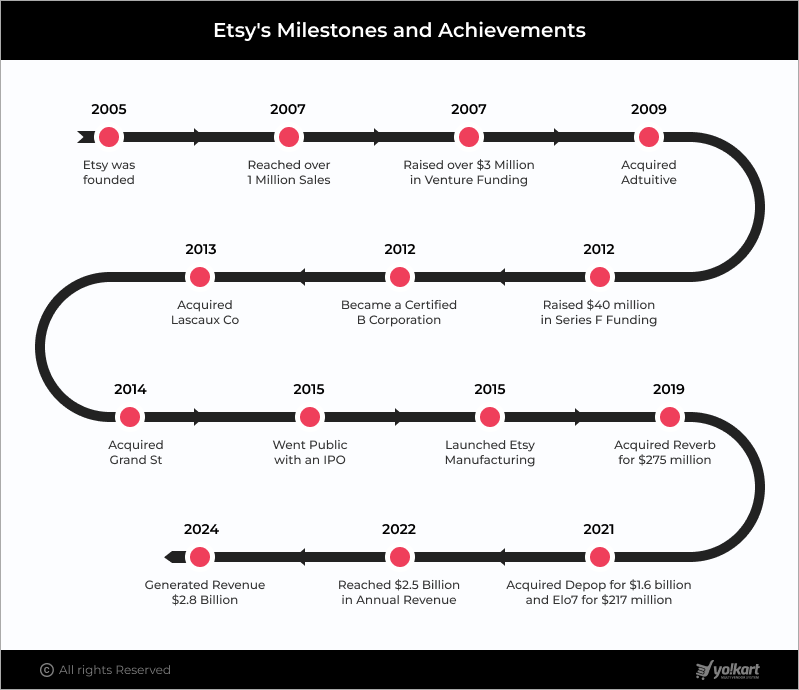
- 2005: Etsy was founded
- 2007: Reached over 1 Million Sales
- 2007: Raised over $3 Million in Venture Funding
- 2009: Acquired Adtuitive
- 2012: Raised $40 million in Series F Funding
- 2012: Became a Certified B Corporation
- 2013: Acquired Lascaux Co
- 2014: Acquired Grand St
- 2015: Went Public with an IPO
- 2015: Launched Etsy Manufacturing
- 2019: Acquired Reverb for $275 million
- 2021: Acquired Depop for $1.6 billion and Elo7 for $217 million
- 2022: Reached $2.5 Billion in Annual Revenue
- 2024: Generated Revenue $2.8 Billion
Success Drivers for Etsy
- Etsy established its unique identity by building a platform to buy and sell unique, creative and handmade items.
- It boasts a strong community of buyers and sellers who want to buy or sell unique, handmade, or vintage items.
- Etsy stands out from the competition by offering unique items.
- It empowers sellers who are artisans, craftsmen and creators. Its seller-centric approach is also one of Etsy’s success drivers.
- Etsy focuses on quality rather than quantity. It helps the platform build trust and brand authenticity among customers.
- The platform offers several tools and marketing features enabling sellers to generate more sales.
Build an Etsy-Like Peer-to-Peer Marketplace
What is Amazon Known For? Definition, History and Success
When it comes to multi-vendor marketplaces, Amazon is probably the first name that comes to mind. Amazon is the global eCommerce giant and has been leading the industry for years. Apart from offering a wide range of products from diverse categories, the platform also provides a wide range of services.
Officially, Amazon was started as an online bookselling platform and then became the world’s largest multi-vendor marketplace selling almost everything customers can look for. The synonym of Amazon is the Everything Store. It sells almost everything.
| Founded Year | 1994 |
| Head Quarters | Bellevue, Washington |
| Founders | Jeff Bezos |
| Marketplace Type | Multi-Vendor, B2C and B2B |
| Industry | eCommerce |
| Subsidiaries | Amazon owns over 100 subsidiaries, including Amazon Web Services, Audible, IMDb, Amazon Robotics, Diapers.com, Goodreads, One Medical, Shopbop, Teachstreet, Twitch, Zappos and more |
| Number of Active Buyers | 310 Million (2025) |
| Number of Active Sellers | 2+ Million (2025) |
| Number of Items Listed | 600+ Million |
| App Downloads | No Data Available |
| Revenue Generated | $638 Billion (2024) |
| Net Income | $59.2 Billion (2024) |
Data Source: Business of Apps
Amazon’s Milestones and Achievements (Success History)
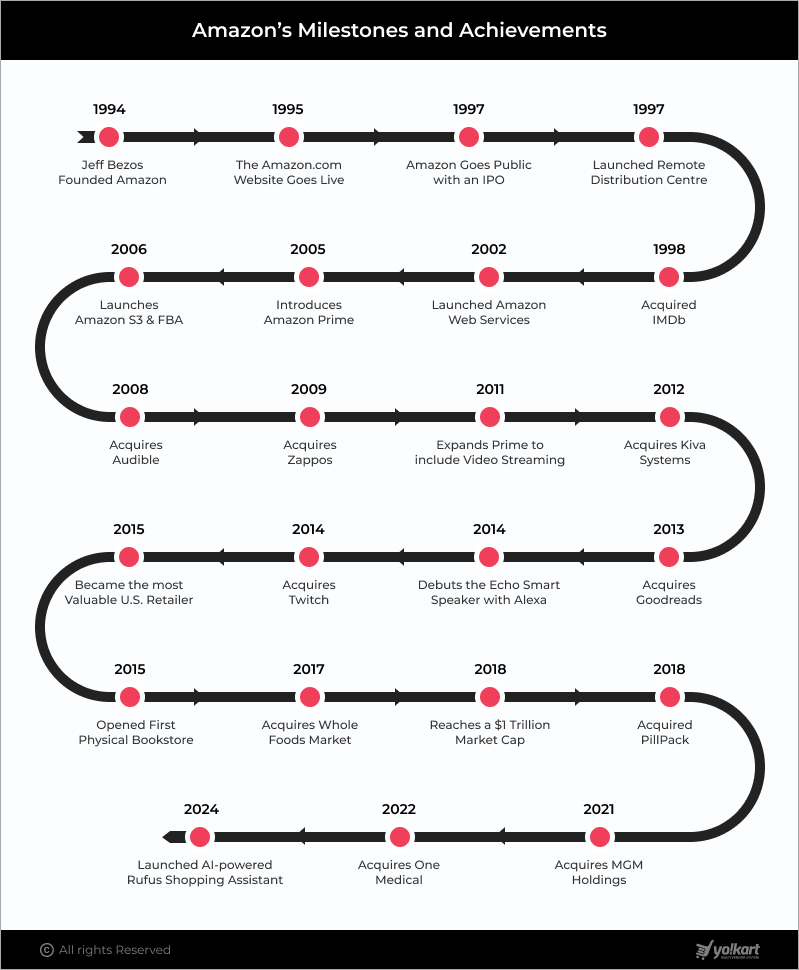
- 1994: Jeff Bezos Founded Amazon
- 1995: The Amazon.com Website Goes Live
- 1997: Amazon Goes Public with an IPO
- 1997: Launched Remote Distribution Centre
- 1998: Acquired IMDb
- 2002: Launched Amazon Web Services (AWS)
- 2005: Introduces Amazon Prime
- 2006: Launches Amazon S3 and FBA
- 2008: Acquires Audible
- 2009: Acquires Zappos
- 2011: Expands Prime to include Video Streaming
- 2012: Acquires Kiva Systems (now Amazon Robotics)
- 2013: Acquires Goodreads
- 2014: Debuts the Echo Smart Speaker with Alexa
- 2014: Acquires Twitch
- 2015: Became the most Valuable U.S. Retailer by Market Cap
- 2015: Opened First Physical Bookstore
- 2017: Acquires Whole Foods Market
- 2018: Reaches a $1 Trillion Market Cap
- 2018: Acquired PillPack
- 2021: Acquires MGM Holdings
- 2022: Acquires One Medical
- 2024: Launched AI-powered Rufus Shopping Assistant
Success Drivers for Amazon
- Amazon’s technological advancements are one of the significant contributors to its success. These advancements include personalized recommendations, AI, robotic and voice assistants like Alexa.
- A wide range of product offerings attracts customers and drives huge traffic on the platform.
- Expansion of services like Amazon Web Services (AWS) and music streaming, video streaming has also played a role in driving success for Amazon.
Launch a Feature-rich Multi-Vendor Marketplace Similar to Amazon
What is Temu Known For? Definition, History and Success
Temu is one of the fastest-growing marketplaces. Since its launch in 2022, the marketplace has overtaken eBay and become the second most visited eCommerce platform. The platform is operated by PPD Holdings, also famous for operating a popular eCommerce platform, Pinduoduo
Temu is known for selling products at great discounts and lower prices. The platform directly ships products from the manufacturers and independent sellers to avoid additional costs and reduce shipping time. Several marketplaces in the U.S., including Etsy, Wayfair and others have experienced a decline in Gross Merchandise Value due to Temu. It won’t be surprising to say that Temu has shown exceptional growth in a short period of time.
| Founded Year | 2022 |
| Head Quarters | Boston, Massachusetts |
| Founders | Colin Huang |
| Marketplace Type | Multi-Vendor, Business-to-Consumer |
| Industry | eCommerce |
| Subsidiaries | Temu operates alongside PDD Holdings’ other major platform, Pinduoduo |
| Number of Active Buyers | 292 Million (2025) |
| Number of Active Sellers | Temu has 100,000 sellers in the U.S. and 200,000 international merchants |
| Number of Items Listed | 10 Million |
| App Downloads | 42 Million |
| Revenue Generated | Not Released |
| Net Income | Not Released |
Source: AMZScout
Temu’s Milestones and Achievements (Success History)
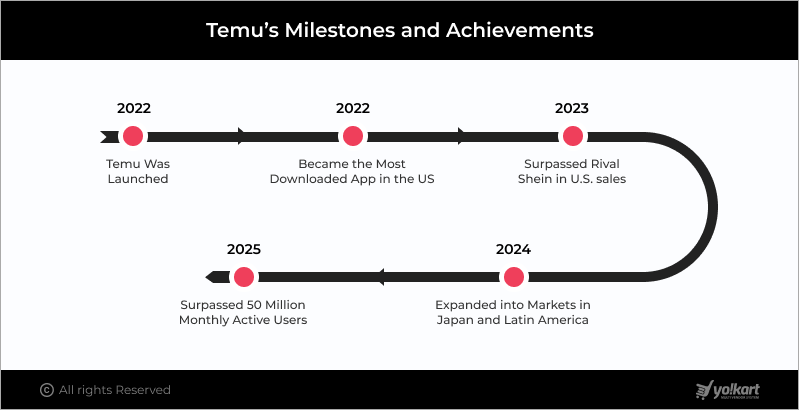
- 2022: Temu Was Launched
- 2022: Became the Most Downloaded App in the US
- 2023: Surpassed Rival Shein in U.S. sales
- 2024: Expanded into Markets in Japan and Latin America
- 2025: Surpassed 50 Million Monthly Active Users
Success Drivers for Temu
- Offer products at the lowest possible prices by ensuring delivery directly from manufacturers.
- Temu runs strategic and aggressive marketing campaigns. Its “Shop Like a Billionaire” campaign helps Temu gain global attention.
- With advanced data-driven supply chain management, Temu also offers low-cost international shipping.
- Temu’s social shopping option also enhances the overall shopping experience and keeps users coming back.
Looking for a Readymade eCommerce Solution to Build a Platform like Temu?
The Distinct Growth Strategies of Etsy, Amazon, and Temu
An effective business model is the key to driving success for your marketplace. No matter whether you are operating a B2B, B2C or any other. To thrive, you need to stand out from the competition. However, if you are one of those entrepreneurs building a marketplace, exploring distinct business models of Etsy, Amazon and Temu can help you define your business model and plan effective growth strategies.
Business Model of Etsy (How Does Etsy Operate)
Etsy operates a peer-to-peer (P2P) marketplace. It connects small manufacturers or individual artisans, craftsmen and creators with customers seeking handmade, unique, and creative products. Etsy operates a niche marketplace targeting customers with specific needs.
Sellers on Etsy list their products, including handmade, and unique and vintage items and set their prices themselves. The platform allows sellers to list as many products as they want without any restrictions.
On the other hand, buyers can browse and proceed to checkout from the comfort of their home.
However, Etsy itself takes care of the operational aspects, allowing sellers to sell products globally without worrying about shipping and other management. In addition, customer service, marketing, promotions, maintenance and seller education are also those areas that Etsy takes care of.
Etsy’s Business Model Canvas:
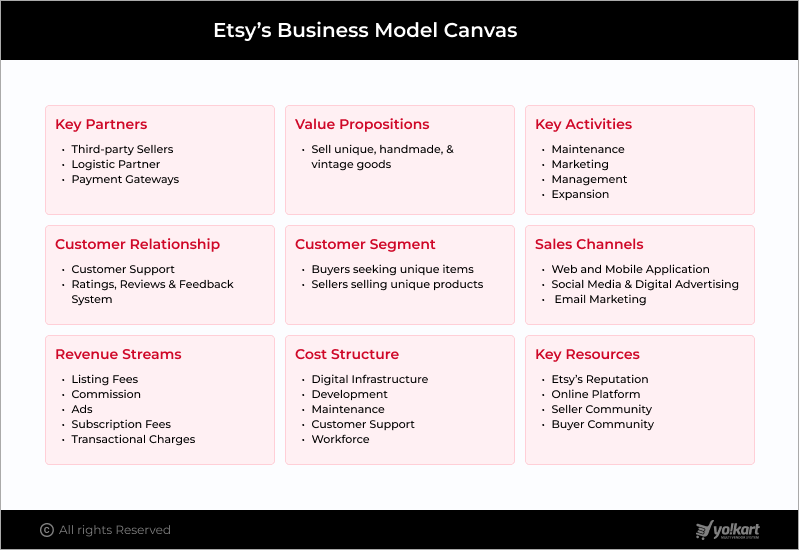
Key Partners
- Third-party Sellers
- Logistic Partner
- Payment Gateways
Value Propositions
- Sell unique, handmade, and vintage goods
Key Activities
- Maintenance
- Marketing
- Management
- Expansion
Customer Relationship
- Customer Support
- Ratings, Reviews and Feedback System
Customer Segment
- Buyers seeking unique items
- Sellers selling unique products
Sales Channels
- Web and Mobile Application
- Social Media and Digital Advertising
- Email Marketing
Revenue Streams
- Listing Fees
- Commission
- Ads
- Subscription Fees
- Transactional Charges
Cost Structure
- Digital Infrastructure
- Development
- Maintenance
- Customer Support
- Workforce
Key Resources
- Etsy’s Reputation
- Online Platform
- Seller Community
- Buyer Community
Suggested Read: How does Etsy make money?
Business Model of Amazon (How Does Amazon Operate)
Amazon is a leading online marketplace known for its diversified business models and a wide range of offerings. It operates B2C (Business-to-Consumer-Customer) and B2B (Business-to-Business) marketplaces. Alongside, it offers products and services, Amazon also offers cloud computing services (AWS – Amazon Web Services).
The marketplace allows third-party sellers to list and sell products. Amazon also acts as a retailer for its own brands. Sells its own products through numerous private-label brands like AmazonBasics, Amazon Essentials and AmazonFresh.
Buyers on Amazon browse a wide range of products from its extensive catalogs, place orders and get them delivered at their doorsteps. In addition, developers also leverage Amazon through its Amazon Web Services (AWS) cloud platform.
Amazon’s Business Model Canvas:
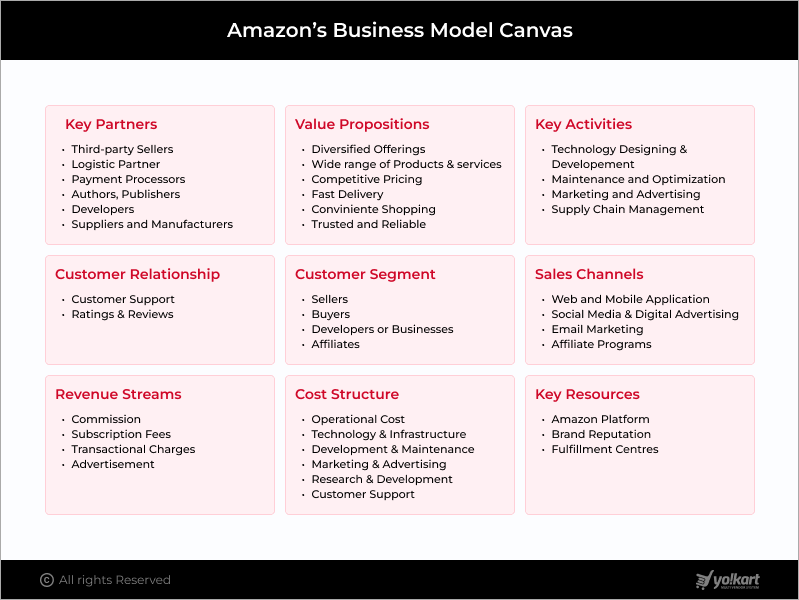
Key Partners
- Third-party Sellers
- Logistic Partner
- Payment Processors
- Authors
- Publishers
- Developers
- Suppliers and Manufacturers
Value Propositions
- Diversified Offerings
- A Wide range of Products and services
- Competitive Pricing
- Fast Delivery
- Conviniente Shopping
- Trusted and Reliable
Key Activities
- Technology Designing and Developement
- Maintenance and Optimization
- Marketing and Advertising
- Supply Chain Management
Customer Relationship
- Customer Support
- Ratings and Reviews
Customer Segment
- Sellers
- Buyers
- Developers or Businesses
- Affiliates
Channels
- Web and Mobile Application
- Social Media and Digital Advertising
- Email Marketing
- Affiliate Programs
Revenue Streams
- Commission
- Subscription Fees
- Transactional Charges
- Advertisement
Cost Structure
- Operational Cost
- Technology and Infrastructure
- Development and Maintenance
- Marketing and Advertising
- Research and Development
- Customer Support
Key Resources
- Amazon Platform
- Brand Reputation
- Fulfillment Centres
Suggested Read: Amazon Business & Features Guide
Business Model of Temu (How Does Temu Operate)
The unprecedented growth of Temu has left the businesses in shock. Its growth and expansion are all about its business model and strategies. Temu’s user acquisition strategies are the highlights for businesses in the eCommerce world.
Temu’s business model is focused on offering products at surprisingly low cost. The platform targets customers looking for the best deals. Hence, the marketplace is able to attract a large customer base seeking affordability.
Temu bypasses middlemen by connecting sellers directly with Chinese manufacturers and suppliers. The marketplace also enables group buying options for customers to get more discounts on an increased number of orders. In addition, its low shipping rates are also one of the significant competitive advantages, even for small orders.
Temu’s Business Model Canvas:
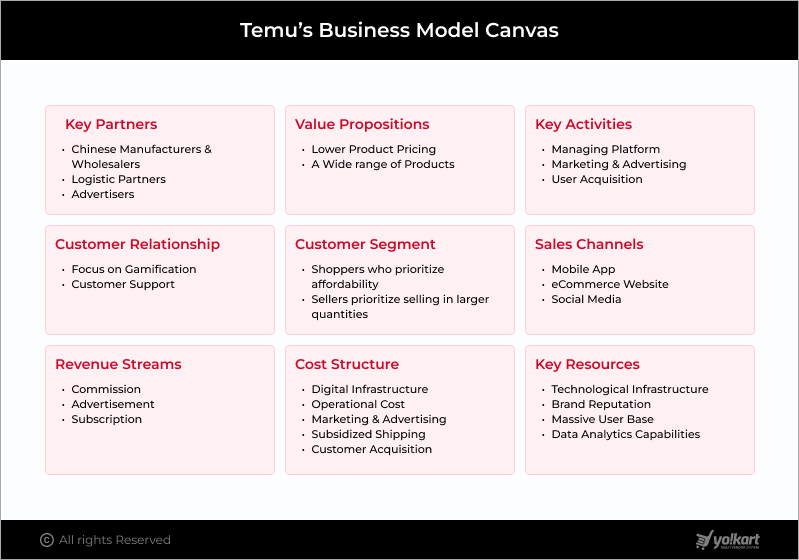
Key Partners
- Chinese Manufacturers and Wholesalers
- Logistic Partners
- Advertisers
Value Propositions
- Lower Product Pricing
- A Wide range of Products
Key Activities
- Managing Platform
- Marketing and Advertising
- User Acquisition
Customer Relationship
- Focus on Gamification
- Customer Support
Customer Segment
- Shoppers who prioritize affordability
- Sellers prioritize selling in larger quantities
Channels
- Mobile App
- eCommerce Website
- Social Media
Revenue Streams
- Commission
- Advertisement
- Subscription
Cost Structure
- Digital Infrastructure
- Operational Cost
- Marketing and Advertising
- Subsidized Shipping
- Customer Acquisition
Key Resources
- Technological Infrastructure
- Brand Reputation
- Massive User Base
- Data Analytics Capabilities
Launch a Thriving eCommerce Platform Like Temu
Decoding the Revenue Models
Marketplaces generate revenue via multiple revenue channels. Similarly, Etsy, Amazon and Temu also generate revenue via several revenue streams. Let’s explore the revenue model of each one of these marketplaces below:
Revenue Model of Etsy: How Does Etsy Make Money?
Etsy is known for its unique revenue model. It generates revenue from multiple channels. Below are a few major revenue generation sources for Etsy.
- Listing Fee: Etsy charges a listing fee of $0.20 from sellers to list the product on the platform. Listing fee is non-refundable and it is incurred for each listing.
- Transaction Fee: It charges 6.5% of the total order amount as a transaction fee on each item sold on the platform. Etsy deducts the percentage from the final amount initiated, including shipping cost and any other associated costs.
- Payment Processing Fees: Etsy also charges a fee for payment processing. However, the processing fee may vary depending on the location of the bank. The fee is subject to VAT.
| Please note that the payment processing fee on Etsy is separate from the transactional charges. |
- Advertisement and Promotional Charges: These revenue channels are another revenue source for Etsy. They are primarily of two types: on-site, in which sellers pay a certain amount to increase product visibility. The second one is Off-Site: in this revenue model, Etsy runs ads on external sites and sellers pay charges if a sale is made.
- Subscription Plans: Etsy generates revenue through its subscription plans. There are three subscription plans available on Etsy. One is Etsy Plus, another is Pattern and the last one is Insider.
1. Etsy Plus: Etsy Plus subscription enables access to advanced seller tools, services and perks. It charges a recurring fee of $10.
- 15 credits for creating or renewing listings.
- $5 in Etsy Ads credits each month.
- Access to advanced shop customization tools
- Restock notifications for customers.
- Discounts to custom web domains through Etsy’s third-party partner, Hover.
- Free access to Adobe Express Premium for 6 months, worth $60 on average.
2. Pattern: To subscribe to Pattern sellers on Etsy, sellers need to pay a monthly recurring fee of $15. However, the subscription comes with a 30-day free trial. This subscription allows Etsy sellers to create their own custom website using its listing.
3. Insider: It’s an invite-only closed beta membership program for buyers in the United States. Invited buyers get the option to purchase a seasonal or annual membership. These memberships include benefits like Free US domestic shipping, a birthday bonus, access to special deals and early access to items.
Revenue Model of Amazon: How Does Amazon Make Money?
Amazon is one of those eCommerce businesses shown year-on-year growth and profitability. The reasons are its wide offerings and diversified revenue channels. However, when it comes to how Amazon makes money, the most predicted answer is through retail sales, primarily contributed by third-party sellers.
But that’s not the only way for Amazon to make money. Though it generates revenue from multiple channels. If you are diving into the eCommerce world, knowing Amazon’s revenue can help you choose smart revenue streams. Let’s take a look at each one of these revenue streams carefully:
- Margins on Product Sales: Amazon generated revenue by selling products directly as a retailer. It sells its own products and makes money from the profit margins.
- Commission on Each Sale: Third-party sellers pay a commission between 5% to 45% varying by product categories, on each sale made on the platform.
- Fulfillment by Amazon (FBA): FBA is an order fulfillment program by Amazon. Sellers outsource their order fulfillment to Amazon and pay charges for it. These services include warehousing, order packing, picking, shipping and delivery.
- Subscription Plans: Amazon also makes money through its subscription plans. It charges a recurring fee monthly or annually from its subscribers to provide access to various premium services like free shipping, early access to sales, video streaming, music and more.
However, the charges may vary depending on the subscription plan you choose. These plans may include Amazon Prime, Prime Shipping, Prime Video, Amazon Fresh, Music Unlimited, Amazon Fresh and more.
- AWS (Amazon Web Services): AWS is one of the major revenue channels for Amazon. This promising revenue stream is responsible for more than half of the profitability since 2014. It provides cloud computing services to companies to scale up their IT operations at a much lower price than competitors are offering. AWS is one of the major players in cloud computing today.
- Advertisement and Sponsored Ads: A significant percentage of Amazon’s revenue comes from advertising and sponsored Ads. Reported $56 billion in advertising revenue in 2024. Today, Amazon is the third-largest digital company in the world after Google and Meta.
Businesses pay to increase their products’ visibility on the first page and in the search results. Additionally, Amazon also enables video ads on streaming services like Prime Video, Fire TV, Twitch and more.
Revenue Model of Temu: How Does Temu Make Money?
Temu’s rapid growth is not unnoticed by eCommerce giants. The marketplace is forcing established industry giants to innovate. However, when it comes to revenue generation, Temu generates income through multiple streams, including sales commissions, advertising, affiliate commissions, data monetization, and more. Let’s explore the revenue model of Temu Below:
- Commission: Temu charges a certain percentage on each sale from sellers. However, the commission percentage is not clearly defined or mentioned officially. Yet you can assure it should be very little if you align it with the value proposition of Temu.
- Advertising: Similar to marketplaces like Amazon and Etsy, Temu also enables merchants to promote their products by improving their visibility on the platform and in search results. Merchants pay charges for renting ad space and featured listings.
- Logistics Services: Logistics services are another revenue-generating source for Temu. It charges from vendors for services such as order fulfillment, storage, shipping and more.
- Affiliate Programs: An indirect way to generate revenue for Temu. Temu incentivises affiliates and pays commissions on each sale made using affiliate links. In return, Temu generates more sales, ultimately contributing to its revenue.
- Subscription Fee: Temu also generates revenue from its subscription plan called Temu Circle. It charges a monthly recurring fee of around $9.99. The subscription plan enables members to receive perks such as credit back on purchases, gifts, pay-later option and more.
| Note: Temu remains an unprofitable marketplace due to several positive reasons. At the same time, experts predict that losses may be minimal or can be turned into profit if its user acquisition and sales growth continue. |
Explore The Best eCommerce Solution Supporting Multiple Revenue Streams
How to Build a Marketplace Like Etsy, Amazon or Temu?
Building a marketplace like Etsy, Amazon or Temu can be overwhelming. However, at the same time, the journey can be easy too if you follow the right steps. If you are one of those entrepreneurs or business owners who want to build a marketplace like Etsy, Amazon, Temu or any other, you can follow the steps below:
Step 1: Research and Define Requirements
Every business requires something unique to stand out from the competition. Whether it’s Etsy, Amazon or Temu, each of these marketplaces operates with distinct offerings. Their success lies in what’s unique they have introduced to the industry. Similarly, your marketplace also needs to be exceptional if you want your business to thrive.
To do so, you need to conduct thorough market research. Below are some critical considerations to consider when conducting research and defining your marketplace requirements:
- What is your marketplace niche you will be focusing on?
- Who is your target audience?
- Who are your competitors?
- What problem are you trying to solve?
- How much budget is required to build a marketplace that best suits your business model?
Step 2: Define Your Business and Revenue Model
Once you have finalized conducting research and found answers to all the questions mentioned above. Now, the very next step is to define your business and revenue model. On the one hand, defining a business model is crucial for your marketplace operations. On the other hand, deciding on a revenue model is a critical requirement to generate revenue and build a profitable business.
Business model includes:
- Key Partners
- Value Propositions
- Key Activities
- Customer Relationship
- Customer Segment
- Channels
- Cost Structure
- Key Resources
Primary revenue streams marketplaces generate revenue from:
- Commission on sale
- Subscription charges
- Advertisements and sponsored ad fees
- Transactional charges
- Payment processing fee
Step 3: Build a Marketplace
Build a marketplace that perfectly matches specific requirements. You can either develop it from scratch or choose a readymade marketplace software to launch. Building a marketplace from scratch requires significant investment of time, money and resources. On the other hand, launching a marketplace using a readymade solution can reduce investment of time and resources, allowing you to tap into the market quickly.
Initially, you can build a marketplace MVP (minimum Viable Product) instead of building a full-fledged marketplace. It requires less investment, time and resources. Launching an MVP is a great way to validate your idea.
| Yo!Kart is a popular readymade marketplace software that empowers businesses by helping them build a feature-rich marketplace. |
Critical requirements for a marketplace include:
- User-friendly Platform: Building a user-friendly marketplace can help you enhance the overall experience of marketplace users.
- Customizability: Customization is the primary need for any digital platform. A customizable marketplace enables businesses to tailor the platform to their specific requirements.
- Scalability: A marketplace must support growth and expansion. A scalable platform can handle an increased number of users, listings, and transactions without any performance degradation.
- Integration Capabilities: Several features and services required third-party app integrations. A marketplace compatible with integration can let businesses integrate third-party apps or tools based on their needs. These integrations may include integrating payment gateways, order management systems, CRM, ERP, taxation tools, reporting and analytics tools, marketing tools, shipping management tools and more.
- Key Features: A marketplace requires several features and functionalities to be operational for its different users, including Buyer, Seller and Admin:
Key Features for Buyers (Buyer Dashboard)
- Easy signup or social login
- Advanced search and filter
- Add to cart/Wishlist
- Multiple payment gateways
- Easy checkout
- Order tracking
- Ratings and reviews
- Customer support
Key Features for Sellers (Seller Dashboard)
- Easy vendor login
- Listing management
- Inventory Management
- Order management
- Discount and coupon management
- Reporting and analytics
- Marketing and promotion
- Reporting and analytics
Key Features for Admin (Admin Dashboard)
- Vendor management
- Commission management
- Marketing and advertising
- Analytics and reporting
- Tax management
- Refund and return management
- Content management
- Logistics and shipping management
- Payment Management
- User/Role Management
Step 4: Launch Your Marketplace and Grow
The final step is to launch your and grow your marketplace. However, before introducing your marketplace to the real world, you can tick these factors.
Pre-Launch Activities:
- Plan a soft launch: Before you launch your marketplace to the real users, plan a soft launch to a small group of controlled users. In this way, you can test features, functionality and operation and implement updates if required. This process ensures a seamless marketplace experience post-launch.
- Attract Sellers: Before you enable access for buyers, it’s important to attract as many sellers as possible. This will help you expand your offerings and keep buyers engaged. You can announce incentives, offers and more to attract sellers in large numbers.
- Pre-launch Buzz: Create hype via several marketing strategies and activities before you officially launch your marketplace. You can run campaigns, partner with influencers, and do more.
Post-Launch Activities:
- Feedback and Implementation: Always keep track of user experience, marketplace performance and offerings. Gather feedback and keep working on the improvement areas to maintain an enhanced user experience.
- Marketing and Promotions: In today’s competitive world, marketing and promotions are critical activities that you can’t ignore. This will keep you connected with existing users and help you acquire new customers.
- Follow Trends: Following trends is also important to keep your marketplace relevant and thriving. Follow and implement the latest trends to engage users and improve the experience.
Build a Marketplace Like Etsy, Amazon or Temu with Yo!Kart
Planning to launch a marketplace like Etsy, Amazon or Temu, Yo!Kart is the right readymade solution for you. The software supports B2C, C2C, and B2B business models, which makes it an ideal choice for entrepreneurs. It enables all the necessary features and functionality required to complete transactions on the marketplace.
Yo!Kart comes with 20+ pre-integrated payment gateways, shipping management tools, reporting and analytics tools, SEO and marketing tools and more. In addition, it allows you to launch buyer mobile apps for Android and iOS users to offer an enhanced shopping experience. In short, you can gain access to the complete ecosystem by getting started with Yo!Kart.
What attracts entrepreneurs more about Yo!Kart is a self-hosted eCommerce solution that allows you to host your platform on your preferred server, offering complete control and access. Moreover, by getting source ownership with Yo!Kart, you can modify and implement changes at the code level without any restrictions.
Advantages of Choosing Yo!Kart
Yo!Kart brings several advantages alongside a feature-rich eCommerce platform. Let’s explore the advantages of choosing Yo!Kart below:
- White-Label: Yo!Kart is a 100% white-label marketplace software that lets you rebrand it as your own.
- Self-Hosted: It’s a self-hosted software. You can gain complete control over your data and platform by hosting it on your own preferred server.
- One-time Payment: The software is available at a one-time payment model. No recurring payments are needed.
- Lifetime License: Yo!Kart provides a lifetime license to use without any restrictions.
- Source Code Ownership: It provides source code ownership, allowing you to access and modify source code.
- Fully Customizable: You can customize and tailor your marketplace as per your specific requirements.
- Easily Scalable: Yo!Kart supports growth and expansion. The software can easily handle the increased number of users, listings and transactions.
- 20+ Payment Gateways: It comes with 20+ pre-integrated payment gateways and its compatibility with third-party apps integration lets you integrate the gateways or tools you want additionally.
- Multi-Lingual and Multi-Currency Support: By getting started with Yo!Kart, you can cater to the needs of the global market without worrying about barriers like local languages and currencies.
Looking for a Self-Hosted Software to Launch Your Marketplace?
Final Thought
All three industry leaders are an inspiration for entrepreneurs and business owners looking to start their own marketplaces. Etsy has proven how a different business model can help you stand out from the crowd, Amazon has shown how continuous innovations have led the way to lead the industry and on the other side, Temu has demonstrated how strategic planning can help you become one of the fastest-growing marketplaces, surpassing eCommerce giants.
Whether you’re a startup planning to launch your own multi-vendor marketplace or an entrepreneur who wants to explore how Etsy, Amazon and Temu have grown their business, I hope this blog has solved all your queries and provided you with valuable insights.
This craft has decoded how Etsy, Amazon, and Temu built their empires, what their business and revenue models are, and how you can build a marketplace like them using Yo!Kart. In addition, you have also explored their history, achievements, improvements and innovations.
FAQs
Q 1. How long does it take to build a marketplace like Etsy, Amazon or Temu?
Ans: The time to build a marketplace like Etsy, Amazon or Temu can vary depending on the approach you choose. Building a marketplace from scratch can like any one can take anywhere between 6 to 12 months or more. On the other hand, choosing the best readymade marketplace software can let you introduce your marketplace within a month.
Q 2. How much does it cost to build a marketplace like Etsy, Amazon or Temu?
Ans. The cost to build a marketplace like Etsy, Amazon or Temu can vary greatly. Building it from scratch may require an investment of between $100000 – $200000 or more. However, choosing a readymade marketplace software like Yo!Kart can let you launch your marketplace starting at $1249 or more, depending on your personalized needs.
Q 3. How can Yo!Kart help startups reduce marketplace development costs?
Ans. Yo!Kart is a readymade marketplace software that is available at a one-time payment model, starting at $499. It eliminates the need for a higher investment required for building a marketplace from scratch. In addition, Yo!Kart also lets you avoid recurring payments like SaaS-based solutions.
Q 4. How much does Etsy charge to list a product?
Ans. Etsy charges $0.20 for each listing. In addition, selling products on Etsy also requires paying transactional charges, payment processing fees and more.
Q 5. How is Etsy different from Amazon and Temu?
Ans. Etsy is a niche-based marketplace that targets specific customer segments looking for handmade, creative and vintage products. However, Amazon and Temu offer a wide range of products catering to diverse categories.
Q 6. Is Temu not a profitable marketplace?
Ans. After getting a great hype, Temu is still not a profitable marketplace. However, the marketplace is currently focusing on acquiring customers, growth and expansion rather than just focusing on profit.
Q 7. How does Temu manage to sell products at extremely low prices?
Ans. Temu cuts down the middleman cost by directly sourcing products from manufacturers to ensure delivery to the customers. In addition, Temu also manages shipping at a very low cost by partnering with its parent company, Pinduoduo (PPD Holdings). Several sources also indicate that it charges a lower commission compared to other marketplaces. This is how Temu manages to offer products at extremely low prices.
Q 8. How to get started with Yo!Kart?
Ans. You can get started with Yo!Kart in just four easy steps:
- Step 1: Select a package
- Step 2: Set-up and Installation
- Step 3: Customize and onboard sellers
- Step 4: Launch your marketplace
The post How Etsy, Amazon & Temu Grew Their Marketplace Business: Success Story, Business & Revenue Model Explained appeared first on YoKart Blog.
]]>The post Shop Using ChatGPT: Walmart’s Partnership with OpenAI to Enable an AI-First Shopping Experience appeared first on YoKart Blog.
]]>Are Technological Advancements changing the future of multi-vendor marketplaces and driving growth in online retail sales? It can be true. The integrations of AI in eCommerce and Agentic AI’s partnership with the world’s leading multi-vendor marketplaces are ready to set examples.
Walmart, one of the top multi-vendor marketplaces in the U.S., announced a partnership with OpenAI in October 2025. This strategic partnership will enable Shopper to complete purchases of Walmart’s offerings using ChatGPT without leaving the app.
The AI users will be able to browse and check out Walmart’s offerings while using ChatGPT. For instance, suppose you are a ChatGPT user searching for the best Farhouse Dining Table, along with relevant details, you will get suggested buy options from Walmart. You can complete a purchase using ChatGPT directly without leaving the platform or navigating to Walmart’s website.
This AI-First shopping experience will allow customers to chat and buy products simply by using ChatGPT, and Walmart will handle the rest. The collaboration will bring the change by offering an enjoyable and convenient shopping experience. Moreover, the partnership will help Walmart generate more sales by reaching millions of ChatGPT users.
However, alongside the advantages, data sharing and data management can be a challenge for Walmart, as the platform will share the customer data with OpenAI.
Source links:
The post Shop Using ChatGPT: Walmart’s Partnership with OpenAI to Enable an AI-First Shopping Experience appeared first on YoKart Blog.
]]>