The post Which is the Best Marketplace Software to Launch an Online Marketplace? appeared first on YoKart Blog.
]]>However, while marketplace opportunities are expanding, launching one requires thoughtful planning, a clear strategy, and most importantly, the right marketplace software. Moreover, the software you choose will determine your speed to market, scalability, vendor management workflow, customer experience, operating costs, and more.
This comprehensive blog deep-dives into everything you need to know, including marketplace basics, benefits of white-label marketplace software, top solutions in the market, their comparisons, pricing, and final recommendations for getting started.
Table of Contents
- What Is an Online Marketplace?
- What Is Online Marketplace Software?
- Benefits of Launching an Online Marketplace Using White-Label Marketplace Software
- Top Marketplace Software to Launch an eCommerce Marketplace
- Comparison of the Best Marketplace Software
- Yo!Kart Clients: Case Studies
- Conclusion
- FAQs
What Is an Online Marketplace?
An online marketplace is a digital platform where multiple independent sellers can list, sell, and manage their products or services while the platform owner operates as the mediator between sellers and buyers. Unlike single-vendor eCommerce stores, marketplaces bring together multiple sellers, offering customers more variety, competitive pricing, and a more convenient shopping experience.
Some common marketplace types include:
| Marketplace Type | Examples | Description |
| Product Marketplaces | Amazon, eBay, Etsy, Flipkart | Multi-vendor platforms with large product catalogues |
| Service Marketplaces | Urban Company, Upwork, Fiverr | Platforms connecting professionals with service seekers |
| Rental Marketplaces | Airbnb, Turo | Platforms that enable asset or property sharing |
| B2B Marketplaces | Alibaba, IndiaMART | Marketplaces that facilitate large-scale business-to-business trade |
| Hyperlocal Marketplaces | Food, grocery & pharmacy delivery apps | Location-based platforms offering rapid local delivery |
In every model, the fundamental structure remains:
Vendors supply → Marketplace facilitates → Buyers purchase
The success of this structure relies heavily on how well the software supports vendors’ onboarding, catalogue management, payments, commission rules, logistics, and customer experience.
What Is Online Marketplace Software?
Online marketplace software is a ready-made digital solution that enables entrepreneurs to build and manage multi-vendor platforms without coding everything from scratch. It includes the essential features required for running a marketplace, such as:
- Vendor dashboards
- Catalogue management tools
- Automated commission systems
- Order management
- Shipping integrations
- Payment and payout systems
- Review and rating mechanisms
- Return and dispute workflows
- SEO, analytics, and admin controls
Depending on the type of solution, marketplace software can be:
| SaaS-Based Marketplace Software | Self-Hosted, White-Label Licensed Marketplace Software | Fully Custom Software |
| Hosted and managed by the provider | One-time purchase or lifetime license | Expensive and time-consuming to develop |
| Monthly subscription fees | Full source-code access | Requires a dedicated development team |
| Beginner-friendly, quick setup | Highly customizable | Best for complex, enterprise-level needs |
| Limited customization, no ownership | Better long-term control & scalability | Full freedom but high cost and long timelines |
- Most entrepreneurs start with self-hosted, white-label marketplace software, which provides speed, affordability, and flexibility.
Explore the Right Marketplace Solution for Your Business
Benefits of Launching an Online Marketplace Using White-Label Marketplace Software
Launching an online marketplace with white-label software offers entrepreneurs a strategic advantage by providing a foundation that can be tailored to their unique business vision. This approach allows businesses to focus on growth, branding, and market differentiation while relying on a proven, market-tested technology. Thus, it’s an ideal way to enter the marketplace industry with flexibility and a clear path for future expansion. Key benefits include:
1. Faster Time to Market
White-label software comes with already built essential marketplace features. Hence, they allow you to launch your MVP in weeks, not months, and start validating your business model early.
2. Lower Development and Maintenance Costs
A white-label marketplace software eliminates the need for expensive custom development or recurring SaaS fees by:
- Significantly reducing development costs
- Lowers long-term maintenance
- Offers predictable budgeting to manage your marketplace
3. Source-Code Access & Customization
Most white-label marketplace platforms provide full or partial source-code access, giving you the flexibility to tailor the platform to your specific business needs. Key features often include:
- Modular architecture
- API integration
- Customizable features
- Brand-specific UI/UX
This level of control ensures your marketplace can grow and adapt alongside changing customer expectations, market trends, or business strategies.
4. Built for Multi-Vendor Ecosystems
White-label solutions include robust vendor management tools, such as:
- Seller onboarding
- Catalog controls
- Analytics
- Payout management
- Commission settings
5. Scalable, Secure & Reliable
A robust white-label marketplace ensures your platform can handle growth while maintaining security and reliability. Furthermore, it supports:
- Secure transactions
- High performance under load
- Scalability for thousands of vendors
- Compliance options
This foundation gives both entrepreneurs and customers confidence in the platform’s stability and trustworthiness.
6. Optimized for SEO & Performance
White-label marketplace software is built with SEO challenges in mind. Hence, it includes:
- Structured URLs
- Product schema
- Mobile optimization
- Page load optimization
By addressing these critical SEO and performance factors, your marketplace can attract more traffic, convert visitors into buyers, and drive sustainable growth.
Top Marketplace Software to Launch an eCommerce Marketplace
Selecting the right marketplace software is a critical step for an entrepreneur looking to launch a successful eCommerce marketplace. With a wide range of options available, from white-label solutions to fully custom platforms, it becomes difficult for entrepreneurs to find software that fits their business goals, budget, and technical expertise.
Hence, below you will explore some of the top marketplace software solutions that empower businesses to build scalable, feature-rich, and customer-friendly eCommerce marketplaces.
1. Yo!Kart
Yo!Kart is a fully customizable, self-hosted multi-vendor marketplace software built for entrepreneurs seeking long-term scalability and complete ownership. It offers strong eCommerce capabilities, including in-built vendor management tools, advanced product management, secure payment gateways, and more. Additionally, it supports diverse marketplace models, from product and service marketplaces to niche and hyperlocal platforms. Moreover, the platform is known for performance, flexibility, and one-time pricing. Known for its high performance, reliability, and one-time pricing model, Yo!Kart empowers businesses to scale efficiently without recurring subscription costs, while retaining full control over features, design, and future enhancements.
Pros of Yo!Kart
1. One-Time Licensing: Yo!Kart uses a one-time license model, which reduces long-term costs compared to monthly SaaS fees. Hence, for entrepreneurs who plan to scale, this solution is financially advantageous.
2. Source-Code Access: Unlike many hosted platforms, Yo!Kart provides source-code access. This allows full customization of vendor dashboards, workflows, UI/UX, and integrations, important for scaling or creating niche-specific features.
3. Marketplace-Built Features: Yo!Kart includes built-in multi-vendor capabilities that reduce dependency on external plugins. These features include:
- Vendor onboarding
- Product approvals
- Escrow-like commission structure
- Multi-currency support
- Marketing tools
This gives founders a more complete starting point.
4. Scalability: The solution handles high-volume product catalogues and multiple vendors, making it suitable for businesses expecting gradual or rapid growth.
5. Mobile App Support: Android and iOS apps are available as add-ons, helping marketplaces establish a mobile presence early.
Cons of Yo!Kart
1. Requires Some Technical Setup: Since it’s self-hosted, users must handle hosting and server management but a dedicated project manager will be assigned to handle th same.
Key Highlights of Yo!Kart
- One-time payment + lifetime ownership
- Self-hosted, with complete control
- Scalable vendor and product management
- Multi-language and multi-currency support
- Advanced SEO controls
- Integrated marketing and reporting tools
- Customizable codebase
- Designed specifically for the eCommerce marketplaces
Launch Smarter with Yo!Kart
2. Sharetribe
Sharetribe provides two versions: Go for quick launches and Flex for custom marketplace development. It is ideal for niche, service-based, or rental marketplaces, but transaction-based pricing may increase expenses as revenue grows.
Furthermore, Sharetribe Go allows entrepreneurs to launch an MVP quickly without technical expertise, while Sharetribe Flex provides full API access and customization options for scaling or unique workflows.
Best for: Service marketplaces, rentals, niche MVPs
Pros:
- Extremely easy to use
- Fast deployment
- Good for early startups
Cons:
- Limited customizability
- Cost increases as traffic grows
- Not ideal for product-based multi-vendor marketplaces
3. CS-Cart Multi-Vendor
CS-Cart is a multi-vendor solution that offers a comprehensive set of features and a strong admin interface. It allows deep customization of both front-end and back-end, although it may require technical support or development expertise for advanced modifications or technical support.
Best for: Mid-sized marketplaces
Pros:
- Mature marketplace system
- Affordable entry pricing
- Good vendor tools
Cons:
- UI/UX requires heavy customization
- Add-ons often necessary
- Scalability challenges beyond mid-level traffic
4. Magento + Marketplace Extensions
Magento, paired with marketplace extensions, offers enterprise-level customization and robust eCommerce capabilities. It is highly customizable and suitable for businesses with dedicated developer teams, offering robust tools for inventory, payment, shipping, and order management. However, development complexity, ongoing maintenance, and cost make it more suitable for mid-to-large-scale businesses with technical resources.
Best for: Enterprises with strong developer teams
Pros:
- Highly flexible
- Large developer ecosystem
Cons:
- Expensive to maintain
- Requires extensive technical expertise
- Longer development times
5. WooCommerce + Dokan
Dokan is a plugin that transforms WooCommerce sites into multi-vendor marketplaces. It works well for small marketplaces and entrepreneurs familiar with WordPress, offering simple vendor management, commissions, and storefronts. However, performance and scalability limitations can appear for large-scale marketplaces with thousands of products or vendors.
Best for: Small multi-vendor marketplaces
Pros:
- Very affordable
- Ideal for WordPress users
Cons:
- Plugin-heavy setup
- Security risks
- Not recommended for large or complex marketplaces
Comparison of the Best Marketplace Software
The comparison table highlights how each marketplace software differs in scalability, customization, pricing model, and ease of use. While all platforms offer essential multi-vendor capabilities, their suitability depends on your business size, technical resources, and long-term goals. Moreover, the table helps you quickly evaluate which solution aligns best with your marketplace vision.
| Feature / Platform | Yo!Kart | Sharetribe | CS-Cart | Magento | WooCommerce + Dokan |
| Ownership | Lifetime | No | Licensed | Open-source | Plugin-based |
| Customization | High | Low | Moderate | Very High | Moderate |
| Hosting | Self-hosted | SaaS hosted | Self-hosted | Self-hosted | Self-hosted |
| Multi-vendor Features | Comprehensive | Limited | Good | Add-ons required | Plugin dependent |
| Scalability | High | Medium | Medium | High | Low |
| Best For | Product marketplaces | Service marketplaces | Mid-size eCommerce | Enterprise custom projects | Small beginners |
Recommended Choice: Yo!Kart
After evaluating all major options available, Yo!Kart stands out as the most balanced, high-value, and scalable choice for founders who want both power and ownership.
Here’s why:
- No recurring costs
- Marketplace-ready features
- Flexible and customizable
- Future-proof architecture
- Proven real-world success
- Suitable for startups to mid-large marketplaces
It delivers a strong blend of affordability, scalability, and long-term control, something very few marketplace platforms can match.
Yo!Kart in Action: Client Marketplaces That Thrive
1. Uni Diamonds
Uni Diamonds is a leading B2B diamond trading marketplace that requires:
- High-value transaction support
- Multi-layer vendor verification
- Global scalability
- Secure architecture
Yo!Kart’s customizable infrastructure helped Uni Diamonds build a robust and secure diamond trading platform trusted by global suppliers and buyers.
2. Voyij
Voyij is an Alaska-based marketplace serving local vendors across tourist destinations.
Key Features:
- Multi-vendor onboarding
- Localized product listings
- Mobile responsiveness
- Seamless product management
With Yo!Kart, Voyij successfully digitized the local shopping experience for travellers, streamlining vendor operations and improving customer engagement.
3. WaterSorted
WaterSorted specializes in niche water-related products, requiring:
- Tailored vendor dashboards
- Product filters
- Custom workflows
Yo!Kart enabled WaterSorted to scale efficiently without relying on plugins, dependent solutions, and supporting a smooth marketplace experience for both vendors and buyers.
4. Tajer
Tajer Marketplace needed a robust multi-vendor solution with:
- Payment integrations
- Arabic language support
- Regional customization
Yo!Kart allowed Tajer to launch quickly and establish a trusted regional eCommerce destination, providing a seamless experience for local users.
5. Customize Your Truck LLC
This automotive accessories marketplace needed:
- Custom product configurations
- Vendor-specific catalogs
- High-performance pages
Yo!Kart empowered Customize Your Truck LLC to operate a specialized automotive marketplace efficiently, delivering smooth performance for vendors and customers alike.
Conclusion
Choosing the best marketplace software is not about picking the most expensive or popular tool. It’s about selecting a platform that aligns with your requirements, scalability goals, and business model.
While SaaS tools may work for early MVPs, they are not ideal for entrepreneurs who want long-term control, scalability, ownership, and strong eCommerce features. That is where, Yo!Kart, a consistently proven, reliable and value-driven solution, stands out. Its balance of features, cost-effectiveness, customizability, and real-world success makes it an exceptional solution among modern marketplace builders.
Whether you’re launching a niche marketplace or planning to scale globally, choosing the right marketplace software will determine how fast and efficiently you reach your goals. Moreover, Yo!Kart delivers the flexibility, functionality, and foundation required to build a powerful, future-ready online marketplace.
FAQs
Q 1. What is the best marketplace software for eCommerce?
Ans. For most businesses, Yo!Kart offers the best balance of cost, customization, and ownership. Purpose-built for multi-vendor marketplaces, it enables entrepreneurs to launch a scalable, secure, and feature-rich platform without the complexity of building the marketplace from scratch.
Q 2. How much does it cost to build a marketplace from scratch?
Ans. Custom development can range anywhere from $80,000-$500,000 or even more, depending on complexity and requirements. Whereas, using marketplace software like Yo!Kart reduces the cost significantly.
Q 3. Is Yo!Kart suitable for large marketplaces?
Ans. Yes, Yo!kart is suitable for large marketplaces. Its scalable architecture and performance optimization make it a trusted solution for growing marketplaces handling thousands of users and transactions simultaneously. Moreover, many existing large marketplaces use this robust solution.
Q 4. Which marketplace type can I build with Yo!Kart?
Ans. Yo!Kart supports multiple types of business models, such as B2C, B2B, and niche marketplaces, including fashion, electronics, automobile parts, and more. Its flexible features allow you to customize workflows, pricing, and vendor management for virtually any industry.
Q 5. Do I get source-code access with Yo!Kart?
Ans. Yes, with Yo!kart, you get the source code access. Its licensed version provides complete ownership, allowing you to customize, integrate, and control your marketplace platform for long-term growth.
Q 6. Are mobile apps available with Yo!Kart?
Ans. Yes, Yo!Kart offers native Android and iOS mobile apps with seamless integration to your marketplace, ensuring vendors and buyers can access your platform anytime and anywhere.
The post Which is the Best Marketplace Software to Launch an Online Marketplace? appeared first on YoKart Blog.
]]>The post A Complete Guide to Subscription-Based Models for Multi-Vendor Platforms appeared first on YoKart Blog.
]]>The multi-vendor eCommerce market is advancing at a mindboggling momentum, reflecting a spectacular growth at a CAGR of 18.9% from 2025-2030, while expecting to reach a splendid $83.26 trillion by 2030.
However, the real competitive edge no longer lies entirely in onboarding more vendors or expanding product catalogs. Today, the key distinguisher is the economic architecture behind the platform. This shift is prompting a deeper evaluation of business models, and thus subscription-based pricing models are swiftly moving to the forefront. Marketplaces seeking financial predictability and greater operational control are increasingly gravitating towards subscription-based models.
But, with this transition comes a critical question that if these subscription-based models are genuinely profitable in multi-vendor platforms.
Hence, this blog examines the strategic relevance of subscription-based models in multi-vendor platforms, how they operate and whether they’re really profitable in multi-vendor environments.
Table of Contents
- What is a Subscription-Based Model?
- How Does a Subscription-Based Model Work?
- Leading Players of Subscription-Based Marketplaces
- Key Features of a Subscription-Based eCommerce Marketplace
- Benefits of Adopting Subscription-Based Models
- Drawbacks of Recurring Revenue Models in Multi-Vendor Platforms
- Are Subscription-Based Models Profitable in Multi-Vendor Platforms?
- Top Alternative Monetization Models
- Best Software to Build a Subscription-Based Multi-Vendor Marketplace
- Conclusion
- FAQs
What is a Subscription-Based Model?
Recurring subscription-based eCommerce marketplace models offer a versatile revenue model in which users pay a fixed, recurring fee, typically on a monthly, quarterly or annual basis, to access the multi-vendor platform. Instead of charging per transaction or per sale, users are made to purchase a membership plan to access the products or services on the platform.
While the vendors benefit from specialized offers and advanced features, buyers benefit from exclusive perks, specialized delivery services and more. Additionally, these models shift the users’ mindset from reactive cost payments to proactive value investment. Moreover, users commit to a definite cost structure that aligns with the perceived value.
How do Subscription-Based Models Differ From Traditional Business Models?
A subscription-based model deviates fundamentally from conventional revenue structures by replacing unpredictable, transaction-led earnings with a stable, recurring income stream. Unlike commission-based models where earnings depend solely on transaction volume, subscription costs monetize continued access and specialized benefits.
Moreover, subscription-based revenue structures can be influential for both sellers and customers in many ways. Additionally, this dual-sided structure strengthens revenue predictability for marketplace owners. Compared with listing fees or pay-per-sale model, subscription-based models consolidate a unified, value-driven offering that enhances the long-term growth of a multi-vendor platform.
| Parameters | Subscription-based Models | Traditional Business Models |
| Explanation | Users pay a fixed, recurring fee to access the platform and offerings | Users pay only for the items they purchase |
| Revenue Stream | Recurring & predictable due to ongoing costs | Fluctuating & unpredictable due to one-time transactions |
| Value Delivery | Essential to deliver continuous value to engage and retain users | Delivered at the time of purchase |
| Demand Forecasting | Generally simpler due to recurring subscription revenue | Comparatively difficult as the customer demands, expectations & seasonal patterns keep fluctuating |
| Customer Relationship | Focuses on prolonged & continuous customer retention | Focused essentially on one-time transactions |
How Does a Subscription-Based Model Work?
Unlike long-established marketplace revenue models, subscription-based models create a predictable recurring revenue stream for marketplace owners, ensuring long-term marketplace growth. Here’s how subscription-based models work:
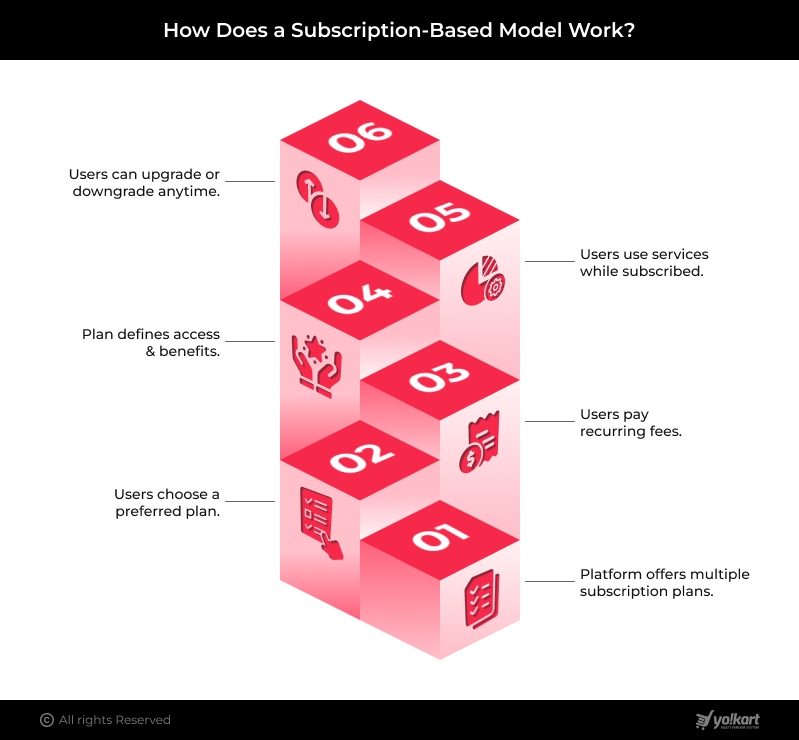
- The platform offers diverse subscription plans, each designed with different levels of functionalities and offerings.
- Users choose a subscription tier that they prefer.
- They pay a recurring fee, be it on a monthly, quarterly or an annual basis, to stay active on the platform.
- The chosen subscription tier determines the user’s operational capabilities and benefits.
- Users use the platform and obtain products/services for as long as their subscription remains active.
- Users can change their subscription tier to either higher or lower plans as per their requirements in the future.
Leading Players of Subscription-Based eCommerce Marketplaces
Subscription led marketplaces have earned a considerable amount of traction across both B2C and B2B environments. These platforms generate predictable recurring revenue while delivering sustained value to the users, modernizing traditional marketplace dynamics by replacing transactional uncertainty.
Here are some of the prominent marketplaces that deploy subscription models at scale:
1. Amazon:
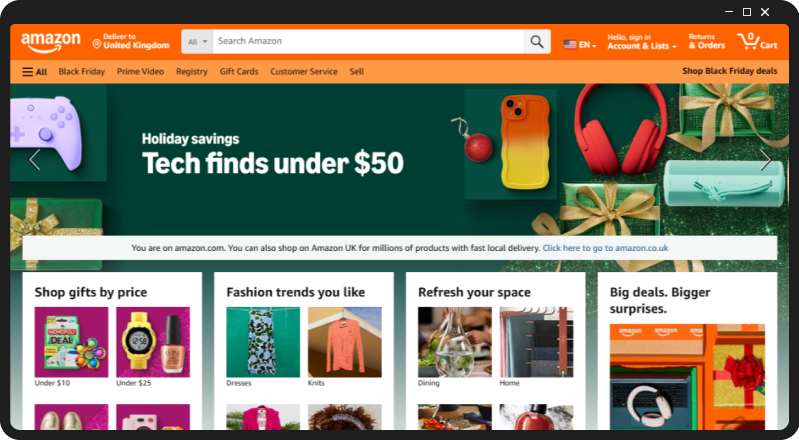
Amazon is a globally recognized eCommerce marketplace launched in 1995. While primarily known for selling books online, the platform has now progressed in diverse regions such as eCommerce, digital streaming, online advertising, artificial intelligence and cloud computing. Similarly, its subscription-based models include exclusive benefits for both its sellers and customers, known as:
- Amazon Professional Seller Plans: Amazon’s Professional Seller tier exemplifies a high-performing subscription framework within a global marketplace. Rather than paying per item sold, sellers subscribe to a fixed monthly fee, offering advanced operational capabilities. This allows Amazon to maintain reliable recurring revenue while offering sellers a scalable cost structure.
- Amazon Prime Membership: Amazon Prime is a flagship example of subscription-based value creation. The membership’s bundled benefits, such as expedited delivery, digital media and exclusive deals, fuel a high-velocity purchasing ecosystem that benefits customers, sellers and marketplace operators as well.
2. Etsy Plus:
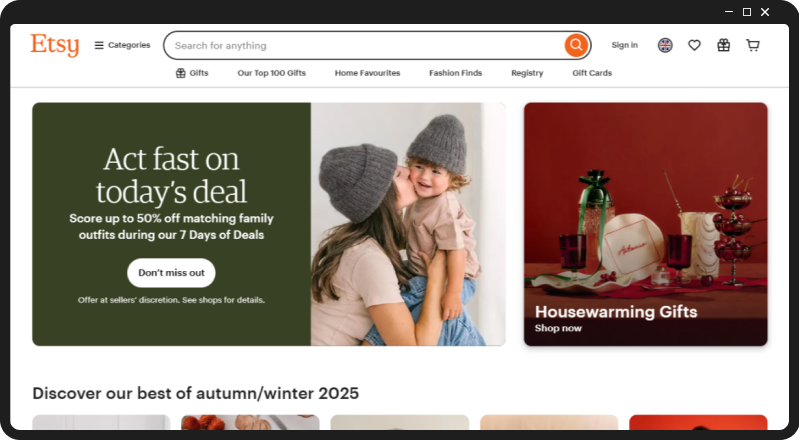
Etsy Plus, an American eCommerce marketplace for handmade or vintage products, represents a refined, value-driven subscription tier tailored for ambitious vendors seeking greater visibility and brand distinction. This subscription offers enhanced storefront customization, priority access to merchandising tools and discounted listing & advertising credits. Thus, by offering advanced capabilities into a monthly plan, Etsy cultivates a professional seller segment while maintaining a steady, recurring income channel.
3. Audible:

Audible is a US-based audiobook and podcast service eCommerce marketplace is fundamentally designed around a consumer subscription model. Members pay a recurring monthly fee in exchange for monthly credits and exclusive access to premium audio content. For creators and publishers, this model ensures consistent demand and predictable payouts, while customers benefit from curated listening experiences, creating a high-retention environment.
4. Thumbtack:
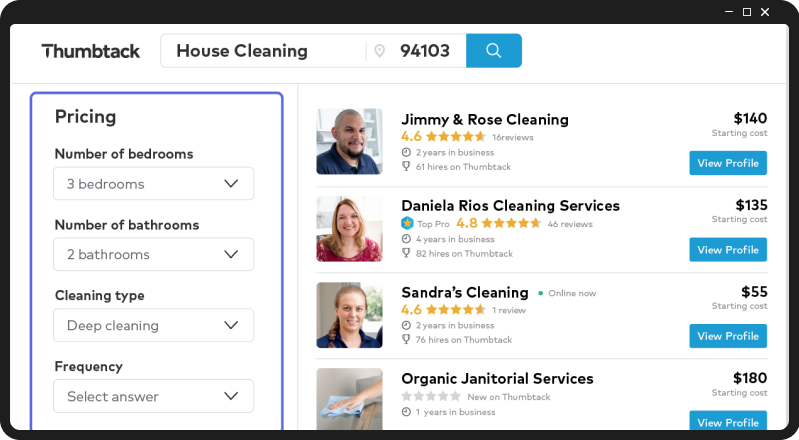
Thumbtack operates on a subscription-centric model for service professionals, offering them systematic access to high-intent customer leads. Instead of relying exclusively on commissions, Thumbtack employs recurring plans, ensuring predictable lead flow, positioning it as a dependable acquisition channel while securing robust, steady monthly revenue for the platform.
5. Envato Elements & StockX:
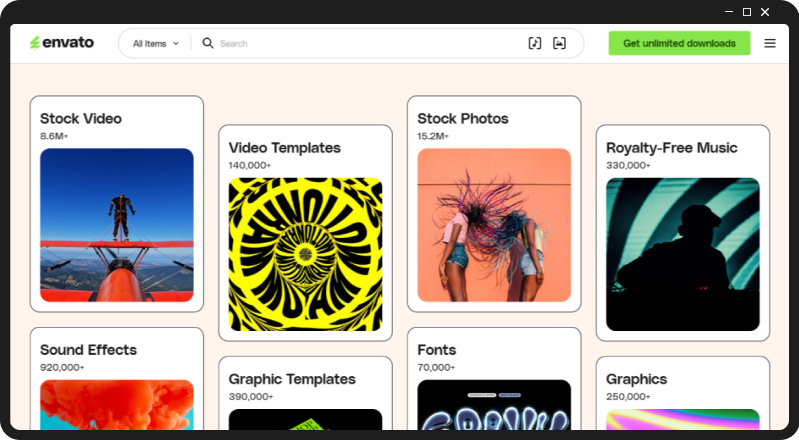
- Envato Elements epitomizes a subscription-first digital marketplace that offers customers unlimited access to curated creative assets under a monthly recurring payment.
- Conversely, StockX offers a Flex membership tier for its premium sellers to list and sell products at lower commissions.
Both these platforms demonstrate how subscriptions can be layered to amplify value while ensuring predictable, recurring revenue.
Planning to Build a Similar Multi-Vendor eCommerce Marketplace?
Essential Features to Launch a Subscription-Based eCommerce Marketplace
To build a multi-vendor eCommerce marketplace, the platform must integrate a robust suite of features specific to eCommerce operations. Hence, here’s a curated list of essential features required to launch a subscription-based eCommerce platform:
- Subscription Plan Management: Create flexible, multi-tiered subscription plans, reflecting clear differentiation in pricing, access privileges and benefits to support diverse monetization and engagement strategies.
- Role-based Access Controls: Assign platform permissions based on subscription tiers, enabling strategic feature gating that elevates premium value perception and naturally incentivizes tier upgrades.
- Vendor Onboarding & Verification: Streamline vendor registration with guided steps, compliance checks and seamless verification to establish a trustworthy, policy-aligned seller ecosystem on the platform.
- Automated Recurring Billing: Implement secure, automated billing cycles with multiple payment options, ensuring predictable, uninterrupted revenue flow while minimizing administrative overhead and enhancing payment reliability across global subscriber bases.
- Dedicated, Advanced Vendor Dashboards: Equip sellers with advanced dashboards featuring performance insights, product controls, subscription status and revenue analytics to drive operational clarity and data-led business growth.
- Products Listing Limits by Subscription Tiers: Define product upload caps, category access and listing privileges per tier, creating structured value differentiation that encourages sellers to upgrade for broader reach and more extensive selling capabilities.
- Buyer Subscription Tiers: Introduce structured customer memberships with clearly articulated benefits such as exclusive pricing, bonus rewards, priority service or faster delivery to strengthen loyalty and improve repeat purchase frequency.
- Exclusive Access & Early Access Features: Provide premium customers early access to discounts, collections, gated experiences or curated exclusives, strengthening perceived value and driving higher adoption of elevated membership plans.
- Marketing & Promotional Tools: Offer tactical promotional capabilities such as coupons, discounts, featured listings and outreach tools to empower sellers to enhance visibility and maximize returns from premium subscription tiers.
- Advanced Reports & Analytics: Deliver deep analytical visibility into subscription performance, user behavior, churn patterns, lifecycle metrics and platform earnings, enabling data-backed optimization of marketing campaigns and growth strategies.
- Integrated Payment Gateways: Ensure reliable, multi-currency payment processing with secure, global payment gateway compatibility, enabling smooth subscription purchases, renewals and upgrades across diverse customer & seller segments.
- Push Notifications: Send automated, timely alerts for subscription renewals, expirations, payment failures and upgrades, enhancing transparency while significantly reducing involuntary churn across the platform.
- Scalable, High-Performance Architecture: Deploy a performance-optimized, scalable infrastructure capable of handling large user bases, multiple locations, heavy subscription traffic and high transaction loads without compromising speed or user experience.
Key Benefits of Adopting Subscription-Based Models in Multi-Vendor Platforms
A subscription-based model delivers substantial benefits for multi-vendor platforms, especially those aiming for predictable growth, stronger vendor engagement and long-term customer loyalty. If executed properly, these subscriptions not only stabilize revenue but also enhance platform efficiency and user experience. Hence, here are the key benefits of adopting subscription-based models in multi-vendor platforms:
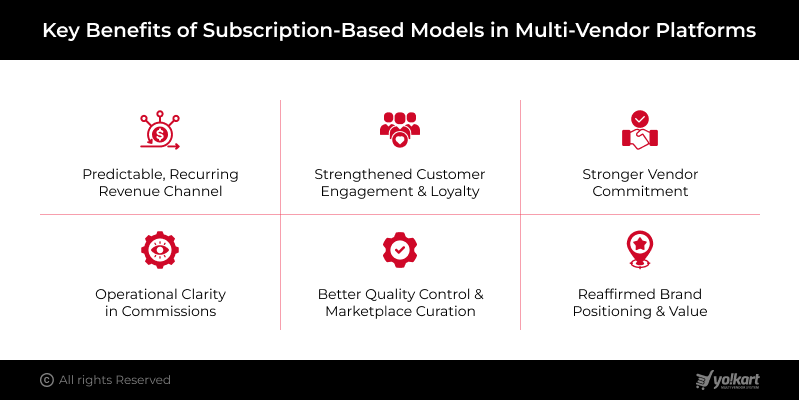
1. Predictable, Recurring Revenue Channel:
Subscription channels create a steady revenue stream that is largely independent of transactional volatility. This predictability enables more accurate financial forecasting, stronger cash-flow management and enhances the platform’s capacity to allocate resources with confidence. For marketplaces scaling globally or expanding into new verticals, a recurring revenue stream can become instrumental in supporting long-term growth and investment cycles.
2. Strengthened Customer Engagement & Loyalty:
Recurring plans, such as Amazon Prime’s membership tier, encourage repeat usage and reinforce brand affinity. Members are more likely to consolidate their purchases within the platform, increasing customer lifetime value. Moreover, curated benefits such as expedited delivery and exclusive discounts further create clear competitive differentiation, cultivating customer loyalty.
3. Stronger Vendor Commitment:
Sellers who pay a recurring subscription fee tend to demonstrate a higher degree of commitment to the platform. Subscription fees signal intentional investment, resulting in:
- More consistent product listings
- Improved service and fulfillment standards
- Proactive participation on the platform
This heightened commitment strengthens the marketplace’s overall supply-side stability and thus contributes to a more predictable, high-quality marketplace environment.
4. Operational Clarity in Contrast to Commissions:
In comparison to commission-based models, subscription plans offer simplicity and transparency, particularly attractive for high-volume or experienced sellers. Sellers benefit from transparent, fixed costs without concerns about diminishing margins as business scales, while customers benefit from exclusive perks, streamlined deliveries and more. Additionally, for the marketplace, this eliminates administrative overhead costs, streamlining operations and improving overall efficiency.
5. Better Quality Control & Marketplace Curation:
Subscription packages inherently filter out low-effort or low-quality sellers who are less likely to invest in maintaining platform standards, resulting in a more curated, trustworthy marketplace. This enhances buyer confidence and contributes to a more premium & professional ecosystem. Additionally, member-only access can help maintain higher engagement quality and reduce spam or fraudulent activities.
6. Reaffirmed Brand Positioning & Perceived Value:
A subscription proposition communicates enduring value, positioning the marketplace as a growth enabler rather than a transactional intermediary. Consistent delivery of premium features, exclusive tools or customer benefits strengthens the platform’s brand equity and frames the subscription as a strategic partnership.
Potential Drawbacks of Recurring Revenue Models in Multi-Vendor Platforms
Despite their ability to generate predictable recurring revenue, subscription-based models come with nuanced challenges that marketplace owners must weigh carefully. In multi-vendor ecosystems, an obstinate subscription strategy can introduce friction and operational risk.
Here are some of the common challenges that businesses must outweigh:
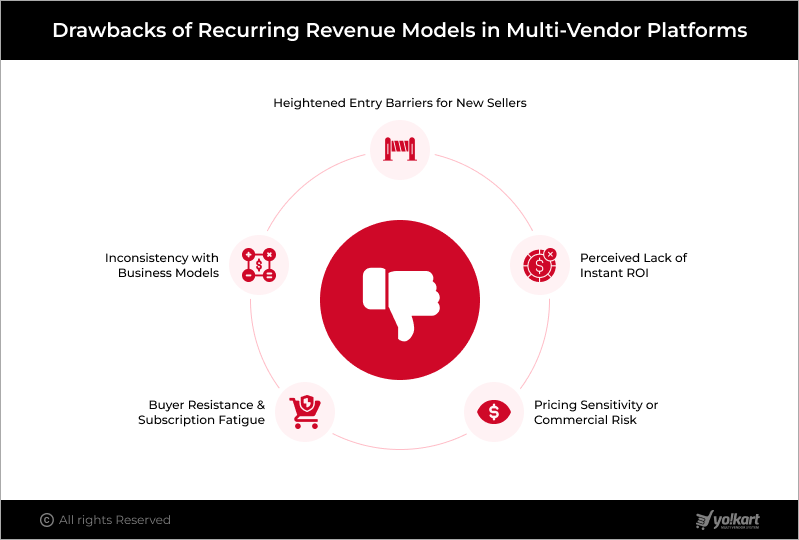
1. Heightened Entry Barriers for New Sellers:
A mandatory recurring fee can discourage new, small-scale sellers with limited budgets from onboarding. Unlike commission-based models that charge only when a sale is made, a subscription fee requires upfront financial commitment that can limit marketplace diversity and slows down early-stage seller acquisition.
2. Perceived Lack of Instant ROI:
Sellers often expect rapid and measurable returns, which is why, if the subscription does not translate into visibility, quality leads and incremental sales quickly, sellers may thus experience dissatisfaction. This can result in higher churn and negative sentiment that might compromise marketplace performance and reputation.
3. Inconsistency with Low-Volume or Seasonal Business Models:
Sellers with cyclical or inconsistent sales patterns may perceive subscription-based models as rigid and financially inefficient. Without a variable cost structure that mirrors their requirements, these sellers may opt for other competing platforms with more flexible pricing frameworks.
4. Pricing Sensitivity or Commercial Risk:
Determining an optimal subscription price is a delicate balancing act, because:
- Underpricing can erode profitability and dilute perceived value, struggling to cover operational costs
- On the contrary, overpricing can suppress user adoption and thus limit platform scalability
Price alignment is particularly risky in multi-vendor ecosystems where seller categories differ widely in margins, order value and sales value. Hence, implementing these costs demands higher precision and understanding.
5. Buyer Resistance and Subscription Fatigue:
On the consumer side, subscription fatigue is an increasingly notable trend nowadays. A customer who already pays for multiple streaming, shopping or delivery services may hesitate to adopt another subscription simply to access a marketplace. Hence, if not placed correctly, such fees can limit user acquisition and reduce marketplace traffic.
Adopt a Powerful Multi-Vendor Marketplace Software that Supports Diverse Monetization Models
Are Subscription-Based Models Profitable in Multi-Vendor Platforms?
A subscription-based model undeniably offers several operational and financial advantages, as highlighted in the earlier sections. It offers predictable revenue, stronger seller commitment and steadier financial planning. Yet, when these advantages are weighed against the broader landscape of marketplace dynamics, it becomes evident that relying solely on a single monetization model can create constraints over time.
A single business model, no matter how efficient, often performs well at the initial stages, but:
- It may restrict the platform’s flexibility as the marketplace matures. Different sellers incline toward different value propositions, and relying solely on a single revenue stream can thus leave potential earnings untapped.
- Competitive differentiation becomes hard to achieve when monetization lacks flexibility.
- Plus, certain product categories or seasonal sellers may find a single monetization model misaligned.
Hence, a diversified monetization structure creates a more balanced revenue mix and strengthens long-term profitability. In essence, while a subscription-based model is a strong strategic foundation, a multi-layered monetization strategy generally positions a multi-vendor platform for more resilient long-term profitability.
Top Alternative Monetization Models in Multi-Vendor Platforms
While subscription-based pricing delivers predictable recurring revenue, multi-vendor eCommerce platforms often benefit from diversifying their monetization channels. Broadening the revenue channels not only enhances financial resilience but also empowers the marketplace to serve a broad spectrum of users. Thus, the following models represent the most strategically relevant alternatives or complements to subscription-based monetization:
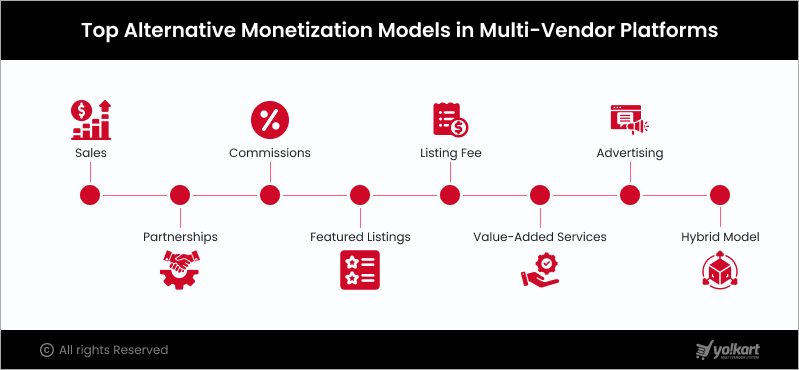
- Sales: It is the most straightforward model in which the platform generates revenue directly from sales of goods and services itself, getting the entire rental fee.
- Commissions: A foundational model for many marketplaces that allows admins to levy commissions per transaction made through the platform as a platform commission.
- Listing Fee: This allows marketplace owners to charge vendors a fixed cost to publish products or services on the platform to make sure only the serious and dedicated sellers join, discouraging spam and low-value listings.
- Advertising: Generate substantial income by offering paid advertising slots to third-party businesses on your marketplace, generating an additional revenue stream from clicks or conversions.
- Partnerships: Partner with local businesses for cross-promotions and exclusive brand visibility, unlocking co-branded offerings, revenue sharing and expanding distribution channels.
- Featured Listings: Premium visibility packages allow vendors to pay for prioritized visibility on premium pages of the marketplace such as top sections, curated collections or spotlight placements.
- Value-Added Services: Offer premium services or complementary products with the main products to increase the overall cart value, catering to customers seeking special services.
- Hybrid Model: Most leading multi-vendor eCommerce marketplaces adopt a hybrid monetization strategy, strategically blending the above-mentioned revenue streams, ensuring revenue stability.
Yo!Kart — Best Software to Build a Subscription-Based Multi-Vendor eCommerce Marketplace
Yo!Kart, a product of FATbit Technologies, stands out as an enterprise-grade multi-vendor eCommerce marketplace software engineered specifically for multi-vendor eCommerce platforms seeking scalable monetization. Meticulously crafted with precision, the software offers a powerful combination of flexibility, performance and scalability.
At its core, Yo!Kart provides a highly configurable framework that allows businesses to adapt to varied business models and requirements. The software provides advanced vendor management capabilities, automated billing & invoicing, granular access controls, integrated marketing tools and analytics that unveil profitability at every step. Additionally, Yo!Kart is built to support businesses of all sizes from startups and small businesses to mid-sized businesses and large enterprises, accommodating large vendor bases and increasing transactions without compromising performance.
Besides, with lifetime ownership, extensive customization capabilities, robust security frameworks and proven performance across marketplaces at scale, Yo!Kart enables businesses to launch and expand multi-vendor marketplaces confidently.
Additional Benefits of Yo!Kart:
- 100% white label software
- Self-hosted solution with one-time upfront pricing
- Lifetime license, no recurring charges
- Over 10 years of industry expertise
- Extensively scalable and secure
- Highly customizable, modular framework
- Expansive suite of multi-vendor marketplace features
- Adaptable, API-driven infrastructure
- 1 year free technical support post-purchase
Yo!Kart Supported Business Models & Marketplaces Built in that Space:
| Business Models | Industry Giants | Yo!Kart Powered Marketplaces |
| Subscription-based | Amazon Prime, Etsy Plus | All marketplaces built with Yo!Kart support a subscription-based revenue model |
| B2C (Business-to-Consumer) | Amazon, Walmart, eBay | Voyij, Tajer, 4GoodVibes, RxAll, etc. |
| B2B (Business-to-Business) | Alibaba, Amazon Business, Global Sources | UNI Diamonds, WaterSorted, Bozinga, Anyflexo, etc. |
| P2P (Peer-to-Peer) | Etsy, Poshmark, eBay | WeDIY, Iconic Motorbikes |
| Hyperlocal Platforms(connects buyers with local sellers) | OLX, OfferUp, InstaCart | Little Local, Shop American Sellers, Glocal Store, DotDune |
| Commission-Based | Amazon, Etsy, eBay | All marketplaces built with Yo!Kart support a commission-based model |
| Niche/Vertical Marketplaces | Newegg, ASOS, Zalando, GNC | Clic & Pick, Party Without Plastic, TransporTECO, Sandhai, Canna Market, CBD Supplements, etc. |
Navigate the Yo!Kart’s clients page to get more information about the marketplaces built with Yo!kart.
Book a Free Personalized Demo Session to Explore Yo!Kart Firsthand
Conclusion
Subscription-based models have today evolved from optional revenue add-ons to strategic growth levers for modern multi-vendor eCommerce platforms. As consumer behavior shifts towards convenience and predictable value, and sellers increasingly seek stability and enhanced platform services, subscriptions offer marketplaces a strong passage to recurring revenue and deeper engagement. However, profitability rarely lies in counting on a single monetization model. Hence, the most resilient, future-ready multi-vendor eCommerce platforms must blend subscriptions with complementary monetization strategies such as commissions, sales, advertisements or hybrid structures to create a balance and build a scalable multi-vendor eCommerce marketplace.
FAQs
Q 1. What are subscription-based models?
Ans. Subscription-based models are monetization models that involve a recurring subscription fee for users to access the marketplaces and get exclusive benefits. These models create a predictable revenue stream for marketplace owners while strengthening the platform engagement and loyalty.
Q 2. Are subscription-based models profitable in multi-vendor marketplaces?
Ans. Subscription-based revenue models offer a stable and predictable revenue channel for marketplaces, improving vendor retention and elevating customer lifetime value. However, relying solely on a single monetization model may limit growth potential. Thus, combining multiple business models offers a more strategic foundation for sustainable growth.
Q 3. Does Yo!Kart support subscription-based marketplaces?
Ans. Absolutely. Yo!Kart offers in-built capabilities for tiered subscription plans, recurring fee renewals, feature-based access controls, value-based privileges and robust analytics tools, allowing marketplace owners to manage and optimize subscription monetization easily.
Q 4. Can I customize Yo!Kart to support my unique business model?
Ans. Yes. Yo!Kart is built with a modular, highly customizable architecture that allows extensive customization to perfectly align with diverse business models, operational requirements, industry-specific demands and business vision. It offers the flexibility to tailor UI/UX, features and workflows to reflect your unique brand identity.
The post A Complete Guide to Subscription-Based Models for Multi-Vendor Platforms appeared first on YoKart Blog.
]]>The post Top Features a Modern Multi-Vendor Marketplace Should Have in 2025 appeared first on YoKart Blog.
]]>Multi-vendor marketplaces not only allow multiple sellers to showcase their products or services under a unified platform but also provide consumers with an expansive range of choices, improving both convenience and variety. However, to thrive in this competitive landscape, modern multi-vendor marketplaces must have several key features, from intuitive user interfaces and seamless payment integration to robust vendor management tools and data analytics capabilities.
Hence, this blog explores the top features a modern multi-vendor marketplace should have in 2025 to succeed and strategies to do so cost-effectively.
Table of Contents
What is a Multi-Vendor Marketplace?
Unlike traditional, single-vendor websites, where one seller is responsible for the entire inventory and customer experience, a multi-vendor marketplace is an online platform that hosts multiple sellers on a single platform to list and sell their products or services to a global audience.
A multi-vendor marketplace aggregates offerings from various vendors, giving buyers more choices and enhancing competition. This dynamic setup benefits both consumers and sellers by allowing buyers to enjoy an expansive range of choices, while sellers gain access to a larger, more diverse audience without the need for their own standalone platform. By hosting numerous sellers, these marketplaces foster competition, which often results in better prices, improved product quality, and a more vibrant shopping experience.
Examples of successful multi-vendor marketplaces include Amazon, Etsy, and eBay. These marketplaces have demonstrated the scalability and profitability of the multi-vendor model. The success of these marketplaces is driven by their ability to provide a seamless, one-stop shopping experience.
Benefits of Launching a Multi-Vendor Marketplace
Building a multi-vendor marketplace offers significant strategic and operational advantages for entrepreneurs and businesses alike. By connecting multiple sellers and buyers on a single platform, it drives growth, reduces costs, and creates long-term scalability.
Key benefits include:
- Diverse Product Selection: A multi-vendor marketplace brings together sellers from various niches, ensuring a wide range of products. This variety caters to diverse customer preferences, keeps them engaged, and increases the likelihood of fulfilling multiple needs in one platform.
- Reduced Operational Costs: Sellers handle their own inventory, logistics, and customer service, which significantly lowers the marketplace operator’s overhead expenses. This decentralized approach allows the platform to scale efficiently while focusing on technology, marketing, and user experience instead of day-to-day operations.
- Multiple Revenue Streams: Marketplace owners can monetize through multiple channels, such as commissions, vendor subscriptions, product listing fees, and value-added services. This diversified revenue model creates consistent income opportunities while reducing dependency on a single channel for financial growth.
- Scalability: Expansion becomes seamless, as new vendors, categories, and features can be added without significant infrastructure investment. This flexibility ensures the marketplace adapts to market trends and customer demands while continuing to grow sustainably.
- Enhanced Customer Trust: User-generated reviews and ratings create transparency and credibility for both sellers and the platform. By fostering trust, these mechanisms encourage repeat purchases, build customer loyalty, and differentiate the marketplace from competitors.
- Global Reach: A multi-vendor marketplace can connect international sellers and buyers, transcending geographical boundaries. This global exposure enhances growth opportunities, expands the customer base, and positions the platform as a worldwide hub for commerce across diverse industries.
Materialize Your Multi-vendor Marketplace Vision with a Platform that Delivers Seamless User Experience
Top 20 Features Every Modern Multi-Vendor Marketplace Must Have
Building a successful multi-vendor marketplace requires more than just a platform to facilitate transactions. It demands a robust set of features that caters to the needs of each stakeholder involved while ensuring smooth operations and scalability. Here are certain essential features that every modern multi-vendor marketplace must have to stay ahead of the curve and offer an outstanding user experience:
1. Intuitive User Interface: A clean, user-friendly interface improves navigation, minimizes friction, and ensures a pleasant shopping experience, reducing bounce rates and increasing conversions.
2. Seller Dashboard: Provide dedicated seller dashboards to allow them to manage listings, track sales, analyze performance, view customer insights, and make data-driven decisions efficiently.
3. Product Catalog Management: Provide efficient tools for adding, editing, categorizing, and organizing products, including bulk upload options, high-resolution image support, and dynamic pricing.
4. Advanced Search and Filters: Provide buyers with advanced search filters to locate desired products quickly using keyword search, category filters, price ranges, brands, ratings, and sorting options, enhancing usability.
5. Secure Payment Gateways: Integrate multiple secure payment methods (credit/debit cards, wallets, cash, or bank transfers) with encryption, fraud detection, and compliance to provide safe transactions.
6. Ratings and Reviews: Customer feedback enhances credibility, helps buyers make informed choices, and provides actionable insights for sellers to improve products or services.
7. Order Management System: Provide streamlined processes for order confirmation, processing, shipping, tracking, and fulfillment to ensure operational efficiency and buyer satisfaction.
8. Inventory Management: Enable real-time tracking of stock levels, automated low-stock alerts, and inventory synchronization to prevent overselling and maintain availability.
9. Discounts and Promotions: Equip tools for creating coupons, seasonal sales, flash deals, and loyalty programs to boost engagement, drive traffic, and increase sales.
10. Mobile Responsiveness: Optimize the platform to be responsive across all devices, such as mobile devices, tablets, and desktops, providing a consistent and accessible user experience.
11. Multiple Shipping Options: Integrate with various shipping providers, allowing buyers to choose from different methods, delivery times, and costs, improving customer satisfaction.
12. Return and Refund Management: Provide simplified processes for handling returns, exchanges, and refunds, reducing buyer hesitation and building trust in the platform.
13. Multi-Currency Support: Enable international buyers to pay in their preferred currency, increasing global reach and sales opportunities.
14. Tax and Compliance Management: Automatically calculate taxes based on location, along with adherence to local eCommerce regulations and VAT/GST rules.
15. Vendor Verification: Verify vendor authenticity, such as document checks and approval workflows, in order to ensure only trustworthy sellers join the platform.
16. Chat Support / Messaging System: Integrate direct communication channels between buyers and sellers for resolving queries, negotiating, or providing support, enhancing satisfaction.
17. Wishlist and Favorites: Allow buyers to wishlist products they like for future purchase, improving engagement and the likelihood of repeat sales.
18. Analytics and Reporting: Equip a robust reports & analytics tool to provide detailed insights on sales trends, customer behavior, revenue reports, and product performance metrics to make informed decisions.
19. Multi-Language Support: Cater to diverse markets by offering multiple languages, improving accessibility and user experience across different regions.
20. SEO-Friendly Architecture: Optimize URLs, metadata, schema markup, and site structure to ensure better search engine visibility, driving organic traffic and higher conversions.
Best Technology Partner to Launch a Feature-Rich Multi-vendor Marketplace
Launching a feature-rich multi-vendor marketplace may seem complex, but choosing the right platform can significantly simplify the process and reduce costs. Yo!Kart is a leading multi-vendor marketplace solution designed to help entrepreneurs launch fully functional, scalable, and customizable marketplaces quickly and affordably.
- Pre-Built, Ready-to-Use Features: Yo!Kart comes with essential multi-vendor features such as seller dashboards, payment gateways, product management, analytics, and SEO tools already built in, eliminating the need for extensive custom development.
- Cost-Effective Development: Avoid the high costs associated with building a marketplace from scratch. Yo!Kart reduces the time and resources needed to launch a multi-vendor marketplace while delivering enterprise-grade functionality.
- Scalable Infrastructure: As your marketplace grows, Yo!Kart can scale seamlessly to accommodate more vendors, products, and buyers without additional infrastructure costs.
- Industry Expertise: Backed by over 10 years of experience in building successful marketplaces across diverse industries, Yo!Kart brings proven strategies and insights that help entrepreneurs minimize risks and achieve faster growth.
- Customizable Design: Tailor your marketplace to reflect your brand identity and niche, making it unique while leveraging the built-in framework.
- Quick Time-to-Market: Launch your marketplace in a few days rather than months, gaining a competitive advantage in your target market.
- Integrated Marketing Tools: Built-in SEO optimization, promotional campaigns, and analytics ensure your marketplace reaches the right audience and drives engagement.
By leveraging Yo!Kart, entrepreneurs can focus on building their brand and growing the marketplace while avoiding unnecessary technical and financial challenges. This approach allows for a cost-efficient, feature-rich launch that is ready to scale and compete effectively in the market.
Book a One-on-One Demo to Explore All the Functionalities of Yo!Kart
Conclusion
The multi-vendor marketplace model is rapidly transforming the way commerce operates, creating immense opportunities for entrepreneurs and established businesses alike. However, to succeed in this highly competitive space, simply launching a marketplace is not enough; integrating the right set of features is also essential. From advanced search and individual seller dashboards to secure payment gateways and powerful analytics tools, these features form the backbone of a high-performing marketplace. Robust multi-vendor marketplace software like Yo!Kart offers the perfect blend of cost-efficiency, customizability, and scalability, allowing businesses to focus on business growth.
FAQs
Q 1. What is a multi-vendor marketplace?
Ans. A multi-vendor marketplace is a digital platform where multiple independent sellers can showcase and sell their products or services to a vast audience. This model not only improves customer convenience but also helps vendors expand their reach without the need for setting up an individual online store.
Q 2. Is launching a multi-vendor marketplace a worthwhile investment?
Ans. Yes. A multi-vendor marketplace offers strong growth potential with relatively low operational costs. Moreover, it creates multiple revenue streams, benefits from network effects, and scales easily, making it a sustainable, high-return investment for entrepreneurs and businesses alike.
Q 3. What are the top features a modern multi-vendor marketplace should have?
Ans. A successful marketplace must include features that enhance both the seller and buyer experience. Key features include dedicated seller dashboards for easy product and order management, secure and flexible payment gateways, robust inventory management, and insightful analytics to track performance. On the customer side, features like ratings and reviews, advanced search and filtering, mobile responsiveness, personalized recommendations, and multi-language/multi-currency support are critical to ensuring trust, usability, and global accessibility.
Q 4. How can I launch a marketplace cost-effectively?
Ans. Building a marketplace from scratch often requires significant investment in time, money, and technical expertise. A cost-efficient alternative to this can be using a feature-rich multi-vendor marketplace software like Yo!Kart, which comes with pre-built core functionalities, scalability, and customization options. This allows entrepreneurs to launch their marketplace faster, reduce upfront costs, and focus on business growth instead of development challenges.
The post Top Features a Modern Multi-Vendor Marketplace Should Have in 2025 appeared first on YoKart Blog.
]]>The post B2B VS B2C: What are the Key Differences between B2B and B2C eCommerce Marketplaces? appeared first on YoKart Blog.
]]>However, B2B and B2C business models share a lot of similarities and there is no such a golden rule to separate them from each other. In both business models, there is a customer who is buying something from a seller who is selling. Yet, what makes them different is purchase quantity, customer journey, product offerings, target audiences, pricing, features, and more. In addition, their market size is also a key distinction between B2B and B2C business models.
According to Precedence Research, the global B2B eCommerce market size is anticipated to reach around $60.62 trillion by 2034, accelerating at a CAGR of 18.04% from 2024 to 2034. Besides, the global B2C eCommerce market size is forecasted to grow at a CAGR of 19.13% from 2025 to 2034 to reach around $37.72 trillion by 2034.
The above-estimated market size and growth rate have defined the potential of both business models. Entrepreneurs and business owners can efficiently harvest the rewards and capitalize on the eCommerce industry by building a B2B or B2C marketplace platform.
However, to build a B2B or B2C, you need to have more clarity on both business models. Your careful consideration of the blog will help you understand the key differences between B2B (Business-to-Business) and B2C (Business-to-customer).
Table of Contents
- What is the B2B Marketplace Business Model?
- Top 5 B2B Marketplaces Worldwide
- What is the B2C Marketplace Business Model?
- Top 5 B2c Marketplaces Worldwide
- The Differentiating Factors that Distinguish between B2B and B2C
- Head-to-Head Comparison between B2B and B2C Business Model
- How to Launch an Online B2B or B2C eCommerce Platform Quickly?
- Final Thought
- FAQs
What is the B2B Marketplace Business Model?
B2B is an acronym for Business to Business, as the name suggests, B2B transactions are initiated between two business entities. Sellers (businesses that sell products or services) and trade with buyers (other businesses that buy) in bulk or large volume. These business entities can be manufacturers, wholesalers, retailers, or suppliers.
B2B eCommerce marketplaces are the ideal mediums that connect businesses with other businesses on an online platform. It streamlines and simplifies their communications and business transactions by offering several tools, features and functionalities. In B2B marketplaces, three key participants play roles; marketplace owners, businesses as sellers and businesses as buyers.
In short, B2B marketplaces are the mediums that help businesses achieve their business goals (buying and selling products) online in no time compared to offline businesses.
Top 5 B2B Marketplaces Worldwide
In this eCommerce era B2B trading is not as complex, time-consuming and mind-teasing as offline B2B trades. B2B Marketplaces like Amazon business, Alibaba eWorldtrade and more have transformed B2B businesses trading. These global marketplaces have opened up new opportunities to reach wider businesses with no hassle. Let’s explore popular B2B Marketplaces worldwide.
1. Amazon Business
Amazon Business, launched in April 2015 is one of the most popular B2B marketplaces globally. One can simply register and start using the platform. With its extensive range of products, Amazon Business offers all the essential features and functionalities tailored to meet unique B2B business requirements.

2. Alibaba
With over 8.5 million annual active sellers and 279 million active buyers, Alibaba is one of the largest wholesale marketplaces worldwide. Often referred to as the Amazon of China, Alibaba is the top B2B marketplace in the Asian market and also a popular marketplace globally. Alibaba is known for keeping track of trends and interests and famous as a reliable platform for businesses.
3. eWorldTrade
eWorldTrade is another leading B2B marketplace in the world. It offers opportunities for businesses to reach new business entities by expanding their reach to the global market. With 900000 suppliers and 11 million products, eWorldTrade is the fastest-growing trading platform that provides innovative solutions to streamline business operations effortlessly.

4. AliExpress
AliExpress, a subsidiary of Alibaba Group is another popular B2B eCommerce platform that empowers global businesses by connecting them online. This marketplace operates in more than 230 different countries and regions around the world. AliExpress offers a wide array of products and services catering to global businesses.

5. Global Sources
Global Sources is also one of the renowned marketplaces with more than 50 years of market presence. This global marketplace connects businesses with other businesses allowing them to trade on a feature-rich online platform. Global Sources is known for offering quality-driven trade one of its USPs that sets the platform apart from other marketplaces.

Launch a B2B Marketplace like Alibaba, eWorldTrade and Amazon Business
What is the B2C Marketplace Business Model?
A B2C stands for Business-to-Customer where businesses deal directly with customers. In the B2C business model, sellers directly reach out to consumers to sell their products. There is no bound on purchase quantity like in the B2B business model. Here, buyers can place an order for a single product quantity.
A B2C marketplace is a digital platform that connects buyers and sellers on a common platform. It allows buyers to access a wide range of products by offering the opportunity to order the most suited product at the best possible pricing. On the other hand, it lets the sellers access a wide customer base where they can showcase their products and offerings to get more sales.
In short, B2C transactions are not as complex as B2B, buyers simply place an order by initiating payment and get the order delivered according to the given delivery timeline.
Top 5 B2C Marketplaces Worldwide
The B2C marketplaces are ruling the eCommerce landscape. Especially, the adoption of smartphones and the rising desire for online shopping have empowered global marketplaces. These are the top 5 online B2C marketplaces that can inspire you to build your own B2C marketplace platform:
1. Amazon
Founded in 1994 by Jeff Bezos, Amazon is a leading B2C eCommerce marketplace platform. With more than 310 million active users worldwide, Amazon is one of the most accepted and largest marketplace platforms. It deals in almost all types of product categories such as electronics, fashion, pharma and healthcare, books, grocery, baby products, and much more. In addition, it also offers numerous services such as prime video, cloud computing, online music streaming, digital content like ebooks and audiobooks and more

2. eBay
With 133 million plus active buyers and 18 million plus active sellers, eBay is registered in the list of the most visited online shopping platforms. Founded in 1995 as an auction website, today eBay is one of the popular marketplaces with a market capitalization of more than $30 billion.
3. Walmart
Walmart, Formerly known as Wal-Mart Stores, Inc. was founded in 1962 and today it is one of the world’s most popular and largest retail marketplaces. In 2024, the global net sales were nearly 643 billion according to Statista. Walmart offers a wide range of products at lower prices, one of its competitive advantages that helps it lead the industry.

4. Flipkart
Flipkart is another renowned B2C eCommerce platform that connects buyers and sellers. Also, Flipkart’s global program allows its sellers to sell products in over 200 countries through eBay. Flipkart Global is a partnership between Flipkart and eBay. This platform deals in diverse product categories including electronics, fashion, home decor, gadgets, pet care, and more.

5. Rakuten
Rakuten is Japan’s largest eCommerce marketplace that offers an extensive shopping experience to its customers by selling products from diverse categories. The marketplace operates in 30 countries and regions. Rakuten’s user-friendly website and same-day delivery offerings make it a preferable choice among customers.

Launch Your Own Online B2C Marketplace
The Differentiating Factors that Distinguish between B2B and B2C
Whether you are looking to launch your B2B marketplace platform or B2C, the end goal of B2B and B2C is to sell products and services to the buyers. However, there are significant differences that set both marketplace models apart. Let’s explore the key differences between B2B and B2C marketplaces:
- Market Size
- Target Audience
- Pricing
- Buying Decision
- Marketplace Features
- Payment Terms
- Customer Support
Market Size: To Determine Growth Areas and Identify Potential Customers
A larger market size means greater opportunities to excel in business growth. Market size is the total number of potential customers to whom you can serve with your product or services. It determines the profitability and growth of your marketplace.
However, the segmentation of market size according to your business model is crucial, it helps you decide strategies and plan of action on how to reach out to customers and also makes you understand the areas where you need to expand. Let’s understand the market size of B2B and B2C separately.
- B2B Market Size: The B2B market is more stable and the market size is larger in value than B2C. Transactions in B2B occur based on the business’s future plans, not on present trends. Again, the customers are other businesses, not individuals. Hence, B2B transactions are typically larger in size and higher in value.
According to Precedence Research, the global B2B eCommerce market size was $9.74 trillion in 2023, estimated at $11.54 trillion in 2024. It is also predicted that the B2B market size will reach around $60.62 at a CAGR of 18.04%.
- B2C Market Size: The B2C market size is smaller than B2B because the transactions are typically lower in value as an individual is involved in the transaction. However, the number of transactions is more than B2B transactions.
According to Precedence Research, the global B2C eCommerce market size is calculated at $7.81 trillion in 2025 and is forecasted to reach around $37.72 trillion by 2034 at a CAGR of 19.13%.
Target audience: The Specific Group of consumers Your Business will Serve
Different business models have different target audiences. Deciding your target audience helps businesses determine their marketing strategies, product selections, marketing channels and business operations. In B2B and B2C business models target audiences are different. Let’s identify the target audience for B2B and B2C marketplaces:
- B2B Audience: In the B2B business model, target audiences are other businesses such as manufacturers, wholesalers, retailers, suppliers and distributors.
Because B2B sellers sell products in bulk. On the other side, the end goal of B2B buyers is to get quality products at lower costs with good profit margins. The B2B business relies on building trust, long-term relationships, offering quality products and more.
- B2C Audience: In B2C business models, target audiences are end-users, the individuals who will be using the product. They make purchases to fulfill their requirements and desires.
The B2C sellers apply multiple tactics to create an emotional connection with their potential buyers. Ultimately, buyers also connect with such businesses considering a few factors such as price, convenience, discounts and more.
Pricing: A Deciding Factor to Consider Before Making a Purchase
The pricing model in B2B and B2C business models is truly a crucial consideration. This consideration and a strategic pricing model help businesses convert leads into sales. Let’s understand the pricing model of B2B and B2C:
- B2B Pricing Model: B2B transactions are higher in value compared to B2C but its pricing model is a bit complex. Deciding on B2B pricing needs many considerations such as order size, delivery timeline, order value and more. In addition, the long-term relationship and future benefits are also important aspects. The B2B pricing model should be flexible and tailored to specific customer requirements.
In addition, B2B marketplaces often hide their pricing from the page and enable an option “Request for Quote”. This marketplace feature makes pricing negotiable.
- B2C Pricing Model: The B2C pricing model is comparatively straightforward from the B2B. Prices are clearly defined and mentioned on the very first product page. The price customization in B2C is offering discounts, coupons, and special offers.
However, in B2C, the prices for products or services should be transparent and consistent and focused on competition, value and customer psychology.
Buying Decision (Sales Cycle): The End Goal of a Buyer
B2B and B2C buyers have similarities, such as looking to buy products or services. On the other hand, their buying process is not the same. They have different considerations while making a purchase decision.
- Buying Decision in B2B: B2B buyers typically take a longer time to decide due to multiple considerations and stakeholders. They conduct a thorough product evaluation and in-depth analysis.
B2B buyers deal in large volume and higher value than B2C. Therefore, the decision evolves many areas to look out such as feature analysis, ROI, market demand, margins, impact on business and many more. In addition, multiple decision-makers also take time when deciding. It might take months or even years to finalize a B2B deal.
However, on online platforms, this process is now a bit faster. Businesses can easily analyze and evaluate products or services through various tools and make buying decisions faster.
- Buying Decision in B2C: Unlike B2B which takes months or years to make a final purchase decision, B2C decides in a minute. The decision is typically made by an individual buyer based on their interest, preferences and needs. The B2C buyer may be influenced by considering emotional connect, brand, or personal choice.
In addition, if they find something relatively good based on their taste or preference, they immediately place an order without analyzing it. However, in B2B multiple considerations are required to make a profitable purchase decision and again due to higher volume transactions.
Marketplace Features: Significant Differentiators Between B2B and B2C Business Models
Marketplace features are another significant differentiator between B2B and B2C marketplaces. An eCommerce marketplace platform primarily connects three participants according to their roles and actions; Admin, Seller and Buyer.
Admin responsible for managing the platform as a marketplace owner, Seller of services or product provider who lists and sells products or services on the platform, and the end-user is the Buyer who leverages the benefit of the platform and makes purchases.
Apart from the different features, there are a lot of requirements that are similar for B2B and B2C eCommerce platforms such as both the business models need an eCommerce platform, product detail page, order management system, content management system, secure payment options, shipping and order fulfillment, digital marketing tools and more.
Let’s differentiate the B2B business model from B2C by exploring the essential marketplace features required for an enhanced user experience and making purchases:
- B2B Marketplace Features: The B2B marketplace requires some specific set of features and functionalities to make the platform fully operational for all its user types. Let’s explore a few important features required in B2B marketplace platforms.
Essential B2B Marketplace features:
1. Hide Pricing: The B2B product pricing may vary on many terms. Therefore, hide pricing helps businesses (sellers and Buyers) to discuss pricing agreeing on various business terms and transactions.
2. RFQ Module: Another significant feature of a B2B marketplace that enables businesses to interact on pricing in case of hidden pricing by requesting a quote.
(However, businesses should enable both the options, Buy Now and RFQ. Suppose, the buyer has a better deal but due to the buy now option only, he can not place an RFQ that may cause loss. Therefore, the RFQ module feature can be more advantageous with Hide Pricing and Buy Now.)
3. Minimum Order Quantity: It’s a necessary feature for a B2B marketplace. The minimum order quantity feature helps sellers restrict buyers from placing orders less than the set minimum number quantity.
4. Bulk Order Discount: This feature allows sellers to give discounts based on order quantities and order values. Discounts encourage buyers to place a maximum order quantity to get maximum discounts. On the other hand, it helps sellers to get orders in maximum quantity.
5. Flexible Pricing: Unlike the B2C marketplace, the flexible pricing option allows sellers to set flexible pricing based on order quantity and value. Flexible pricing allows sellers to plan pricing strategies by increasing or decreasing order quantity or value. Besides, this pricing strategy attracts buyers to place orders in the maximum quantity to get maximum margins.
6. Part Payment Option: This feature allows businesses to place orders by paying a partial amount of the total order value. It helps businesses maintain their cash flow and business transactions.
(B2B transactions are higher in value so the part payment option not only helps businesses initiate transactions in installments but gives them flexibility to pay the remaining amount online or offline according to their preferred payment methods.)
7. Direct Communication Channel: B2B business requires various discussions due to its complexity. Therefore, the direct communication channel option lets the buyers and sellers communicate and discuss their businesses or transactional requirements, payments, terms and conditions and more.
- B2C Marketplace Features: The B2C business model operates differently and buyer-seller actions are also different. Similarly, a B2C marketplace platform requires a distinct set of features in order to meet user satisfaction levels.
Essential B2C Marketplace features:
1. Intuitive User Interface: Shopping means something to buy but at the same time it’s creating a memorable experience. An intuitive user interface lets the buyers experience easy navigation, a visually appealing interface, ease of finding products, and much more. In short, an intuitive UX/UI minimizes friction and effort for its users on the platform.
2. Add to Cart: It is a virtual shopping cart that allows buyers to add products to the cart by clicking on the Add to Cart button. They can add multiple products to their cart and proceed to checkout later or can shop at the same time.
3. Easy Checkout: It streamlines the online shopping process by minimizing the number of steps. A buyer can place an order by providing minimum information. This quick and simple checkout process reduces cart abandonment rates contributing to increased conversion rates. Using this feature, a buyer can place an order in just one click. The guest checkout option also enables buyers to place orders without creating an account.
4. Multiple Payment Gateways: Multiple payment gateways enable businesses to accept payments through multiple payment options such as debit cards, credit cards, wallets and more. Multiple payment options help marketplaces improve their customer experience and allow them to expand their reach without being worried about payment reliability and currency. In addition, multiple payment gateways give an option to the customers to pay using their preferred and trusted payment gateways.
5. Order Tracking: An order tracking feature is another necessary feature of a B2C marketplace that allows customers to track and know their order status anytime. It leads to higher customer satisfaction, confidence, loyalty and enhanced overall shopping experience. In addition, customers are less likely to contact customer care to know their order status which indirectly saves time and resources.
6. Reviews and Ratings: Reviews and ratings are the feedback of the customers. It provides insights into a product or service by real customers who have experienced it. Positive reviews work as referrals and recommendations. It helps build buyers’ trust in the brand. In addition, it also lets the buyers make informed decisions when making a purchase.
Build a Feature-rich B2C eCommerce Platform
Payment Terms: The Difference Between B2B and B2C Payments
Payment terms are a kind of agreement in which a seller and buyers agree to pay money in exchange for products or services. Buyers either pay the entire amount when placing an order, make a partial payment or even choose the post-payment option which means payment after delivery. Unlike B2B, where transactions are flexible and multiple, B2C payments are standardized and often one-time. Let’s explore payment terms in B2B and B2C business models:
- Payment Terms in B2B: The transactions between two merchants (one business who is a seller to another business who is a buyer on the platform) are considered as B2B transactions. B2B transactions are comparatively higher in value than B2C. Therefore, flexibility in payment is required to maintain cash flow and liquidity.
However, there are several terms on which both parties agreed to make payments in installments or within a given period of time. Milestone payments are quite popular on B2B marketplaces where buyers release payments in installments based on specific deliverables or order fulfillment stages.
- Payment Terms in B2C: The transaction between the seller and an individual (the buyer) is a B2C transaction. The products or services prices are often lower than B2B transactions. Therefore, in B2C, customers mostly initiate one-time payments. However, B2C customers are also paying in installments using the EMI or pay later facility. Several banks or financiers are offering options to buy now and pay later in installments at no extra cost. Even though, customers are ready to pay additional charges on paying order amount in installments.
In the US, Afterpay, Klarna, Affirm, Sezzle and Zip Co. are some popular buy now, pay later (BNPL) options that allow customers to pay in installments.
Customer Support: Satisfy Your Customer and Grow Your Business
Customer support is an essential offering for businesses everywhere and every time. Whether you deal offline or online or offer products or services, customer service is paramount. It helps retain customers, increase sales and establish brand loyalty and reputation. However, in B2B and B2C, different customer approaches are required. Let’s make it more transparent for you.
- B2B Customer Service: The B2B customer support emphasizes on building long-term relationships. They primarily focus on providing detailed information. Unlike B2C where inquiries or concerns are resolved with the first interaction or one to two in a few minutes, the B2B resolution may take hours, days, weeks or even months. In addition, to provide personalized attention to each client, B2B businesses assign a dedicated account manager. These trained experts are capable enough to serve clients with their complex inquiries and transactional needs.
- B2C Customer Service: The B2C customer service focuses on providing quicker resolution as customers intend to spend less time. In B2C, businesses should prioritize connecting customers with a human agent in minimum steps.
Multiple, long and dozens of steps to reach out to support often frustrate customers. Unlike B2B, B2C inquiries and concerns are simpler, so businesses should focus on providing efficient and satisfactory resolution within shorter interaction times.
Head-to-Head Comparison between B2B and B2C Business Model
Understanding the differences between B2B and B2C can help you comprehend your marketplace requirements and plan strategies to achieve your business goals. Let’s recall and make the differences more visible through the table below:
| Comparison | B2B | B2C |
| Customer | E-Manufacturers, Distributors, Wholesalers and Suppliers | Individual ( The End User) |
| Product Type | Raw Material, Intermediate or Final Products | Final Products |
| Product Quantity | Large | Single or Small |
| Transactional Value | Higher | Lower |
| Relationship Horizon | Long-term | Short-term |
| Sales Cycle | Longer | Shorter |
| Purchase Decision | Multiple Stakeholders | Individual Customer |
| Focuses On | Logics, Features, Profit Margins and more | Emotions, Desires, Wants, Brands |
| Pricing | Negotiable and Should Align with the Company Budget | Non-negotiable and Dependent on Personal Affordability |
| Customization | Tailored to Requirements | Limited or no Customization |
| Payment Flexibility | Credit Lines, Milestone Payments, Installments | One-time, Buy-now Pay Later, EMIs |
| Demands | Industrial Trends, Business Demands | Fashion Trends, Seasonal Change, Personal Preference |
| Customer Support | Dedicated and Focused on Building Long-term Relationships | Apathetic and Focused on Real-time Resolutions |
How to Launch an Online B2B or B2C eCommerce Platform Quickly?
If you are an entrepreneur or a business owner who wants to launch an online multi-vendor eCommerce marketplace, Yo!Kart can be your most reliable solution. This readymade solution allows you to launch your platform quickly.
Yo!Kart has empowered thousands of businesses by helping them register their successful online business presence. Whether you want to launch a B2B or B2C marketplace platform or a single-vendor store, Yo!Kart lets you launch and grow your platform effortlessly.
- Launch a B2B Marketplace Platform: Yo!Kart B2B is a dedicated B2B marketplace solution that allows you to launch and manage your eCommerce platform. It comes with all the essential features you need to operate, manage and grow your B2B marketplace. With Yo!kart B2B, you can connect manufacturers, wholesalers, distributors and other businesses to conduct sales online on a single platform. In addition, the multiple revenue streams on the platform also let you generate revenue from multiple channels.
B2B Marketplaces Launched with Yo!Kart B2B:
- UNI Diamond – An online B2B custom-made marketplace for diamond trading. View Case Study
- Bozinga – A B2B eCommerce multi-vendor marketplace based in America. View Case Study
- Green Sourcing Hub – A Japan-based fully functional and feature-rich B2B platform for sustainable products.
- Rexporta – A Georgia-based B2B marketplace platform known for selling hardware parts for agriculture, homeware, tools, machinery, and others.
- Launch a B2C Marketplace Platform: Yo!Kart is versatile marketplace software that allows you to launch your feature-rich B2C marketplace platform. This marketplace software helps you launch Amazon, eBay and Etsy-like marketplaces starting at $499. The advanced features and marketing tools let startups and enterprises manage their platforms without any hassle. In short, with Yo!Kart, you can launch a thriving multi-vendor marketplace platform to lead the eCommerce landscape.
B2C Marketplaces Launched with Yo!Kart B2B:
- Voyij – An online marketplace platform for booking tours, activities, and buying local products in Alaska View Case Study
- GNPK Marketplace – A US-based online marketplace for sustainable fertilizer to promote sustainable farming practices.
- RxAll Delivered – It is a drug delivery eCommerce platform that allows patients and pharmacies to order verified drugs online at wholesale prices.
- Mastang – Mastang is an eCommerce marketplace platform that offers an extensive range of products to its users at the best prices.
Build a Fully Scalable B2B or B2C Marketplace with Yo!Kart?
Final Thought
Today, when the world is experiencing remarkable transformation in their shopping from offline to online, building an online marketplace using cutting-edge technology can lead to business growth and profitability in the future.
On the one side, where entrepreneurs and businesses are launching their marketplace platforms. On the other side, a few of them are confused between B2B and B2C business models.
You went through all the differences between B2B and B2C business models and marketplace requirements such as target audiences, market size, pricing, payment terms, sales cycle, customer support and marketplace features required. Now, you are more clear about the differences between B2B and B2C. These are two different business models that differently serve their customers. They apply various approaches in order to lead their industries.
However, the B2B business model is more complex than B2C, it requires extra effort and a dedicated marketplace platform that helps you launch, manage and grow your platform effortlessly. Whether you want to launch a B2C marketplace platform or a B2B marketplace platform, Yo!Kart can help you with a dedicated software solution.
FAQs
Q1. What is the difference between B2B and B2C marketplace?
Ans. A primary difference between the B2B and B2C marketplace is that in the B2B marketplace, one business sells products or services to another business. On the other hand, in the B2C marketplace, a business directly sells products or services to an individual customer means the end-user.
Q2. What are the popular examples of B2B vs B2C marketplaces?
Ans. There are a number of popular marketplaces in B2B and B2B business models. Below are some examples:
- Popular B2B marketplace examples: Alibaba, Amazon Business, eWorldTrade, AliExpress, Global Sources and Faire
- Popular B2C marketplace examples: Amazon, eBay, Walmart, Rakuten, Flipkart
Q3. Where to find the target customer/audience for my business?
Ans. In recent times, the dynamics of customer engagement have changed. It is becoming a challenge for businesses to find their audience. There are a number of marketing channels influencing their target audiences. Yet, most B2B marketers and companies rely on traditional engagement methods. On the other hand, engagement channels like social media have equally benefited the B2B and B2C business models.
Besides, if you are a business that wants to sell products or services, several B2B and B2C marketplaces are there where you can find potential customers for your business. Popular marketplaces are: Amazon, Alibaba, eBay, Walmart, Etsy, eWorldTrade, Flipkart and so on.
Q4. What are the additional features required in B2B than B2C?
Ans. Due to B2B business complexity, there are several additional features required in the B2B marketplace platform than B2C such as hide pricing, RFQ module, bulk order discount, custom invoicing, minimum order quantity, and more.
Q5. Is building a B2B marketplace costlier than B2C?
Ans. Yes, B2B marketplace requirements are more complex than B2C. It requires additional features, functionalities, integrations and much more to create a fully operational B2B marketplace. Therefore, building a B2B marketplace is more expensive than B2C.
Q6. How much does it cost to build a B2B and B2C marketplace platform?
Ans. Building a B2B marketplace platform from scratch may cost you anywhere from $30000 to $200000. In addition, the cost may vary depending on your marketplace requirements.
Similarly, building a B2C marketplace platform may cost you up to $150000. However, again the final expenses depend on several factors such as features, functionalities, integrations and more.
However, if you are an entrepreneur or business owner who wants to launch an eCommerce platform in a cost-saving manner then you can launch your platform using a readymade marketplace solution, Yo!Kart.
With Yo!Kart, you can launch your B2C platform starting at $499. Also, to launch a B2B marketplace requires a nominal amount of $1499 which is far away from developing a platform from scratch.
Q7. Why is the role of B2B customer support more important than B2C?
Ans. Customer support is equally important for all types of businesses. No matter whether it is a B2B platform or B2C.
But Yes, the B2B business model is more complex and requires more clarity and special attention with each interaction. Therefore, customer support in B2B becomes more important compared to B2C.
In B2B transactions, customer support is an ongoing process that helps businesses with their inquiries and technical troubleshooting. Therefore, in B2B, a dedicated and expert account manager is assigned to ensure optimum satisfaction for B2B buyers.
On the other hand, in B2C, customer inquiries are limited to order return, exchange, delivery and sometimes related to order status. There is no need for dedicated support. However, B2C customers mostly approach customer services regarding their issues and look for immediate resolutions.
The post B2B VS B2C: What are the Key Differences between B2B and B2C eCommerce Marketplaces? appeared first on YoKart Blog.
]]>The post Top B2C E-Commerce Marketplaces in Canada appeared first on YoKart Blog.
]]>The Canadian B2C e-commerce market is on a trajectory of remarkable growth, driven by the rising consumer demand for online shopping and increasing digital adoption. As more consumers turn to digital platforms for their shopping needs, Canada has emerged as one of the fastest-growing e-commerce markets in North America. With the revenue expected to soar to $328.9 billion by 2030, Canada’s B2C eCommerce sector is a force to be reckoned with.
The evolution of consumer behavior, driven by the convenience of online shopping and competitive marketplace offerings, has solidified Canada’s status as a key regional player. With leading marketplaces dominating the space, businesses have an unparalleled opportunity to connect with a diverse and growing customer base.
In this blog, we’ll explore what defines the B2C e-commerce marketplace and highlight the top B2C e-commerce marketplaces dominating the Canadian market. Read on to discover key insights into Canada’s thriving e-commerce landscape.
Table Of Contents
Defining B2C E-Commerce Marketplaces
Business-to-consumer (B2C) e-commerce marketplaces are digital platforms that facilitate direct transactions between businesses and individual consumers over the Internet. These platforms serve as virtual storefronts, enabling businesses to showcase and sell their products or services to a broad audience.
B2C e-commerce marketplaces typically aggregate a diverse range of products and brands, offering everything from electronics and apparel to groceries and home goods. By eliminating geographical constraints and reducing traditional overhead costs, these platforms make shopping more accessible, efficient, and cost-effective for consumers.
These platforms have become a cornerstone of the modern economy, driving significant growth in online retail by meeting evolving consumer expectations for speed, choice, and convenience. Canada’s robust digital infrastructure and high internet penetration have contributed to the rapid adoption of B2C e-commerce, making it a critical channel for businesses to expand their market reach.
Top Performing Canadian B2C E-commerce Marketplaces
Canada’s e-commerce market boasts a variety of platforms that cater to the diverse needs of its growing digital-savvy population. The following platforms are the most prominent B2C marketplaces shaping the Canadian e-commerce landscape:
1. Amazon (amazon.ca)
Since its launch in 2002 in Canada, Amazon has grown to become the leader in Canada’s e-commerce industry. The platform achieved remarkable e-commerce net sales of $12.5 billion in Canada, solidifying its position as the go-to platform for a diverse range of products, from electronics to everyday essentials. A key factor in Amazon’s success is its focus on convenience. With its Prime membership offering expedited shipping, exclusive deals, and access to digital content, the platform ensures customer retention and loyalty. Coupled with its robust fulfillment infrastructure, Amazon remains unmatched in scale and efficiency, setting the benchmark for e-commerce excellence in the country.
- Launched In: 1994
- Business Model: Multi-vendor E-commerce
- Annual Revenue (Worldwide): $574.785 billion
- Total Visits: 208.1 million
- Country Rank: #4
- Category Rank: #1
2. Walmart (walmart.ca)
Walmart has firmly established itself as the second-largest e-commerce marketplace in Canada, with the revenue for the quarter ending January 31, 2025, amounting to $180.554 billion. The Canadian online store caters to a broad customer base, offering competitive pricing across categories like groceries, household goods, and apparel, building on Walmart’s long-standing reputation for affordability and variety. The platform offers services like click-and-collect and same-day delivery, which add convenience for time-strapped consumers. Walmart’s emphasis on value, combined with a strong online presence, has helped it maintain a significant share of the Canadian e-commerce market.
- Launched In: 1962
- Business Model: Omnichannel Retail
- Annual Revenue: $680.985B
- Total Visits: 521.27 million
- Country Rank: #17
3. Costco (costco.ca)
Costco.ca has steadily risen to become the third-largest player in Canada’s e-commerce sector. Known for its membership-based model, Costco is synonymous with bulk purchasing and value-driven offerings, and this ethos translates seamlessly to its online platform. Costco’s competitive pricing and bulk discounts appeal to budget-conscious consumers, while its focus on quality builds long-term customer trust. Its consistent year-over-year growth reflects the growing consumer preference for value-packed bulk shopping, even in the digital age.
- Launched In: 1983
- Business Model: Membership-only Retail
- Annual Revenue (Worldwide): $264.086 billion
- Total Visits: 72.73 million
- Country Rank: #46
- Category Rank: #6
Interested in Building a B2C Marketplace like Amazon, Walmart, or Costco?
4. Canadian Tire (canadiantire.ca)
A homegrown brand with deep roots in the Canadian retail landscape, Canadiantire.ca operates exclusively in Canada and holds a special place in the hearts of Canadian consumers. A homegrown brand with deep roots in the Canadian retail landscape, Canadiantire.ca operates exclusively in Canada and holds a special place in the hearts of Canadian consumers. The company is renowned for its extensive range of products and exceptional brand recognition, making it a standout in both physical stores and online shopping. With a robust eCommerce platform complemented by a wide network of retail locations, Canadian Tire is known for its commitment to quality, reliability, and customer satisfaction. Its deep understanding of the Canadian market and focus on delivering high-quality products position it as a prominent player in the country’s eCommerce space
- Launched In: 1922
- Business Model: Omnichannel Retail
- Total Visits: 24.8 million
- Country Rank: #48
- Category Rank: #7
5. eBay (ebay.ca)
As one of the world’s most recognized online marketplaces, eBay has carved out a distinct space in Canada’s e-commerce market. eBay provides consumers with opportunities to access items at competitive prices with its unique auction-based model alongside fixed-price listings. What sets eBay apart is its focus on enabling small businesses and individual sellers to reach a global audience. Additionally, eBay has introduced initiatives to enhance its appeal to Canadian consumers, including localized promotions and shipping options tailored to the domestic market. Its adaptability and wide reach continue to make it a leading choice for both casual shoppers and professional sellers.
- Launched In: 1995
- Business Model: Online Auction Marketplace
- Annual Revenue (Worldwide): $10.28 billion
- Total Visits: $501.81 million
- Country Rank: #23
- Category Rank: #2
6. The Bay (thebay.ca)
Hudson’s Bay Company, one of Canada’s most iconic retailers, has transitioned its traditional retail legacy into the digital sphere with ‘The Bay’, its dedicated e-commerce marketplace. The Bay’s e-commerce platform showcases a curated selection of fashion, beauty, and home goods that appeal to a sophisticated audience. The Bay caters to a more upscale demographic, offering a curated selection of products spanning fashion, home décor, beauty, and accessories. The platform emphasizes on quality and style, partnering with premium brands in order to attract discerning customers. Its strong heritage combined with a modern digital strategy, positions The Bay as a competitive player in the Canada’s e-commerce market.
- Launched In: 2021
- Business Model: Hybrid Retail
- Total Visits: 4.45 million
- Traffic Share: 95.56%
- Estimated Revenue Per Employee: $181,250
7. Home Depot (homedepot.ca)
Home Depot has solidified its position as a leader in the home improvement segment, specializing in home improvement products, tools, and building materials. The Home Depot has solidified its position as a leader in the home improvement segment, specializing in home improvement products, tools, and building materials. The company’s e-commerce platform serves Canadian consumers, seamlessly integrating with its physical stores. Features like real-time inventory checks, curbside pickup, and comprehensive product guides enhance the online shopping experience. Home Depot showcases how traditional retail can effectively adapt to meet the evolving demands of the digital age.
- Launched In: 1978
- Business Model: Home Improvement Retail
- Annual Revenue (Worldwide): $159.514 billion
- Total Visits: 177.31 million
- Country Rank: #47
- Industry Rank: #8
8. Newegg (newegg.ca)
Newegg has established itself as a trusted platform for Canadian consumers seeking electronics, computer hardware, and gaming products. Launched in 2016 in Canada, Newegg caters to a niche audience of tech enthusiasts and professionals. The platform’s success lies in its deep understanding of its niche market. It offers detailed product specifications, expert reviews, and user ratings, ensuring customers can make informed purchasing decisions. Additionally, its competitive pricing, regular flash sales, and exclusive bundles appeal to cost-conscious consumers. Newegg’s commitment to delivering high-quality products and exceptional service ensures its continued relevance in the competitive e-commerce landscape.
- Launched In: 2001
- Business Model: Electronics E-commerce
- Annual Revenue (Worldwide): $1.63 billion
- Traffic Share: 85.39%
- Total Visits: 18.32 million
- Category Rank: #18
9. Well.ca (well.ca)
Well.ca has established itself as a premier destination for wellness and care products in Canada. With net sales of $106.6 million in 2023, Well.ca has established its place in the Canadian e-commerce ecosystem by addressing a niche demand for quality care products. The marketplace offers a wide range of products, including vitamins, personal care items, organic groceries, and baby essentials. Well.ca differentiates itself through its emphasis on quality, stocking trusted brands, and promoting sustainable practices. For businesses, partnering with Well.ca provides access to a niche audience that values health and sustainability. Thus, making it an ideal platform for brands in the wellness space.
- Launched In: 2008
- Business Model: Health Supplements Marketplace
- Traffic Share: 96.30%
- Total Visits: 2.523 million
10. Shein (ca.shein)
Shein.ca, a Canadian extension of the global fast-fashion giant Shein, is a prominent e-commerce marketplace that caters to fashion-forward and cost-conscious shoppers. Known for its trendy and affordable apparel, Shein operates with a fast-fashion model that brings new collections to market rapidly. While its primary strength lies in fast-fashion apparel, Shein.ca also offers home decor, beauty products, and accessories, expanding its reach across multiple consumer categories. Shein’s strength lies in its ability to leverage data analytics to predict and respond to consumer preferences, ensuring that its offerings remain relevant. Its success demonstrates the importance of agility and customer-centricity in the B2C marketplace.
- Launched In: 2008
- Business Model: Fashion & Apparel Marketplace
- Annual Revenue (Worldwide): $32.5 billion
- Total Visits: 210.61 million
- Category Rank: #2
- Industry Rank: #1
11. Best Buy (bestbuy.ca/en-ca):
Best Buy stands as a dominant force in the consumer electronics and appliance e-commerce sector in Canada. As an omnichannel retailer, it seamlessly blends its digital platform with its physical storefronts to create a unified and highly efficient customer journey. The platform supports a broad inventory encompassing consumer electronics, smart home systems, personal technology, home appliances, and entertainment products. With a strong national footprint and deep market trust, Best Buy leverages advanced logistics infrastructure, including curbside pickup, same-day delivery, and ship-from-store capabilities. Additionally, its customer loyalty program, along with strategic bundling and warranty services, drives strong repeat business.
- Launched In: 1966
- Business Model: Consumer Electronics Marketplace
- Annual Revenue: $41.528 billion
- Total Visits: 92.04 million
- Country Rank: #100
12. AliExpress (aliexpress.com)
AliExpress, a subsidiary of Alibaba Group, is a global B2C eCommerce marketplace that has steadily expanded its footprint in the Canadian eCommerce environment. Known for its unparalleled product diversity and competitive pricing structure, AliExpress appeals strongly to value-conscious consumers seeking access to fashion, electronics, homeware, gadgets, and novelty products. Canadian consumers, increasingly accustomed to long-tail inventory and global trends, respond favorably to the price-to-value ratio and breadth of selection. For businesses looking to penetrate the Canadian market in a lean, asset-light manner, AliExpress remains an accessible, cost-effective, and scalable marketplace.
- Launched In: 2010
- Business Model: Retail eCommerce Marketplace
- Total Visits: 778.93 million
- Country Rank: #19
- Global Rank: #39
- Category Rank: #1
13. Wayfair (wayfair.ca)
Wayfair has cemented its position in Canada’s home goods and furniture vertical, leveraging its digital-native model to deliver an unparalleled catalog depth. The platform excels in user personalization, predictive merchandising, and logistics integration, offering a seamless shopping experience. The platform offers a robust category of products, including furniture, decor, lighting, appliances, outdoor items, and more, all supported by an intuitive user interface and AI-enabled product discovery engine. Unlike traditional inventory-heavy models, Wayfair operates a direct fulfillment system where vendors ship directly to customers, significantly reducing warehousing costs and speeding up time to market.
- Launched In: 2002
- Business Model: Home Goods Marketplace
- Annual Revenue: $11.851 billion
- Total Visits: 85.86 million
- Country Rank: #102
14. Etsy (etsy.com/ca)
Etsy’s Canadian presence continues to flourish, driven by consumer demand for authentic, handmade, vintage, and personalized products. The platform empowers independent creators, boutique sellers, and niche craft-based businesses by providing an ecosystem optimized for creative commerce. Etsy is particularly resonant with Canadian consumers who are increasingly prioritizing sustainability, ethical sourcing, and local craftsmanship. Product categories range from jewelry, apparel, art, home décor, and stationery to unique wedding goods and vintage collectibles. Etsy’s mobile-first design and intuitive user interface contribute to high engagement rates, while its curated promotions help drive seasonal demand.
- Launched In: 2005
- Business Model: Handicrafts Marketplace
- Annual Revenue: $2.8 billion
- Total Visits: 306.81 million
- Country Rank: #55
- Category Rank: #8
15. PetSmart (petsmart.ca)
PetSmart has effectively expanded its brick-and-mortar leadership into a high-performing e-commerce destination catering to the pet care segment. With a product offering that spans premium pet food, grooming supplies, toys, aquatics, wellness products, and accessories, PetSmart meets the full lifecycle needs of pet owners. Additionally, the platform benefits from a strong omnichannel model, allowing customers to engage through in-store pickup, curbside delivery, subscription services, and mobile-enabled shopping. As a trusted brand with a high-frequency purchase base, PetSmart presents a strong opportunity for manufacturers and B2C brands operating in the consumables, pet tech, and health & wellness subcategories.
- Launched In: 1986
- Business Model: Pet Supplies & Accessories Marketplace
- Annual Revenue: $14.1 billion
- Total Visits: 15.38 million
Build Your Own B2C Marketplace with Yo!Kart
Building a B2C marketplace from scratch can be a complex and resource-intensive process. Thus, for businesses aspiring to build their own B2C marketplace, Yo!Kart is an ideal choice.
Yo!Kart is a white-label e-commerce marketplace software that simplifies the process of building a B2C marketplace tailored for businesses of all sizes. Designed to support multi-vendor operations, Yo!Kart offers robust features that enable entrepreneurs to launch and scale their online marketplaces effectively.
10 Key Advantages of Yo!Kart:
- 100% White Label
- Self-hosted Solution
- Source Code Ownership
- Customizable Design
- Multi-Vendor Support
- Scalable Infrastructure
- Advanced Analytics
- Native Mobile Apps
- Integrated Payment Gateways
- Lifetime License with an Upfront Payment
How Yo!Kart Benefits Businesses:
- Time and Cost Efficiency: Yo!Kart’s readymade software reduces development time and costs compared to building a marketplace from scratch, reducing time to market.
- Enhanced User Experience: Intuitive interfaces and streamlined processes ensure a positive shopping experience for end-users.
- Ongoing Support: The platform offers one year of complimentary technical support post-purchase to ensure smooth functioning.
Yo!Kart’s capabilities empower businesses to compete with established players by offering cutting-edge technology and user-friendly features.
Launch a Feature-Rich, Scalable B2C Marketplace with Yo!Kart
Wrapping Up
Canada’s e-commerce market is thriving, fueled by innovative platforms like Costco, Canadian Tire, Well.ca, Shein, and more that address distinct consumer needs and preferences. As the market evolves, businesses looking to enter the space must focus on providing value, convenience, and adaptability. Thus, by leveraging insights from top-performing platforms and utilizing advanced marketplace software like Yo!Kart, businesses can position themselves to thrive in Canada’s competitive e-commerce ecosystem.
FAQs
Q1. What is the cost of building a B2C marketplace with Yo!Kart?
Ans. Yo!Kart offers a cost-effective solution for launching a B2C marketplace, with packages starting at $499. This provides a comprehensive marketplace ecosystem at a fraction of the cost of custom development.
Q2. Can I get source code ownership with Yo!Kart?
Ans. Yes, Yo!Kart grants lifetime ownership with full access to the source code, enabling businesses to customize their platform as needed. Note that this may incur additional costs. For detailed information, refer to our source code pricing.
Q3. Are there any installation costs associated with Yo!Kart?
Ans. No, Yo!Kart provides free installation services. Our team handles all installations at no additional cost, ensuring a seamless setup on your servers.
Q4. Is Yo!Kart suitable for small businesses?
Ans. Absolutely. Yo!Kart is designed to support businesses of all sizes, including small businesses. It comes equipped with all essential features from the outset, ensuring a level playing field for businesses regardless of their scale.
The post Top B2C E-Commerce Marketplaces in Canada appeared first on YoKart Blog.
]]>The post Top 10 B2C E-Commerce Marketplaces in the U.K. appeared first on YoKart Blog.
]]>In the dynamic world of e-commerce, Business-to-Consumer (B2C) marketplaces have become the driving force behind digital e-commerce, offering businesses a powerful platform to reach consumers directly. The UK boasts a thriving e-commerce landscape, with projections indicating an increase in revenue of up to $326.8 billion by 2030. These online marketplaces are not just changing the way consumers shop, but are also providing an ever-growing array of opportunities for sellers to scale their businesses and expand their customer base.
From global giants like Amazon and eBay to niche platforms with specialized offerings, the UK’s B2C marketplace sector is ripe with potential and offers ample opportunities for brands to connect with millions of consumers. Whether you’re a startup looking to scale quickly or a seasoned business seeking new avenues for customer acquisition, understanding the latest trends that the leading marketplaces in the UK follow is essential for any successful e-commerce strategy. Thus, in this blog, we will explore the top B2C marketplaces in the UK, each with its own unique strengths and value propositions.
Table Of Contents
What are B2C E-Commerce Marketplaces?
B2C (Business-to-Consumer) e-commerce marketplaces are online platforms that connect businesses with consumers, enabling them to buy and sell goods or services over the Internet. Unlike traditional brick-and-mortar stores, these platforms serve as intermediaries, offering businesses a ready-made infrastructure for listing, selling, and distributing products. This convenience has revolutionized shopping habits and expanded opportunities for businesses, from small startups to established enterprises.
Key Characteristics of B2C E-Commerce Marketplaces:
- Wide Product Range: From groceries to high-end fashion, B2C e-commerce marketplaces cater to diverse consumer needs.
- Ease of Access: Customers can browse, compare, and purchase products anytime and anywhere.
- Streamlined Transactions: These platforms integrate secure payment gateways and user-friendly interfaces, ensuring smooth shopping experiences.
- Trust and Transparency: Marketplaces invest in user reviews, return policies, and buyer protection measures to build trust.
In the U.K., the e-commerce market is highly competitive, with the user penetration rate expected to hit 97.2% by 2029 up from 81.5% in 2024. This has led to the rise of specialized and general marketplaces, each catering to distinct consumer needs. These platforms are not just retail outlets but also community hubs, enabling connections between buyers and sellers.
List of Top B2C Marketplaces in the U.K.
The U.K. is a vibrant hub for e-commerce, with several B2C marketplaces dominating the market. Each marketplace caters to distinct customer needs, industries, and demographics. Below is a detailed look at the most prominent players, each offering unique opportunities for businesses and unique experiences for customers:
1. Amazon
Amazon is synonymous with e-commerce and holds a commanding position in the U.K. In 2023, its net sales reached an impressive $33.6 billion in the UK, a significant increase from approximately $4 billion a decade ago. From electronics and books to groceries and fashion, Amazon provides an almost limitless range of products. Amazon’s extensive product range, competitive pricing, swift delivery, and customer-centric features such as Prime membership have contributed to its overwhelming popularity among U.K. consumers.
- Launched In (UK): 1998
- Business Model: Multi-vendor e-commerce marketplace
- Annual Revenue (Worldwide): $576 billion
- Country Rank: #4
- Traffic Share (UK): 86.42%
2. eBay
eBay is a veteran in the e-commerce space in the U.K., offering a unique mix of auction-style and fixed-price listings. Its estimated revenue stands at $1.6 billion in 2023 in the U.K., with a high revenue-per-employee ratio of $101,500, showcasing its operational efficiency. The platform caters to both individual sellers and professional businesses, making it a hub for diverse products ranging from vintage collectibles to brand-new items. eBay’s focus on personalization, its vast user base, and a robust buyer-seller feedback system make it a trusted choice for U.K. shoppers.
- Launched In: 1999
- Business Model: Online Auction Marketplace
- Annual Revenue (Worldwide): $10.1 billion
- Country Rank: #10
- Total Visits: 629.3 million
3. Argos
Argos stands as a leading B2C e-commerce platform in the UK, seamlessly integrating traditional retail with modern digital convenience. A subsidiary of Sainsbury’s, Argos offers an extensive product portfolio encompassing electronics, home essentials, toys, and more. Its innovative ‘click-and-collect’ model allows customers to place orders online and pick them up in-store, often on the same day, while its fast delivery options cater to urgent needs. This dual-channel approach, combined with a user-friendly website and app, makes Argos a leader in the UK’s dynamic e-commerce landscape, setting benchmarks for customer satisfaction and retail innovation.
- Launched In: 1972
- Business Model: Omni-channel retail
- Annual Revenue (Worldwide): $5.28 billion
- Net Sales (2023): $4.1 billion
- Traffic Share (UK): 97.22%
- Total Visits: 128.0 million
Looking to Build an E-commerce Marketplace Like Amazon or eBay?
4. Etsy
Etsy has carved a niche in the U.K. as a go-to marketplace for handmade, vintage, and artisanal goods. The London-based division reported a turnover of $11.42 million in 2023, more than doubling from $4.82 million in 2022. This growth highlights the increasing demand for bespoke and artisanal products. Etsy’s user-friendly platform connects small-scale creators and craftspeople with a global audience, empowering entrepreneurs and fostering a community-driven shopping experience. The marketplace’s continued emphasis on creativity and personalization ensures its relevance in the competitive U.K. e-commerce landscape.
- Launched In: 2005
- Business Model: Handmade Crafts Marketplace
- Annual Revenue (Worldwide): $2.7 billion
- Traffic Share (UK): 95.08%
5. ASOS
ASOS Marketplace is a dominant force in the UK’s online fashion retail industry, generating approximately $3.74 billion in revenue in the UK in fiscal 2024. Accounting for 16.8% of total UK retail in 2023, it commands a significant share of the market. Renowned for its forward-thinking approach, ASOS was one of the first UK retailers to adopt Buy Now, Pay Later (BNPL) services, enhancing customer affordability and flexibility. ASOS Marketplace features independent brands and vintage boutiques, appealing to a diverse and trend-savvy audience. With its innovative strategies and strong performance, ASOS continues to shape the UK’s fashion e-commerce space.
- Launched In: 2000
- Business Model: Fashion and Apparel
- Annual Revenue (Worldwide): $4.43 billion
- Total Visits: 161.8 million
- Industry Rank: #9
6. Temu
Temu has rapidly emerged as a global e-commerce leader, achieving a gross merchandise volume (GVM) of $15.1 billion in 2023. In the UK, the platform reported revenue exceeding $32 million, driven by its competitive pricing and vast product selection across categories like fashion, electronics, and home goods. Temu’s appeal lies in its ability to offer high-quality products at exceptionally low prices, leveraging its extensive supply chain network. Aggressive marketing campaigns and flash sales have further bolstered its popularity among UK consumers. By leveraging data-driven insights and global sourcing, Temu is expanding its footprint and becoming a trusted name in the UK e-commerce space.
- Launched In: 2022
- Business Model: Muti-vendor e-commerce
- Annual Sales (Worldwide): $20 billion in 2024
- Monthly Active Users: 167 million
- Total Visits: 1.998 billion
7. Zalando
Zalando has solidified its reputation as one of the UK’s top online fashion destinations, reporting net sales of $219.8 million in 2023. Renowned for its extensive product range and seamless user experience, Zalando caters to fashion-forward consumers with a curated selection of clothing, accessories, and footwear from international brands. The platform’s innovative features, such as virtual fitting rooms, personalized recommendations, and a seamless mobile experience, enhance customer satisfaction and engagement. Zalando’s commitment to sustainability, including its “Pre-Owned” program and eco-friendly product filters, has made it a preferred choice for environmentally conscious consumers.
- Launched In: 2008
- Business Model: Fashion e-commerce
- Annual Revenue (Worldwide): $10.71 billion
- Traffic Share: 84.81%
- Total Visits: 10.53 million
8. ManoMano
ManoMano, a home improvement and gardening marketplace, is a growing name in the UK e-commerce sector. It generated $3.9 million in revenue in the UK, with an average order value ranging from $225-$250, signaling its appeal to high-value customers. Specializing in DIY and professional tools, ManoMano provides an extensive product range to cater to home enthusiasts and professionals alike. Its ability to blend competitive pricing with a user-friendly interface positions it as a valuable alternative to traditional hardware stores. As the DIY market grows in popularity, ManoMano’s innovative and customer-centric approach positions it as a significant player in this niche segment.
- Launched In: 2012
- Business Model: DIY and home decor
- Annual Revenue (Worldwide): $1.76 billion
- Funding: $708.0 million
- Total Visits: 2.209 million
9. Not On The High Street (NOTHS)
Not On The High Street (NOTHS) is a curated online marketplace specializing in personalized and unique products from independent sellers. With an average order value of $75-100, it caters to discerning shoppers seeking distinctive gifts, homeware, and artisanal goods. Over time, NOTHS has raised $57.6 million in funding over five rounds, with the latest Series E funding further emphasizing its robust growth and investor confidence. Focused on supporting small businesses and artisans, Not on the High Street has carved a distinct identity within the UK e-commerce ecosystem, offering customers a curated and high-quality shopping experience.
- Launched In: 2005
- Business Model: Curated marketplace
- Annual Revenue (Worldwide): $62.7 million
- Total Visits: 7.725 million
- Traffic Share (UK): 91.86%
10. Wayfair
Wayfair is a dominant force in the online furniture and home goods sector, reporting a total net revenue of $3.1 billion, with a $13 million increase year-over-year. Recognized for its extensive product catalog, the platform boasts a 76% brand awareness among UK online furniture shoppers. Wayfair combines affordable pricing with innovative tools like augmented reality for product visualization, ensuring a superior shopping experience. Additionally, Wayfair’s focus on fast shipping and exceptional customer service has earned it a loyal customer base. Wayfair’s continued investment in technology and customer service solidifies its leading position in the UK market.
- Launched In: 2002
- Business Model: Furniture retail
- Annual Revenue (Worldwide): $12 billion
- Traffic Share: 96.68%
- Industry Rank: #4
How Does Yo!Kart Help?
Launching a successful e-commerce marketplace requires a robust, scalable, and customizable platform. This is where Yo!Kart excels. Yo!Kart is a feature-rich multi-vendor e-commerce marketplace software designed to help businesses build their own multi-vendor e-commerce marketplaces. It provides a feature-rich, scalable solution that caters to a wide range of industries, including fashion, electronics, home goods, and more.
Here’s how businesses benefit from Yo!Kart:
- Complete White Label Solution
- Self-Hosted and Secure
- Source Code Ownership
- Customizable and Scalable
- Comprehensive Multi-Vendor Features
- Advanced Analytics
- Over 20 Payment Gateways
- Offers Native Mobile Apps
- One Year of FREE Technical Support
With a well-structured development process, Yo!Kart facilitates quick deployment, enabling businesses to enter the market faster and start generating revenue sooner. By using Yo!Kart, businesses can enter the e-commerce space with confidence, backed by software that ensures smooth operations, scalability, and a competitive edge in the market.
Book a One-on-One Personalized Demo to learn more about Yo!Kart
Yo!Kart-powered Multi-Vendor E-commerce Marketplace in the UK
Yo!Kart powers an innovative multi-vendor e-commerce marketplace in the UK, promoting sustainable, plastic-free party solutions. Catering to environmentally conscious businesses and consumers, the marketplace offers a diverse range of eco-friendly party supplies, from biodegradable decorations to reusable tableware. This pioneering approach positions the marketplace as a key player in the UK’s green economy
2. Mastang
Mastang is a dynamic multi-vendor e-commerce marketplace based in the UK, powered by the robust Yo!Kart software. The platform enables businesses to showcase diverse product offerings through a unified digital storefront, enhancing customer reach and engagement. Businesses benefit from advanced tools for inventory management, analytics, and order processing, streamlining operations and maximizing growth potential.
Wrap Up
The UK’s B2C e-commerce marketplace landscape is thriving, driven by consumer demand for convenience, variety, and personalized experiences. The rise of innovative platforms like Amazon, eBay, ASOS, or NOTHS highlights the importance of understanding target audiences. Thus, invest in the right software like Yo!Kart and strategies to ensure long-term success in this ever-evolving digital space, meeting customer expectations while staying ahead of competitors.
FAQs
Q1. How does Yo!Kart help build a B2C e-commerce marketplace?
Ans. Yo!Kart is a robust multi-vendor e-commerce marketplace software that is designed to help businesses build their own B2C e-commerce marketplaces. The software comes pre-integrated with essential features and business APIs to support all e-commerce operations. Yo!Kart’s adaptability extends to a variety of industries, from fashion and electronics to home goods and handmade crafts.
Moreover, with significantly less investment than custom development, Yo!Kart allows you to enter the market faster. This makes sure that your business starts generating revenue sooner and establishes a strong presence in the industry.
Q2. Is Yo!Kart suitable for small businesses?
Ans. Yes, Yo!Kart offers affordable pricing plans and quick deployment options, making it an excellent choice for startups and small businesses to launch their own B2C e-commerce marketplaces. Moreover, Yo!Kart offers a lifetime of ownership for a one-time upfront cost, which eliminates recurring costs as well.
Q3. How long does it take to launch a B2C e-commerce marketplace with Yo!Kart?
Ans. Yo!Kart gets your marketplace up and running in 7-10 business days. However, this timeframe may vary in case of any customizations required.
For more information on this, please feel free to contact our team.
Q4. Does Yo!Kart offer mobile-friendly solutions?
Ans. Absolutely, Yo!Kart is designed to provide a seamless shopping experience on mobile devices, essential for today’s on-the-go consumers.
The post Top 10 B2C E-Commerce Marketplaces in the U.K. appeared first on YoKart Blog.
]]>The post Top B2C eCommerce Marketplaces in the U.S. appeared first on YoKart Blog.
]]>The U.S. is the home to some of the world’s most influential and competitive B2C (business-to-consumers) marketplaces. Business-to-consumer (B2C) marketplaces form the backbone of this ecosystem, serving as digital platforms where sellers showcase their products and consumers shop seamlessly. These platforms are not just a hub for transactions; they are engines driving the digital economy, facilitating billions of dollars in annual sales.
The revenue in the B2C eCommerce industry in the US alone is expected to grow to 1,554.8 billion by 2030, with beauty and personal care expected to experience the fastest growth. From robust logistical frameworks to cutting-edge personalization technologies, they are setting benchmarks for success in digital commerce. For businesses aiming to tap into this immense U.S. market, understanding and leveraging these B2C platforms is no longer optional but imperative.
This blog explores the leading B2C marketplaces in the U.S., their competitive advantages, and how you can build a thriving marketplace like these platforms.
Table Of Contents
What are B2C E-Commerce Marketplaces?
Business-to-consumer (B2C) marketplaces are online platforms where businesses sell their products directly to individual customers. Acting as intermediaries, these marketplaces provide a centralized space for multiple sellers to list their goods, while consumers benefit from a diverse range of products and competitive pricing under one virtual roof.
Unlike traditional online stores, B2C marketplaces do not rely on a single retailer’s inventory or operations. Instead, they host multiple third-party vendors who manage their own product listings, pricing, and fulfillment. The appeal of the B2C marketplaces lies in their ability to attract large audiences and foster trust. They serve as a one-stop solution for consumers and a high-visibility sales channel for businesses.
As the U.S. market demonstrates, the success of B2C marketplaces hinges on their ability to adapt to changing consumer behaviors, incorporate innovative technologies, and offer unparalleled convenience. With the US expected to lead the global B2C e-commerce market in terms of revenue by 2030, these marketplaces are not just an option for growth—they are the backbone of modern retail.
Top Players in the B2C E-Commerce Marketplaces in the U.S.
The United States boasts a thriving e-commerce sector, and B2C (Business-to-Consumer) marketplaces are at the heart of this growth. These platforms bridge businesses and end consumers, offering convenience, variety, and efficiency. Let’s take a closer look at the top players dominating this space, along with key statistics that underline their success.
1. Amazon
Amazon leads the U.S. B2C marketplace space with unmatched market penetration and customer loyalty. Its success stems from its expansive product offerings, Prime membership benefits, and cutting-edge logistics. Amazon’s revenue for the quarter ending March 31, 2025, totaled $155.667 billion, reflecting an 8.62% year-over-year growth. Amazon’s emphasis on customer experience through personalized recommendations, same-day delivery, and diverse payment options has set it apart from competitors. It remains the benchmark for innovation and consumer experience.
- Launched In: 1994
- Business Model: Multi-vendor e-commerce
- Annual Revenue: $650.313 billion
- Global Rank: #7
- Total Visits: 2.7 billion
- Country Rank: #3
2. Walmart
Walmart, the second-largest B2C e-commerce company in the US, generated a revenue of $180.554 billion by the end of January 2025. With a 6.3% market share, Walmart remains a dominant player in the U.S. market. Its success stems from an effective omnichannel strategy, combining online and in-store experiences to meet consumer needs seamlessly. The company leverages its robust logistics network to offer competitive pricing and rapid delivery, driving customer loyalty and market penetration. Walmart’s commitment to innovation and operational efficiency positions it as a key force in U.S. e-commerce.
- Launched In: 1962
- Business Model: Omnichannel Retail
- Annual Revenue: $680.985
- Country Rank: #3
- Total Visits: 521.27 million
3. eBay
eBay continues to be a key player in the US eCommerce market, with a significant portion of its global revenue coming from the region. With over 18.3 million seller accounts and 132 million active buyer accounts, eBay fosters a diverse marketplace, attracting both individual and business sellers. eBay’s strength lies in its unique auction-style listings and diverse product offerings, catering to both niche and mainstream markets. Its global reach and local focus make it a preferred platform for niche and second-hand products.
- Launched In: 1995
- Business Model: Online Auction Marketplace
- Annual Revenue: $10.283 billion
- Monthly Visits: 609.8 million
- Country rank: #4
Want to Build a Marketplace Like Amazon, eBay, or Walmart?
4. Target
Target remains a leader in US retail, achieving $30.915 billion in revenue for the quarter ending January 2025. Its seamless integration of online and in-store shopping, coupled with an extensive product portfolio, positions Target as a customer-centric retailer. By offering curated assortments, competitive pricing, and efficient digital platforms, Target caters to diverse customer needs. By investing in technology and digital tools, Target ensures a seamless shopping experience. Its integration of loyalty programs, such as Target Circle, further enhances customer retention and long-term growth.
- Launched In: 1902
- Business Model: Omnichannel Retail
- Annual Revenue: $107.41 billion
- Country Rank: #50
- Category Rank: #17
5. The Home Depot
The Home Depot continues to thrive as a leader in the home improvement industry, driven by its strategic focus on e-commerce. By catering to both DIY enthusiasts and professional contractors, the platform has strengthened its market position through competitive pricing, extensive product offerings, and convenient delivery/pickup options. This digital-forward approach has improved customer accessibility and further reinforced Home Depot’s position as a dominant force in the retail and home improvement sectors.
- Launched In: 1978
- Business Model: Home Improvement Retail
- Total Visits: 539.1 million
- Annual Revenue: $159.514 billion
- Category Rank: #18
- Industry rank: #1
6. Etsy
Etsy stands out as a prominent marketplace for unique, handcrafted, and vintage products in the industry. With 6.2 million active sellers and 91.2 million active buyers, Etsy’s ecosystem connects small-scale artisans with a global audience. Etsy’s strength lies in its community-centric approach, offering personalized experiences and empowering small creators. The platform’s emphasis on personalization, sustainability, and niche products has made it a preferred destination for unique goods. With its focus on niche markets and innovative digital tools, Etsy continues to carve a distinct space in the global e-commerce sector.
- Launched In: 2005
- Business Model: Handicrafts and Vintage Marketplace
- Total Visits: 1.244 billion
- Traffic Share: 54% (U.S.)
- Category Rank: #8
7. Lowe’s
Lowe’s stands as a prominent platform in the home improvement industry, widely recognized for its vast product selection and strong support for contractors and professionals. With a clear focus on strategic customer engagement and innovative business solutions, Lowe’s remains a trusted partner for businesses in the construction, remodeling, and home improvement sectors. Its commitment to professional services and efficient fulfillment options reinforces its role as a trusted resource in the industry.
- Launched In: 1921
- Business Model: Home Improvement Retail
- Monthly Visitors: 366.1 million
- Annual Revenue: $83.674 billion
- Country Rank: #86
8. Macy’s
Macy’s is a well-known player in the US retail market and is recognized for its premium selection of apparel, home goods, and luxury items. Known for its expensive product range in apparel, home goods, and luxury items, Macy’s partnerships and wholesale distribution channels strengthen its B2B offerings. Moreover, the platform is a preferred partner for businesses seeking established brand recognition. The platform’s admiration for quality and reliability thus continues to attract businesses looking for trusted retail collaborations.
- Launched In: 1985
- Business Model: Department Store Retail
- Monthly Visits: 64.12 million
- Industry rank: #8
- Annual Revenue: $23.71 billion
- Category Rank: #7
9. Newegg
Newegg is a very well-known tech-focused marketplace that acts as a one-stop solution for consumers to provide products such as electronics, computing, and IT hardware, offering businesses bulk purchasing and logistics solutions. Renowned for its seamless online shopping experience, Newegg leverages data-driven insights to meet customer needs. Its tailored offerings position it as a reliable partner for technology-focused enterprises.
- Launched In: 2001
- Business Model: Electronics E-Commerce
- Total Visits: 30.99 million
- Traffic Share: 77.12% (U.S.)
10. Kroger
Based in the US, Kroger is a distinctive eCommerce marketplace, well-known for its presence in the grocery and pharmaceutical sectors. The platform empowers customers to order a range of products, from fresh grocery items & liquor to fashion & home care goods, at the click of a button. Additionally, Kroger’s B2B offerings include catering services, institutional partnerships, and wholesale supply, making it a leader in food retail innovation and logistics.
- Launched In: 1883
- Business Model: Grocery and Delivery
- Annual Revenue: $147.123 billion
- Total Visits: 133.3 million
- Industry Rank: #1
- Category Rank: #6
11. Best Buy
Best Buy is one of the most prominent consumer electronics retailers in the US, operating both online and through a vast network of physical stores. Founded in 1966, it has evolved into a major eCommerce player, especially as demand for electronics, smart home devices, and home office setups has surged. Best Buy’s strength lies in its trusted brand reputation, knowledgeable customer service, and value-added services installation and repairs. Its online platform features real-time inventory updates, fast shipping, same-day pickup from local stores, and customer-friendly return policies. The company has also embraced sustainability and recycling programs, making it an appealing choice for environmentally conscious tech buyers.
- Founded In: 1966
- Business Model: Consumer Electronics
- Annual Revenue: $41.528 billion
- Country Rank: #100
- Total Visits: 92.04 million
12. Wayfair
Based in Boston, Wayfair is an American eCommerce marketplace that specializes in selling furniture, home goods, and decor. Founded in 2002, Wayfair has built a reputation as a go-to platform for home-related shopping. Its vast catalog features a range of products from thousands of suppliers, making it one of the largest online destinations for home furnishings. Catering to different consumer tastes and budgets, the platform offers a wide variety of styles at different price points.
- Founded In: 2002
- Business Model: Home Goods & Decor
- Annual Revenue: $11.852 billion
- Country Rank: #102
- Total Visits: 85.86 million
13. ASOS:
Founded in 2000, ASOS is a notable multi-vendor fast-fashion and cosmetics eCommerce marketplace that features several popular brands, apart from its in-house lines. The platform has carved out a strong niche in the US market, especially among young consumers, targeting millennials and Gen Z with a diverse and inclusive brand identity. Known for its wide range of trendy clothing, accessories, and beauty products, ASOS offers fashion-forward styles at a range of price points.
- Launched In: 2000
- Business Model: Fast Fashion & Cosmetics Retail
- Category Rank: #11
- Total Visits: 44.51 million
14. Wish
Wish is a budget-friendly eCommerce platform that connects consumers directly with manufacturers. Founded in 2010, the platform caters to cost-conscious consumers, offering everything from electronics and clothing to household goods and gadgets. The app uses gamification and an addictive scrolling interface to keep users engaged. Its focus on low prices and global accessibility allows it to reach users that other marketplaces often overlook.
- Founded In: 2010
- Business Model: eCommerce Retail
- Annual Revenue: $226.5 million
15. Zalando
Zalando is an online fashion giant that aims to capture fashion-forward consumers who value variety and a premium shopping experience. The platform offers an expansive catalog of apparel, accessories, and footwear from global brands, as well as its own private labels. Its focus on high-quality customer service, sustainable fashion, and a curated shopping experience has made it a leader in digital fashion retail.
- Founded In: 2008
- Business Model: Fashion and Apparel
- Annual Revenue: $11.556 billion
- Category Rank: #20
- Total Visits: 24.74 million
Build a Scalable B2C E-Commerce Marketplace with Yo!Kart
Yo!Kart is a premier, self-hosted e-commerce marketplace software trusted by over 5500 entrepreneurs worldwide, ranging from startups to Fortune 500 companies. The software is designed to enable the swift creation and launch of online marketplaces across diverse niches—whether in fashion, handicrafts, furniture, health supplements, or other sectors. Yo!Kart provides a comprehensive suite of out-of-the-box features and pre-integrated business APIs to simplify and accelerate your journey toward launching a successful B2C marketplace.
Reasons to choose Yo!Kart:
- Completely white label and can be rebranded
- Packed with out-of-the-box eCommerce features
- Pre–ntegrated with various APIs and 20+ Payment Gateways
- Lifetime License with One-Time Payment
- Offers Native Mobile Apps
- Source Code Ownership
- Highly Scalable and Customizable
- One Year of FREE Technical Support
With Yo!Kart, businesses can quickly launch a tailored marketplace without compromising on quality or budget, thanks to its efficient, scalable, and secure architecture.
Prominent B2C Marketplaces Built Using Yo!Kart:
Yo!Kart has empowered several B2C marketplaces across various industries and regions, including:
- Voyij: Travel Activities & Shopping Platform
- LinstaShop: Multi-Vendor eCommerce Marketplace
- Rxall: Drug Delivery Marketplace in Africa
- Sandhai: Online Shopping Marketplace
- Canna Market: Cannabis Marketplace
Schedule a Personalized Demo to Know More About Yo!Kart
To Sum It Up
B2C Marketplaces in the U.S. play a pivotal role in shaping the online shopping landscape, offering unparalleled convenience, variety, and accessibility to consumers. Dominated by industry giants like Amazon, Walmart, and eBay with their strong market share and innovative services, these B2C marketplaces cater to the evolving preferences of the modern consumer. Specialized platforms like Etsy and Newegg further diversify the ecosystem by targeting niche markets, highlighting the dynamic nature of e-commerce.
For businesses, tapping into the U.S. marketplace space presents opportunities to scale, gain exposure, and build brand recognition in an ever-growing digital economy. Thus, leveraging an advanced, customizable e-commerce marketplace software like Yo!Kart can provide the necessary technological edge.
The post Top B2C eCommerce Marketplaces in the U.S. appeared first on YoKart Blog.
]]>The post Key Features of B2C eCommerce Platform: An Overview of Different Solutions appeared first on YoKart Blog.
]]>However, with such an opportunity, the competition has also been increasing. Getting users’ attention means putting in place a well-orchestrated eCommerce platform strategy. One that gives all the participants the right set of tools. For this reason, you may wonder, what is the right mix of features to look for in a B2C eCommerce platform solution? And which solution offers better features?
Read ahead to find out…
Table Of Contents
What is a B2C eCommerce Platform?
Think of a platform like Amazon or Etsy. Such a website is launched by an intermediary party. They further invite third-party vendors to sell their products and services to the buyers on the website, while they manage the supporting eCommerce operations like technology management, marketing, platform management, shipping, accounting, and others.
On such a platform, all three participating entities have their respective roles on the platform.
- The intermediary assigns an Admin to manage and support the platform operations but does not need to maintain an inventory of their own.
- Third-party vendors use the infrastructure and support to sell their inventory.
- The buyers simply sign up, choose desired products, and complete the transactions.
Top B2C eCommerce marketplace Platforms
So, what decides the structure of B2C eCommerce marketplace platforms? Leaders in the industry pioneered expectations and workflows to meet these expectations. Some of the leading names set the tone with innovation. This innovation filters down to the eCommerce industry, and the rest of the ecosystem responds by offering those capabilities with their features. So let’s see which players are leading the B2C industry.
1. Amazon
Founded by Jeff Bezos in 1994. Amazon’s primary business involves offering a wide range of product categories through its online marketplace platform and making money from multiple revenue channels. Amazon is popular for its vast product selection, efficient operations, and customer-centric innovations.
- Annual Revenue: $514 billion
- Headquarters: Seattle, USA
2. Walmart
Although Walmart has been a legacy business in the US, its eCommerce operations commenced in 2000, It leverages its offline physical stores and offers both its products and those from third-party sellers. Walmart is globally renowned for its competitive pricing and seamless experience of online and physical stores.
- Annual Revenue: $611 billion
- Headquarters: Bentonville, USA
3. Wayfair
Wayfair was founded by Niraj Shah and Steve Conine in the year 2002. It offers homeware, including a massive selection of furniture and home décor items. It has gained popularity for its user-friendly online interface and extensive product categories for home furnishings.
- Annual Revenue: $12.2 billion
- Headquarters: Boston, Massachusetts, US
4. Newegg
Newegg was founded in 2001. It is a leading electronics B2C platform specializing in tech products such as computer hardware, electronics, and gaming accessories. It started operations as an inventory based business, but slowly added third party sellers to transition to the marketplace business model. Known for its wide range of tech goods and a dedicated customer base, Newegg excels in delivering a streamlined shopping experience focused on technology.
- Annual Revenue: $2.4 billion
- Headquarters: City of Industry, California, USA
5. Tokopedia
A leader in the rapidly progressing South East Asian region, Tokopedia was launched in 2009, Operating from Indonesia it caters to the specific needs of the region i.e. it empowers small businesses and individual entrepreneurs to sell a wide range of products across product categories. The B2C platform is popular for its vast selection of products, intuitive UX, and integration of digital financial services, making it a behemoth of the region.
- Annual Revenue: $3.5 billion
- Headquarters: Jakarta, Indonesia
Want to Build a Multi Vendor Marketplace like Amazon?
What are the different types of B2C eCommerce Platform Solutions?
A B2C eCommerce platform solution can help you launch an online eCommerce platform. While these solutions achieve the same final objective, they vary greatly amongst themselves. The main types are as follows:
1. Hosted eCommerce platform solutions (also known as SaaS eCommerce solutions)
These are turnkey eCommerce solutions that are already hosted over the cloud by the providers on the solution. Entrepreneurs interested in launching an eCommerce platform simply sign up and launch their eCommerce platform. However, the pricing model in such scenarios is via rental models i.e. you pay a recurring fee forever to maintain. Examples include Shopify, Sharetribe.
2. Open Source eCommerce platform solutions
These are solutions freely available for download. However, these solutions need customization before they can be launched as fully functional B2C platforms. So essentially these are low-code options. For example Prestashop
3. Self-hosted eCommerce platform solutions
These are turnkey solutions that are typically license-based. You acquire the license to use, and then you can host these on-premises or over a server of your choice. Here you don’t rent but you own the eCommerce platform. For example Yo!Kart
Why does Choosing the right B2C Platform Features matter?
The B2C marketplace is the platform for your eCommerce business. It connects three participants i.e.
- Admin: The authority responsible for managing the eCommerce platform.
- Sellers: Third-party vendors selling products/services on your platform.
- Buyers: The end consumers who buy the products and services on the platform.
Your B2C platform solution needs features to create a modern eCommerce ecosystem for all these users. Moreover, you need to cover the following business functions.
- Platform configuration
- Managing product categories
- Order Management
- Hosting payments and redistribution
- Business health analysis
- Shipping management
- Finances
- Taxes and Compliances
- Marketing, branding, and promotions
- User management
- Vendor management
- Managing content and website SEO
Hence a list of features is required for the streamlined functioning of the B2C eCommerce marketplace platform.
20 Key Features to look for in a B2C eCommerce Platform Solution
1. Product Catalog
All products offered on the marketplace need to be streamlined and managed. The product catalog feature allows the marketplace operator to add the product categories that are to be sold in the eCommerce marketplace. Moreover, this feature should give the operator comprehensive capabilities to add necessary details and relevant media.
2. Support for Multiple Revenue Channels
eCommerce marketplaces have the opportunity to make money via multiple revenue channels. The most popular revenue channels in an eCommerce marketplace are:
- Commissions: commissions on products are one of the more popular channels.
- Subscription plans for sellers: Marketplaces also introduce subscription plans for the sellers. These are typically in exchange for additional services.
- Advertisements: website advertisement space can be monetized.
Support for all these channels in a B2C eCommerce platform is essential to maximize revenue generation from the business.
3. Shipping and Fulfillment
Efficient shipping operations are key to eCommerce success. It is the biggest differentiator that helps eCommerce businesses leverage lower prices over the traditional supply chain. Moreover, it is an important factor for user satisfaction. A key feature in B2C eCommerce platform is the capability to set custom shipping rules by the Admin. Additionally, you can allow the sellers to choose their shipping resulting in a win-win scenario. Significantly, third-party solutions like Shipstation also aid in shipping and fulfillment operations in an eCommerce marketplace. However, the API of these solutions has to be integrated with the platform.
4. Affiliate marketing
Affiliate marketing is when an eCommerce business pays partners (called affiliates) a commission for diverting traffic onto their website. In the US, 16% of all online orders come via Affiliate marketing channels, highlighting its importance. Thus, a well-organized affiliate marketing module is a key features to look for in a B2C eCommerce platform.
5. Pay Per Click Campaigns
Pay Per Click or PPC is a feature that allows the business to streamline monetizing advertisements on the website by counting each click thus streamlining the revenue being generated from the PPC campaigns.
6. Tax Management
In a country like the US, each state and each county has its own rules and regulations for charging VAT. Plus the tax slab can vary for product categories. If you add global operations, in countries like Canada or Australia, you have to factor in a similar but different tax structure i.e. GST. Hence robust tax management is integral to B2C eCommerce operations. Furthermore, third-party business solutions like Avalara also help with easing tax calculations.
7. Dedicated User Dashboards
In modern eCommerce, the marketplace Admin, Sellers, and the Buyers have their distinct roles within the eCommerce platform. A dedicated dashboard gives each user group access to relevant features and data tailored to their needs, enhancing usability and functionality.
- Admin dashboard: A centralized panel to manage operations, users, and gauge site performance.
- Seller dashboard: Gives sellers control over sales and shop performance.
- Buyer dashboard: Provides buyers with a unified panel to experience shopping on the platform.
- Affiliate dashboard: Gives the affiliate partners a convenient way to judge their earnings from the eCommerce platform.
- Advertiser dashboard: Helps advertisers to manage and streamline their advertisement campaigns.
Launch an eCommerce marketplace with pivotal features
8. Intuitive User Experience
Shopping is often a pursuit that transcends necessity and engages the buyers in creating memorable experiences. Historically, brick-and-mortar stores have invested heavily in making shopping an occasion to remember. The same is replicated by eCommerce stores with intuitive user experience. Prefer logic-driven buyer journeys that minimize friction and leverage minimum effort from users.
9. Geolocation-Based Product Listing
Give your buyers the convenience of searching for only relevant products in their search. With geolocation-based product listing the buyers can see only products available to ship at their location. This ensures an optimized user experience by enhancing convenience and filtering the irrelevant details from a user’s perspective.
10. Push notifications
A key communication tool, push notification gives the business a direct communication channel with the users of your business. With the capability to send push notifications to the users’ devices, you can run promotional campaigns, advertise new additions to the eCommerce business, promote new releases, and more.
11. Mobile Apps
Today, an increasing number of users use mobiles as their primary device for online shopping. Hence to maximize the reach of a business, mobile devices are important for eCommerce success. That said, the mobile apps must mirror the experience on your eCommerce platform. Hence, if you are planning to include mobile apps in your eCommerce strategy, prioritize B2C eCommerce platforms that offer intuitive mobile apps along with the B2C platform solution.
12. Automated Seller Payouts
On an eCommerce platform, the transaction cycle works like this: The buyers checkout with the product and complete the transaction. The money gets transferred to the bank account of the marketplace business. To complete the cycle, the business deducts any applicable commissions and transfers this amount to the seller’s account. All online transactions are facilitated by secure payment gateways. The best payment gateways like Stripe or Paypal give the option of automating sellers’ payouts. Choose an eCommerce platform solution that can integrate leading payment gateways.
13. Streamlined Checkout
Checkout is the last but an important stage in the buyer journey. A streamlined checkout process in an eCommerce platform accelerated the completion of the transaction thereby removing friction and enhancing the overall user experience, and reducing the cart abandonment rates. Options like saved user fields, lesser need for clicks, and optimized workflows enhance the chance for conversions in a B2C marketplace platform.
14. Multiple Payment Methods
Buyers’ priorities can vary when it comes to how they wish to pay for the product or service. The option for multiple payment gateways improves the buying experience and enhances conversions on the platform. Some popular payment methods to offer include payments by cards, eWallets, bank transfers, and cash on delivery.
15. Effortless Platform Access
Integral to the browsing experience of all users on the platform, a faster log in ensures that each of the users are able to begin their respective journeys on the platform. Some popular methods to facilitate a faster log in include social media login and OTP-based log in. These complement the existing method of the traditionally popular email log in.
16. Reports and Analytics
In today’s digital-driven retail ecosystem, data insights remain pivotal to understanding and analyzing the performance of your online business. On an eCommerce platform, data is made available by reports and analytics. Data-driven decisions can fundamentally change your eCommerce strategy, hence making this a key features to look for in a B2C eCommerce platform.
17. Abandoned Cart
An abandoned cart is an incomplete order by a buyer. With eCommerce, this can be a common pain point. This feature allows businesses to reach these customers with the help of push notifications or/and emails. This is typically the Admin’s prerogative, and helps the business to recover lost sales.
18. Data Import/Export
Setting up product listing can take time, especially if the sellers have a long list of products to list. To accelerate this process, give your sellers the option of quickly importing data into the system. This can be done quickly with the help of .csv files.
19. Individual Seller Storefronts
By giving your sellers a virtual microsite within your marketplace allows them to build their brand on your platform. This can be done with the help of individual seller storefronts. You can go further, by allowing the sellers to personalize their storefronts to align it with their individual branding requirements. Such features of B2C eCommerce platform help to onboard sellers easier.
Launch an eCommerce marketplace with rich seller features
20. Marketing and Promotions
Unlike a brick-and-mortar marketplace, your online platform will exist in a virtual space. So effective marketing and promotions are essential to cross selling and upselling products. Key features of B2C eCommerce for promotions include displaying smart recommendations, featured and related products. Promotions can be done with the help of promotional banners and running rewards, coupons, or discounts on the eCommerce platform.
21. Reviews and Rating
User-generated content is one of the best ways to engage buyers and earn their trust on the platform. A key feature in a B2C marketplace is the ability to add reviews and ratings for the products and services available. Moreover, you can further foster context by introducing review parameters. However, an important tip here is to create a system where these are published only after Admin approval.
How to Launch an Online Marketplace with Key Features of a B2C Platform
In this blog, we have explored some of the important features of B2C eCommerce platforms. These features can build a foundation for achieving your business goals. However, the next big question is: how do you launch a B2C eCommerce platform that has all the features to succeed? There are two main options available to you.
Custom Development: Alright, the first approach is straightforward, and is probably what you would opt for if you lack key insights. So you outline your specific platform requirements and have a custom platform built from scratch around those. This can help you in curating a platform as per your needs. However, this route requires significant time and resources, increasing your investment manifold and impacting time to market. The question is do you need to do this?
Leverage a Turnkey Solution: There is an alternative. You can choose an off-the-shelf solution that allows you to quickly build a B2C eCommerce marketplace. This method is both faster and more cost-effective. However, which are the best turnkey B2C Platform solutions? Let’s explore.
Best Feature Rich Turnkey B2C Platform Solutions
By now, you are familiar with the top features to look for in a B2C platform solution. These are capabilities that allow eCommerce platforms to perform well in the market, gaining traction with the audience. To get ahead of the competition you need to launch a B2C platform that offers the best of these features and more, at affordable price solutions. To do that you need a turnkey B2C platform solution with the best features. So, breaking down for you, the list of the most feature rich turnkey solutions in the order given below.
1. Yo!Kart: This solution has a range of class leading eCommerce features. Moreover, all of these features are included in all of its price packages. If you want to launch a B2C eCommerce platform with rich features, Yo!Kart is a good choice.
2. Growcer: Like Yo!Kart, Growcer too has a list of features. Moreover, this solution is tailored towards hyperlocal B2C eCommerce solutions. If you want to launch a hyperlocal B2C eCommerce platform, Growcer is a good choice.
3. Shopify: This is a SaaS eCommerce store solution. It is a popular choice for launching a single vendor inventory based B2C eCommerce platform.
4. Adobe Commerce CU: This is an open source B2C eCommerce platform solution. As mentioned above, open source solutions need extensive customization.
Let’s understand all these solutions in more detail along with their salient features.
1. Yo!Kart: Build a B2C eCommerce platform with pivotal eCommerce features
A leading self-hosted B2C eCommerce platform solution since 2014, having empowered 5500+ entrepreneurs to Fortune 500 companies, Yo!Kart is a solution packed with features that make a difference in eCommerce. Developed completely in-house with robust custom frameworks, this ready-to-use solution, can help you in launching your eCommerce marketplace platform at a quick time and at very affordable costs.
Salient features of Yo!Kart
- Multi-Vendor support OOTB, no plugins necessary for this.
- It has a range of essential eCommerce features, all offered builtin
- Pay a one-time License acquisition fee, and the solution is all yours, for lifetime.
- Also part of the price package is free installation and upto 1 year of free tech support.
- Yo!Kart has multiple key business API and payment gateways integrated by default into the system.
- The solution is also extensively customizable and tested for scalability.
- Mobile apps for android and iOS. Yo!Kart is also PWA compliant and mobile responsive.
2. Growcer: Build a B2C eCommerce platform with a Hyperlocal Module built-in
Growcer is a robust multi-vendor platform to start a hyperlocal marketplace platform. A hyperlocal marketplace platform is a business that confines its services to a localized geographical region. For instance, take a grocery online platform serving a city. Growcer is a readymade solution that comes with all essential eCommerce features, such as a product catalog system, commission management, tax management, order tracking, click-and-collect, PWA, and more.
Salient Features of Growcer
- Multi Vendor support OOTB, no plugins necessary.
- Hyperlocal module built-in
- Lifetime license available with one time payment fee.
- Pre-integrated business APIs and payment gateways.
- Secure and based on a robust tech stack.
- Customizable and scalable.
- Growcer has a readymade buyer and delivery staff apps for iOS and Android platforms
3. Shopify: SaaS B2C eCommerce Store Solution
One of the most popular B2C eCommerce solutions if you want to build an eCommerce store platform. An eCommerce store is simply an eCommerce platform a business launches to sell its own inventory. Such sites have just one seller. This Canada-based solution is both versatile and robust. But like any other SaaS solution, Shopify comes with recurring subscription charges. If you want to launch a multi vendor B2C platform, you will need a third party plugin. Some popular ones include Shopify multi vendor plugins from Webkul or Cedcommerce.
Salient Features of Shopify
- Leading single vendor eCommerce website builder
- SEO features, however these are not best in class.
- For enterprises, Shopify also offers premium service called as Shopify Plus
- Pricing plans start at $199, however, features restrictions and vendor lock in is there for affordable plans.
4. Adobe Commerce (previously Magento): Open source B2C platform solution
Adobe Commerce Open Source (formerly Magento Open Source). It is a popular eCommerce solution that is available as an open source version as well. An open source solution is a low-code alternative to custom eCommerce development. However, open source solutions might be free but they have to be extensively customized to make it into a fully functional eCommerce platform with rich features. Hence they need less work than custom development but need more work than no-code solutions. Adobe comes with features like SEO optimization, in-built CMS, mobile responsiveness, product management, and more. However, Adobe commerce needs customization, so the overall cost is higher than a readymade solution like Yo!Kart.
Salient features of Adobe Commerce Open Source:
- Free to Use: The platform solution is freely available for download.
- Unlike SaaS solutions, businesses have more control over their platform.
- Scalable platform solution.
- Customizable.
- Good features but the learning curve is higher.
Why Yo!Kart is the Best B2C eCommerce Platform Solution
The reason Yo!Kart has been so popular is because of these factors:
- Yo!Kart has a list of features, but most importantly, all these are inclusive in every price package. There are no incremental inclusions, every feature is offered by default.
- It is self-hosted so it can be hosted over a server of your choice.
- It is built on a robust and customizable technology stack, in case any changes are required for a very unique business model.
- Support of an in-house Agile team for after sales support and in case there is need for customization.
- A list of pre integrated business APIs and 20+ payment gateways.
- Comes with PWA support and native mobile apps.
- Free upto 1 year of Technical support
- Currently used by 5500+ clients worldwide to power their dream projects.
Choose Yo!Kart to lead in eCommerce industry
Wrapping Up
The eCommerce industry is ripe with opportunities, ready to be explored. However, at the same time the industry is getting competitive, and established players like Amazon have set the bar of customer expectations.
These expectations can be met with a rich-featured, matured, and evolved eCommerce platform solution aligned with the industry’s best practices. With Yo!Kart, entrepreneurs and enterprises have a robust solution that has key features of a B2C eCommerce platform, allowing them to launch a contemporary eCommerce marketplace platform.
FAQ
Q 1. Which are the top 3 B2C eCommerce Platform features?
Ans: The top 3 best B2C eCommerce platform features are:
- Frictionless UI/UX for a seamless buyer journey including a streamlined checkout process.
- Multiple payment methods which includes integrated secure payment gateways for all major world regions.
- Advanced search for buyers to quickly find relevant products.
Q 2. What factors should I consider when choosing a B2C platform solution?
Ans When selecting a B2C platform solution, consider:
- Features: Ensure the platform offers the features you need.
- Customizable: For any changes, if required.
- Scalability: The platform should be able to handle growth as your business expands.
- After Sales Support: Good customer support can be crucial, especially when dealing with technical issues.
- Pricing: Understand the TCO or the total cost of ownership of the B2C eCommerce platform solution including transaction fees, subscription costs, and any other charges.
Q 3. What is an eCommerce platform solution?
Ans: An eCommerce platform solution is a software that allows you to launch an eCommerce platform.
Q 4. What is an example of a B2C platform?
Ans: An example of a B2C platform is Amazon. Alibaba, or Etsy.
Q 5. Which is better SaaS or self hosted B2C eCommerce platform solution?
Ans: A SaaS solution is relatively easier to start since you don’t need to install it on the server. However, you never own the copy of the solution you use, you just pay a lifetime recurring rental fee.
A self hosted solution has to be installed over the server of your choice before getting started. But once that is done, you own the solution for life and there is no rental fee to be paid to the developing company.
The post Key Features of B2C eCommerce Platform: An Overview of Different Solutions appeared first on YoKart Blog.
]]>The post Best B2C eCommerce Platforms 2024 appeared first on YoKart Blog.
]]>Statista confirms it with a key stats reveal: in 2025, one in five of all global retail sales is expected to occur online. This can be expected since the industry continues to reach the masses with increasing options, products, and more possibilities. As the market continues to mature across borders ― for businesses, eCommerce is quickly moving up the priority ladder ― from an additional consideration to an imperative.
Given this increased traction, as an aspiring entrepreneur, you might be curious to know, what is the best way to enter this industry, especially considering multiple scenarios of achieving this. The answer lies in various eCommerce platforms, that vary amongst themselves to include multiple startup variables. Let’s discuss these top B2C eCommerce platforms.
Table of Contents
What is B2C eCommerce and How does it work? Let’s know more
Fundamentally, B2C (or Businesses to Consumers) is businesses interacting directly with consumers to sell their products or services. When this engagement takes place online, this is when we call it B2C eCommerce. Furthermore, the websites used for this engagement are eCommerce websites, built specifically for this purpose. They can be of two types i.e. a Single vendor eCommerce website or a Multi-Vendor marketplace website. Understandably, eCommerce platforms offer either single-vendor or multi-vendor functionality.
For instance, a digital storefront such as Apple or Ikea is a business selling its inventory on a digital storefront. This is simply an online store ― a B2C platform is a solution to launch such an e-store with a single seller.
On the other hand, a website like Amazon has three main participants instead of two. The business owners, who play the role of an intermediary party. They set up the infrastructure (digital and physical) and provide backend services/support. Moreover, they assign a marketplace operator to manage Admin duties. Then there are third-party vendors selling their inventory or services. Finally the buyers of the platform. A multi-vendor B2C eCommerce platform allows you to launch a marketplace website.
That said, let’s analyze what all these B2C eCommerce platforms offer at their core to make this ecosystem function seamlessly, and with aplomb.
Key components of an eCommerce platform
Buyer Engagement: Over the years the industry has analyzed the complete buyer journey in an eCommerce setting. From the moment buyers land on the website with a purchase intent that varies. They then search for products they have in mind, or they may just be aware of the product category. They browse around and find what they are looking for. In the process, they find additional products or services.
For eCommerce platforms, there is a consistent effort to discover and perfect the science behind this, analyzing and crafting all elements in the website, and tailoring the UI/UX in a way to make this process as seamless as possible for the buyers.
Shopping Cart: Once the buyer finds what they are looking for, they need a virtual shopping cart. This keeps their selected products in place while they continue their shopping. Moreover, the capability to pause and resume the shopping process in multiple sessions is an additional advantage.
Checkout and payment infrastructure: Once the buyer is ready to make the purchase, the checkout process assists them in completing the purchase. Moreover, contemporary eCommerce demands the facility of multiple payment methods to offer consumers multiple buying options. For instance, eWallets, cards, bank transfers, and POD are some of the payment options to complete the transaction.
Start with a payment gateway for any region
Backend infrastructure: This relates to all the features and their various functionalities to carry out the operations of the eCommerce business. From shipping to taxation to marketing and more, this is the engine of the eCommerce platform.
API integration: Modern-day eCommerce is a dynamic mix of possibilities. To make this work, multiple eCommerce tools come together to support businesses in achieving various goals. For instance, Google Analytics gives businesses key insights into the performance of various elements in an eCommerce business, empowering them to drive effective business decisions.
Suggested Read: Game Changing eCommerce Tools to Power Business Success
List of Best B2C eCommerce Platforms:
On a broader level, all eCommerce platforms will allow you to build an eCommerce website. But once get down to intricate details, they vary amongst themselves. Each of these give you certain unique capabilities. You can decide the best fit depending on your business goals. Listed below are the top B2C eCommerce platforms in 2024.
Yo!Kart – Launch and host your Amazon-like marketplace
5000+ businesses globally found an easy process to launch and scale a purpose-built multi-vendor e-marketplace like Amazon. The engine behind their growth has been Yo!Kart. The multivendor marketplace platform has been built from the ground up to power multiple use cases of a multi-seller business. The reason for this is the list of features this solution has to offer. Moreover, these features give extended capabilities to all platform participants i.e. the operator, sellers, and buyers to engage and transact effortlessly. Significantly the impact comes from a minimalist clean UI and a conversion-driven UX that engages users. Financial goals are also fostered with the support for multiple revenue streams.
A key feature of YoKart is also the low cost of ownership. The solution is available in one-time payment packages that also include extras like free (upto) 1 year tech support, installation, and others.
Highlights of YoKart:
- Self-Hosted eCommerce platform
- Pre-integrated business APIs and payment gateways
- Boost revenue with multiple revenue channels
- Facilitates efficient operations with Logic-driven workflows
- Gives complete control with dedicated dashboards for all users
- Sellers have Independent microstores and other branding features
- Data-driven business decisions with analytics for eCommerce
- Blogging, SEO, and features for eCommerce marketing and branding
- PWA compliant for higher business reach and added buyer convenience
- Mobile apps for Android and iOS available
However some limitations:
- Limited free themes out of the box
- Learning curve is higher due to the list of available features
Experience How YoKart Can Power Your Dream Project
Prestashop – open-source platform for wide-ranging bespoke projects
An open-source eCommerce platform is a solution that allows one to download and customize on top of it to build their website. It is a low-code solution that gives you a basic platform to work with. However, the overall cost of the platform can be higher, considering the need for extensive customization services. Moreover, that would also depend on the business goal, and the overall customization required. Prestashop is a popular open-source solution when it comes to B2C eCommerce platforms. It builds a single-vendor eCommerce store by default.
Highlights of Prestashop
- Open-source benefits
- Good set of features
- Active community support
- Modular functionality
- Operational features like inventory control
- Freedom of hosting
However some limitations
- Good for smaller businesses
- For complex eCommerce stores, customization costs will be higher
- Customer support can be limited
- Picking the right module can be tedious
- Technical knowledge will be required
Kreezalid – Use SaaS(rented) infrastructure for a multi-seller website
A SaaS (Software as a service) eCommerce platform is a solution that is hosted and owned by the provider itself. If an entrepreneur wishes to use this solution they pay rentals as a recurring charge till the time they wish to use it. So it’s easy to get started with a SaaS solution but ownership of the platform will not be there. Kreezalid is a SaaS-based solution, that can help you to start with a marketplace with multiple sellers. The solution offers an intuitive UI. More design themes are available, albeit some can be paid for. Moreover, Kreezalid offers features as a modular plugin approach. The business owner can purchase these plugins and add them to their website for enhanced functionality.
Highlights of Kreezalid
- Easy to use
- Multi-seller support
- Marketing and SEO features
- Order management
- Commission management as a revenue stream
- Flexible rental plans (monthly/yearly)
However some limitations
- Rental payment structure limits long-term business viability
- Some key features are missing
- Users on your website will be limited to the plan you choose
- Enterprises/Bigger businesses can find the platform limiting
BigCommerce – Benefit from a resourceful single-vendor platform
BigCommerce falls in another distinct category. It is another SaaS-based solution. However, this eCommerce platform builds an online store (single-vendor eCommerce website) and it is best suited for larger businesses. So if your requirements are the same, BigCommerce is a good choice. Being a SaaS solution, the platform comes with the typical advantage of easy set-up but the trade-off of recurring charges throughout the business lifecycle, and no ownership. Moreover, it also comes with an annual sales limit starting with just $50,000. Having said that the B2C eCommerce platform comes with some good features such as storefront-designing capabilities, abandon cart feature, product catalog, and the ability to optimize conversions on the platform.
Highlights of BigCommerce
- Entry plan is well designed
- Intuitive website builder
- Marketing and SEO features
- Content Blogging module can be opted for
- Reporting features are there
However some limitations
- Incremental feature list as you move up plans
- Lower plans skip essential eCommerce features
- Free themes are limited
- Can be expensive to use overall
- Customer Service can be insufficient
WooCommerce – Make your WordPress website eCommerce-ready
WordPress is a popular website builder that allows building basic websites. However, WordPress websites don’t have eCommerce functionalities. For that there is WooCommerce. It is a plugin for WordPress websites that adds eCommerce functionalities to WordPress websites. So you can create a B2C online store with a single-vendor option and sell your products or services. With this plugin, you get features for inventory management, checkout, shipping operations, and some front end customization capabilities. It further offers some paid extensions and themes to enhance functionality and design.
Highlights of WooCommerce
- User-friendly interface
- Flexible B2C eCommerce platform plugin
- Leverages popularity of WordPress
- Can be utilized as add-on shop built over content marketing WordPress websites
- High compatibility
- SEO features
However some limitations
- Lack of sufficient documentation
- Limited extensions
- Some expenses can be hidden unless scrutinized beforehand
- Shipping management can be better
Wix eCommerce – Build a single-vendor website for free
Wix eCommerce is another B2C eCommerce platform that allows users to build a single-vendor website for free. However, an important detail in this is that you can build the website for free but you can’t sell from it. For selling you will have to opt for their plans that start from $199/month onwards. Just like WordPress, WIX eCommerce also has a popular blogging website presence. So content marketers will find this a good option. Furthermore, it has ease of set-up featuring an intuitive CMS that features the ease of using drag-and-drop tools, making the ease of setting up shop easy.
Highlights of Wix
- Intuitive Drag and Drop CMS
- Customizable templates, although some can be paid
- Blogging tools
- Mobile responsive websites
- Social media selling capabilities
However some limitations
- Aggregating all extensions you may need will add up to (high) final costs
- Stock management feature is limited
- Hosting performance can be better. Since it is SaaS solution, you are stuck with the proprietary hosting.
- Some operations are complicated
Get a complete solution with multiple features unlocked
Squarespace – Unify your brick-and-mortar and online sales
Squarespace is a SaaS B2C eCommerce platform that gives businesses with Brick and Mortar retail operations a good option to add an online sales channel. What separates Squarespace from a platform like Wix eCommerce is the simplicity paired with good features. This makes it ideal for efficient use. So if you compare Wix vs Squarespace, Wix fosters a more creative process of site building while Squarespace brings in higher efficiency, typically suited for existing businesses ― giving them a solution for unified physical and online sales.
Highlights of Squarespace
- Mobile responsive design
- A good number of paid front-end templates
- Easy to use
- Ability to use custom code
However some limitations
- Limitation of design flexibility
- Some features need refinement
- Can get expensive
To Sum it up
All B2C eCommerce platforms shared in this blog are built to give you certain advantages. They solve a specific purpose for aspiring entrepreneurs. However, the majority are for single-vendor eCommerce stores. The way the eCommerce industry is progressing, multi-vendor eCommerce has a distinct leverage over smaller e-stores. Single-vendor eCommerce has limited application and finds traction with top brands considering online presence. In many scenarios, this is in addition to the presence in other popular multi-vendor websites.
Given these market indicators, existing online stores can consider migrating to multi-vendor eCommerce. For startups, as well, multi-vendor eCommerce is a consideration worth pondering over.
For these reasons, a B2C eCommerce platform like YoKart, which is purpose-built to support multi-seller eCommerce, presents a unique proposition. To add to it the benefits of lifetime ownership and the range of features it offers.
FAQs
Q1. What is a B2C eCommerce platform?
Ans. B2C eCommerce is when businesses sell directly to consumers on a website purpose-built to allow business engagement. A B2C platform is a solution that allows aspiring eCommerce entrepreneurs to build their eCommerce business using the platform.
Q2. How many types of B2C eCommerce platforms are there?
Ans: B2C eCommerce platforms can either be single-vendor or multi-vendor. The former allows you to build an Online store with one seller, wishing to sell own products or services. Examples include Apple store, Ikea, and others. On the other hand, a multi-vendor eCommerce platform allows you to build a marketplace website like Amazon or Etsy.
Q3. What is the biggest example of B2C?
Ans. The biggest example of a B2C website is Amazon. It has a global presence and offers a huge assortment of products. Business model wise, it follows multiple business strategies and can be categorized under multiple definitions. With a revenue of US $574.78B in 2023, it leads the eCommerce world with a significant share of the market.
Q4. Which is the best B2C eCommerce platform?
Ans: Each B2C eCommerce platform comes with its own strengths. But if you consider the current trend in the eCommerce industry, the multi-vendor marketplace model holds the edge with higher consumer traction. Given this market scenario, YoKart gives entrepreneurs the ability to build a contemporary marketplace website like Amazon with a rich feature set. Moreover, one-time pricing structure gives the owners a lifetime of low business overhead advantage. All these virtues make YoKart a compelling B2C eCommerce platform in the current market.
The post Best B2C eCommerce Platforms 2024 appeared first on YoKart Blog.
]]>The post B2B or B2C: How to Choose the Right eCommerce Platform for Your Business? appeared first on YoKart Blog.
]]>If you were to ask buyers, the end consumers, what made them commit to a purchase? The response could be beyond just the value addition of the product to their life. Things like: I like to buy from this brand; or This makes me feel good, Oh, My friend has it too! will start to take center stage, at times more than the product itself.
But if you post the same question to a business, the priorities will shift to ROI, brand image, long-term business prospects, traction with consumers, product value for the consumers and more.
There is a considerable difference in how buying triggers work for end consumers and businesses. Likewise, the whole purchase journey differs for both sets of buyers. While sellers in the physical world have a broader range of variables to address this difference, including human interactions. The digital space interacts via the device itself. Here, the controllable variables are the platform features and UI/UX. These variables team up to offer buyers the shopping experience they are looking for.
Since expectations and the buying journey of buyers, in the case of B2B or B2C business interactions vary, these variables need to vary as well. In this blog, let’s explore the difference between B2B and B2C eCommerce platforms – that allow buyers and sellers in both domains to interact and transact in a purpose-driven ecosystem, tailored to their needs.
B2B or B2C: 6 Things to Consider Before Choosing Your Platform
As humans, all our actions stem from perceived desires. According to eminent American psychologist Abraham Maslow, human needs can be classified into self-actualization, esteem, belongingness, safety, and physiology. Indeed, in the case of B2C, these are the key drivers behind our purchase decisions as consumers.
On the contrary, for B2B, the drivers are business goals’ driven. This difference in priorities between buyers in each case leads to distinct processes. Discussed below are the key differences between these processes that eCommerce platforms need to consider.
1. Buyers’ Profile: Differences in the B2B and B2C Buying Process
While it is easier to define the buyer in B2C interactions, B2B is complex and business interactions can be between two businesses anywhere across the value chain of a product. For instance, consider a scenario where a product reseller (like retailers), interacts with wholesalers, or in the case wherein a business procures a product for internal consumption. While both are B2B interactions, they will have different variables at play. This is also one of the reasons why B2B eCommerce platforms have to be more dynamic than B2C – and they have to incorporate varying requirements.
2. Sales: The Intent of a Buyer in B2B and B2C Before Making Purchase Decisions
Since the priorities of buyers in both domains differ, their approach to sales varies significantly as well. Take the example of a fashion accessory like a luxury watch. Consumers will consider buying it for themselves or as a gift. For the buyer, this might be the only luxury watch they buy from the seller. However, businesses that buy the same product to be sold to the end buyer – may need to offer the product for a longer period, till it has sustainable buyer traction.
In most B2C instances, consumers will be the only decision-makers in the purchase. The product and the brand will matter more than the sellers. And in most scenarios, the consumer journey will be short. In B2C, businesses also have the opportunity to understand impulse sales psychology and leverage their platform to trigger such buying behavior.
On the other hand, the sales cycle in B2B is longer. Here, business relations can play a key role in the sales process, especially if the buyers are considering reselling the procured products. In B2B, the decision makers can be more than one, and the sales cycle tends to be longer.
3. Transactions (Value and Terms): Flexibility in Payments in B2B and B2C
Let’s consider the same example of the luxury watch. Consumers are unlikely to buy the product beyond a few numbers. Businesses, however, need to go for a higher number.
Transactions in B2C are low volume and lesser value. On the contrary, B2B transactions are higher in volume. Also, B2B transactions are cyclic, which means a manufacturer or a distributor may accept orders beyond their real-time inventory stocks.
Moreover, consider the case where a business procures custom-built machinery or a bespoke software solution. In such scenarios, the business deal can include long-term commitments, from the buyers and sellers. So the transaction terms need to be more flexible and may involve dynamic payment options.
4. Product Pricing: A Strategic Approach to Drive More Sales in B2B and B2C
For vendors selling to consumers, the prices of the products are subject to the business strategy of the business and not the consumers themselves. Barring exceptions like auctions, prices of the products can be universally visible to all. Any discounts or marketing promotions applicable can also be displayed alongside.
But business deals between businesses themselves work differently. They can be subject to order volume, payment terms, the location of the buyers, aspirations for market penetration, inventory stocks, and/or other complexities that come with B2B. Hence vendors in the domain would want more flexibility to implement their pricing strategy.
Build a platform giving your B2B vendors complete flexibility
5. Marketing and Research: Know Your Target Audiences in B2B and B2C
Another outcome of the varying priorities of buyers in both domains is how sellers reach out to their target audience. In B2C, the marketing is more experience-driven, aligned with the aspirations of the consumers. While in B2B, the buyers need more information and value-driven details. They want to evaluate the product from a business sense perspective. Hence, buyers in both domains have a varying approach to research.
6. Services and Products: Aiding Customers by Offering the Best
While this difference is more subject to the niche of the business. Still, B2C deals are focused on either services or products. Vendors have the capability to operate exclusively in either of the two scenarios, as end consumers may not want both under one roof.
However, in B2B – the services gain more significance. These services may be related to the product itself. For instance, a business may consider procuring T-shirts from one vendor and T-shirt printing services from another. Another example can be a business procuring products that need regular maintenance from authorized personnel. They will need such services from a single source.
Difference in B2B and B2C eCommerce Platforms
The differences between buyers in B2C and B2B emphasize a key imperative ― there can’t be a one-size-fits-all solution. Especially in an age where eCommerce has matured (and is further evolving) to give buyers tailored personalized experiences – buyers in both domains need an ecosystem that is suited to their priorities.
So the question now worth pondering over is – How do you address these varying priorities with your eCommerce platform?
The answer lies in understanding these differences and offering an exclusive ecosystem that suits the needs of the specific user type. Let’s have a look at the difference in features of a B2C and a B2B eCommerce platform.
| Variation Addressed | Parameter | B2C Platform |
B2B Platform |
| Pricing Strategy/Sales |
Product Pricing | Fixed | Flexible based on quantity/or Request For Quote |
| Product Pricing Visibility | Universal | Option to hide prices | |
| Sales/Transactions | Discounts | Promotions & Reward Point scheme | Bulk Order Discounts |
| Payment Terms | Fixed with eWallets and Cash On Delivery option | Flexible with Part Payment option (Credit Line) |
|
| Minimum Order Quantity | Optional | Required | |
| Custom Invoicing | Not Required | Required | |
| Marketing & Research |
UI/UX | Engaging, Marketing oriented | Clean UI, detail & information-driven |
| Product catalog | Support for elements like Videos | Support for downloadable documents | |
| Product reviews | Parameters based | Information based | |
| Search | Elastic with keyword search | Advanced with keyword search | |
| Shop/Product Tags | Required | Not Required | |
| Operations (Difference in Buyers profiles) |
Shipping | Low cost options are pivotal, in-house, etc. | Low cost options are critical, vendors’ in-house, etc. |
| Returns | Critical | Subject to market | |
| Multilingual and Multicurrency | Optional | Critical | |
| Services with Products |
– | Optional (Subject to market) | Offer bundled with products/exclusive/available at checkout |
If you’ve analyzed here keenly we have discussed some platform features/modules in this blog. The reason for this is despite their differences, the underlying principles in both B2C and B2B remain the same. eCommerce as a whole has some fundamental underpinnings that are common to users of both domains.
Engage your users with pivotal and proven features
Top 10 B2C eCommerce marketplaces Leading in the Industry
Entrepreneurs and business owners looking to launch an online B2C marketplace should once glance at these popular B2C platforms in the industry. These marketplaces are inspirations for many startups and businesses. Here is the list of the top ten B2C (Business-to-Customer) marketplaces that can help you understand your goal better.
Popular B2C eCommerce Platforms
- Amazon
- eBay
- Walmart
- Shopee
- Rakuten
- Etsy
- Tmall
- Newegg
- Target
- Flipkart
1. Amazon
Amazon is not just an online marketplace but it’s a dream of many entrepreneurs and business owners who want to launch an online platform. The platform has become an essential part of our lives that helps us meet everyday needs. Amazon almost tackles all industries to offer a complete shopping solution to its customers.
The mind behind this most accepted online B2C eCommerce platform was Jeff Bezos Who launched the marketplace in November 2000. The reason behind the initiative was to provide a platform for the merchants where they could list and sell their products directly to global customers. Today, the platform has more than 310 million active users worldwide which is truly a large number.
2. eBay
eBay, one of the most trusted online platforms, is typically famous for retail sales. However, if you are a business and want to trade on eBay, the platform provides opportunities for businesses too. The platform operates in more than 200 countries and the platform has a wide collection of almost two billion products that makes it one of the most preferred choices among businesses and customers.
3. Walmart
Walmart is one of the largest eCommerce platforms that allows businesses to sell products to customers. It sells a wide range of products from multiple categories such as clothing, electronics, groceries, home decor items and many more. In addition, the massive customer base of the platform helps sellers expand their reach in order to generate more revenue through diverse offerings.
4. Shopee
Shopee was founded in 2015 in Singapore. However, Shopee expanded its reach to most of the regions of Southeast Asia and Taiwan. It is one of the popular eCommerce platforms in Southeast Asia and Taiwan. With a total gross merchandise volume of $47.9 billion which was nearly half of the total GMV of the Southeast Asian Market, the platform became the largest marketplace in the region. Shopee allows its users to buy or sell a variety of products including electronics, clothing, groceries and more.
5. Rakuten
Rakuten is a merchant-focused marketplace that offers an extensive range of products including electronics, fashion and more. The platform offers complete control to the merchants by allowing them to control their storefronts, product pages and overall customer experiences. This Japan-based eCommerce platform was founded in 1997 by Hiroshi Mikitani and currently operates in 30 different countries and regions.
6. Etsy
Founded in the year 2005 in Brooklyn, New York, the platform gained popularity for offering unique, handmade and vintage items on an online platform which were not readily available on other online platforms. Etsy also opened up opportunities for artists, creators and crafters to sell their products directly to customers. This direct approach to connecting creators with customers fostered a stronger relationship and sense of community. In addition, the user-friendliness of the platform also helped in gaining reach and customer base.
7. Tmall
Tmall is another popular online B2C marketplace, operated by Alibaba Group, the largest marketplace platform in China. Tmall allows businesses to sell a variety of products to its customers. However, the platform has its own dedicated “Tmall Global” to conduct cross-border eCommerce transactions. It allows vendors overseas to sell their products to Chinese customers through the platform.
8. Newegg
Popularly considered a B2C marketplace and known for selling electronic items, computer hardware and other tech-related products. With the way the gaming industry is growing, Newegg is the favorite destination for gamers and tech enthusiasts. In the fiscal year 2023, the platform’s gross profit was $167.6 million. However, it was down from 2022, $216.7.
9. Target
Target is a global marketplace that enables shoppers from more than 200 countries and territories access exceptional products. It helps buyers to get quality products from trusted brands around the world. According to Digital Commerce 360, Target is ranked as fifth online retailer of North America by web sales. Reports say that Target’s net sales were $106 billion in 2023. Now, the platform is in the list of popular retail giants including Walmart, Costco, Dollar General, and more.
10. Flipkart
Flipkart is another popular eCommerce platform, primarily focused in India. However, the company has also partnered with eBay to tackle global markets. The platform is often compared with Amazon in India. According to various resources, Flipkart is more popular in India than Amazon, holding 48% market share in the Indian online retail sector where Amazon holds around 32%. Flipkart’s total revenue in 2024 was $8.2 billion and net income was $490 million. However, Flipkart’s 77% stake was acquired by Walmart in 2018 for $16 billion, the largest deal at that time. Today, Walmart owns 80.5% of Flipkart.
Launch B2C Marketplace like eBay, Etsy and Walmart
Top Ten B2B eCommerce Platforms Transforming B2B Trade Worldwide
In today’s eCommerce universe manufacturers, suppliers, wholesalers and retailers have the opportunity to reach wider businesses through popular B2B online marketplaces. Businesses are growing faster than ever before due to digital transformations and advancements in technology. Explore the list of popular B2B marketplaces empowering businesses worldwide:
Popular B2B eCommerce Platforms
- eWorldTrade
- Alibaba
- Amazon Business
- AliExpress
- Global Sources
- Made-In-China
- DHGate
- Tradewheel.com
- ECplaza
- Faire
1. eWorldTrade
eWorldTrade is one of the largest eCommerce platforms that connects all sizes of businesses allowing them to trade online. The platform has opened up an option for businesses to trade globally by breaking all the boundaries. In addition, eWorldTrade is also famous for its user-friendly interface, advanced SEO and marketing tools, and flexible payment options.
2. Alibaba
Alibaba is another giant in the B2B eCommerce landscape. It connects and allows businesses across the world to buy or sell anything they want to sell or buy on the platform. The massive categories and ranges of products help Alibaba stand out from the competition.
3. Amazon Business
In the eCommerce space, who doesn’t know the name of Amazon? Amazon Business is a B2B eCommerce platform that helps businesses trade online. The platform has a variety of tools and features that let businesses manage their procurement and purchasing effortlessly.
4. AliExpress
A subsidiary of Alibaba Group, AliExpress today is an international online retail platform known for offering products at competitive prices across 230 different countries. However, this eCommerce platform not only serves B2B businesses but is also accepted by B2C customers due to its cost-effective product offerings.
5. Global Sources
With a base of 10 million regular buyers on the platform from 250 countries, Global Sources is another well-known B2B marketplace platform. This leading multi channel B2B online marketplace has verified suppliers from various industries offering authentic B2B trades on the platform.
6. Made-In-China
Made-in-China is a global B2B marketplace that connects businesses worldwide with Chinese manufacturers, wholesalers, exporters and suppliers. Fostering global commerce, the platform bridges the gap between international businesses and Chinese businesses by connecting them online. The platform has a wide range of product categories available with good margins.
7. DHGate
DHgate is also a B2B platform that allows small and medium-sized businesses to trade online. The platform has thousands of active merchants and more than 30 million listed products tackling various industries. The platform offers several payment options to its users making shopping a hassle-free experience. In addition, DHgate’s real-time tracking, and easy return and refund policy also make it an ideal platform for businesses.
8. Tradewheel.com
Headquartered in the US, Tradewheel is a recognized B2B marketplace that provides a safe platform for businesses worldwide to trade online. The company operates in more than 195 markets with millions of listed products. Tradewheel also facilitates business with a dedicated ISM (Independent Account Manager) to ensure smooth business transactions.
9. ECplaza
ECPlaza is a leading B2B eCommerce platform that connects buyers with manufacturers, suppliers, and exporters worldwide. With more than 10 million registered members in more than 150 countries, the platform has gained enough popularity. ECplaza offers products from multiple categories including automobiles, chemicals, electronics, machinery, hardware and healthcare products.
10. Faire
Founded in 2017, Faire is an online wholesale marketplace. It connects independent retailers with small businesses such as artisans, manufacturers, designers and emerging brands. The platform uses a machine learning algorithm to match local retailers with brands and products that perfectly align with their stores. With a mission to empower local businesses, Faire enables access to a global platform to sell products worldwide.
Build a Feature-rich B2B Marketplace Platform
Readymade Solutions to Launch Your B2C/B2B eCommerce Platform
To make your entrepreneurial journey even more convenient, you can use readymade solutions that are purpose-built to meet the needs of each user type.
YoKart and YoKart B2B are solutions built for each of these specific needs. While YoKart caters to the needs of users in the B2C domain, YoKart B2B provides an apt platform for B2B users. For instance, YoKart B2B offers features like RFQ, bulk order discounts, MOQ, part payments, custom invoicing, and support for services & products, right out of the box. Likewise, YoKart is a solution tailor-made for an intuitive and memorable shopping experience for consumers of today.
Both solutions come with a host of pre-integrations and are offered with one-time payment options. The best way to understand the working is to go through the demos of both YoKart and YoKart B2B.
B2C Marketplaces Launched by Yo!Kart
- Voyij
- GNPK Marketplace
- RxAll Delivered
- Mastang
- TransporTECO
B2B Marketplaces Launched by Yo!Kart
- Uni Diamond
- Bozinga
- CX Marketplace
- Green Sourcing Hub
- Rexporta
Final Thought
A key to winning in eCommerce is reaching out to the target audience with what they need. If you can solve key pain points of the users, you have their attention. In a multi-vendor eCommerce marketplace, these users are both sellers and buyers. Your business will be giving them a platform to conveniently carry out their activities. Moreover, with eCommerce reaching the level of maturity that it has, your users already have certain minimum requirements, when it comes to expectations.
Hence, it is essential that you consider offering the right set of features, tailored to each user type. By the information in this blog, you can get an understanding of how your eCommerce platform can meet their specific needs.
FAQs
Q 1. Which is the most common type of marketplace B2B or B2C?
Ans. B2C (Business-to-Customer) marketplaces are common compared to B2B (Business-to-Business) marketplaces.
However, there are a few more marketplaces types including C2C (Customer-to-Customer), D2C (Direct-to-Customer) and more.
Q 2. Can I launch a scalable eCommerce platform with Yo!kart?
Ans. Yes, Yo!Kart is a fully customizable and scalable eCommerce platform that allows entrepreneurs and business owners to launch a fully scalable online platform.
In addition, Yo!Kart also provides source code ownership that allows complete access to the source code of the platform. Another advantage that can be helpful in scaling the platform.
Q 3. How can I tailor my marketplace according to my brand?
Ans. You can launch a tailored marketplace platform aligning it with your marketplace requirements with Yo!Kart. Yo!kart is a readymade marketplace platform that allows you to build and customize your platform with your brand. In addition, Yo!Kart’s custom development services also help you meet your specific marketplace needs.
Q 4. Can I build a global marketplace to target global audience with Yo!Kart?Ans. Yes, with Yo!Kart you can launch a global marketplace. Yo!Kart has empowered thousands of global marketplaces. Also, Yo!Kart’s multi-lingual and Multi-currency support makes it a reliable choice for global eCommerce platform. If you want to launch your platform to target a global audience, Yo!Kart can be a powerful solution.
The post B2B or B2C: How to Choose the Right eCommerce Platform for Your Business? appeared first on YoKart Blog.
]]>